
How to properly design ribs and bosses in plastic parts?
Ribs and bosses are essential features in plastic part design. They add strength, support, and help with assembly — but if not designed correctly, they can lead to cosmetic defects, weak joints, and mold complications.
This article explains:
What ribs and bosses are used for
Recommended design guidelines
Common design mistakes to avoid
Practical tips for strong, defect-free ribs and bosses
How GoodTech MFG helps optimize structural features
What Are Ribs and Bosses?
Ribs are thin, vertical support structures that add rigidity and reduce material usage without increasing wall thickness.
Bosses are cylindrical features often used for screws, fasteners, or alignment in assemblies.
Design Guidelines for Ribs
Rib Thickness
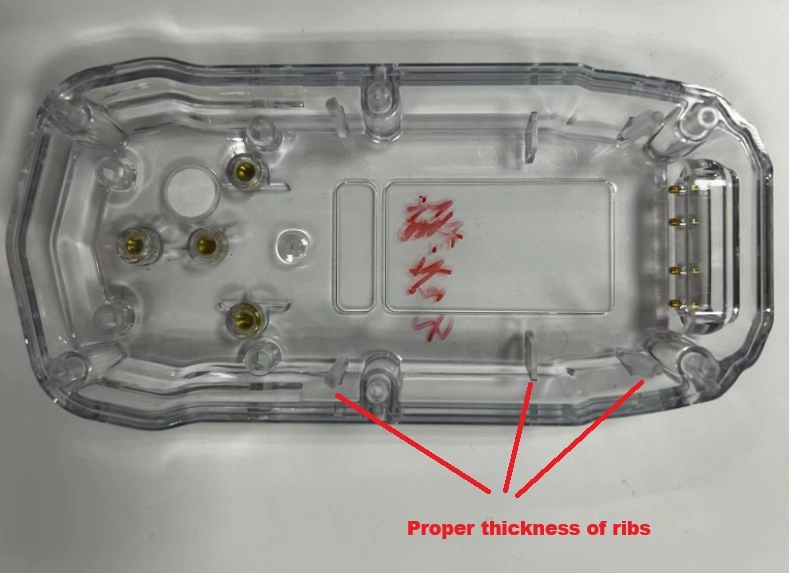
Should be 40–60% of the adjacent wall thickness
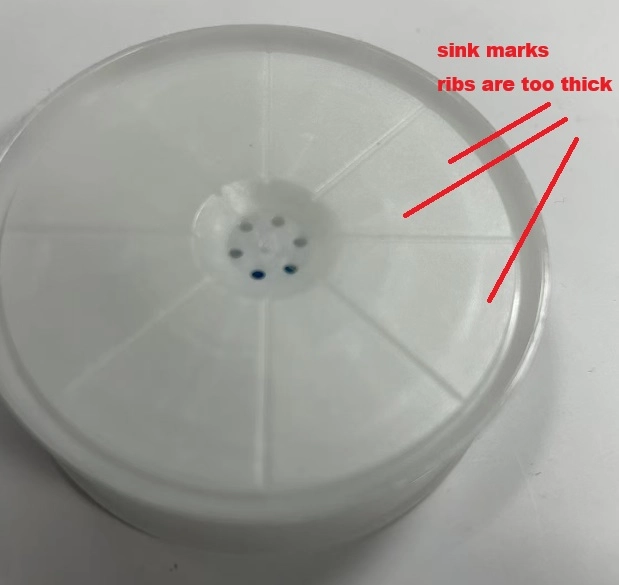
Too thick → causes sink marks and uneven cooling
Rib Height
Typically 2.5 to 3 times the wall thickness
Tall ribs may require multiple short ribs or gussets instead
Draft Angle
Apply 0.5° to 1° draft to each side for easy mold release
Rib Spacing
Space ribs at least 2 to 3 times their thickness apart to avoid cooling hotspots
Design Guidelines for Bosses
Boss Wall Thickness
Should be 60% of the outer wall thickness max
Avoid solid bosses — core them out to prevent sink marks
Boss Base Support
Add connecting ribs between boss and base to distribute load
Use fillets at the base to reduce stress concentration
Draft & Hole Design
Add 0.5°–1° draft on outer walls and through holes
Leave 0.5 mm clearance in through-holes for screw guidance
Common Mistakes in Rib and Boss Design
Too thick ribs → sink marks on the visible surface
Unsupported bosses → weak screw retention or cracking
Sharp corners → stress concentration and flow hesitation
Zero draft → difficult or damaged ejection
Pro Tips for Design Optimization
Use ribs instead of increasing wall thickness for strength
Avoid overlapping thick bosses with other solid features — core them out
Run mold flow analysis to detect sink-prone areas
Use fillets and radii to guide plastic flow and reduce stress
Add venting near ribs and bosses to help avoid short shots and burns
Visual Example
A proper thickness of ribs (Good)
Ribs are too thick (Not Good)
Goodtech MFG — Your Engineering Partner
At Goodtech MFG Group, we help you balance structural strength and cosmetic quality. Our engineering team reviews your 3D models and provides DFM reports, rib/boss optimization, and mold flow simulation support.
Have a design you’d like us to check? Contact us for a free DFM consultation.