
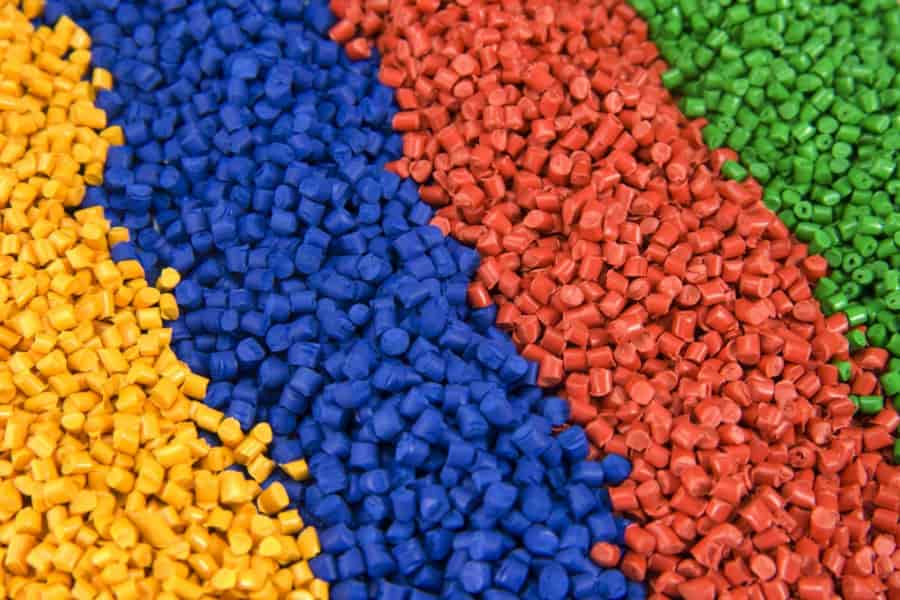
Choosing engineering plastics for injection moulding is not simply a matter of selecting the strongest or most heat-resistant resin. The right material must match the part’s mechanical requirements, operating environment, dimensional needs, appearance, manufacturing process, tooling strategy, and total project cost.
For engineers and B2B purchasing teams, a practical selection process starts with the application and works backwards to the material grade. Factors such as temperature, chemical exposure, load, wear, moisture, shrinkage, reinforcement, and mould design can all influence the final decision.
This guide explains how to evaluate engineering plastics for injection moulding, compare commonly considered materials, assess overmoulding and two-shot moulding requirements, and work with a manufacturing partner to validate the material before production.
What Makes a Plastic an “Engineering Plastic” for Injection Moulding?
Engineering plastics are generally selected when a part requires more controlled mechanical, thermal, chemical, electrical, or dimensional performance than a basic commodity plastic can provide.
The term does not identify a single material. It describes a group of plastics that can be selected for more demanding engineering applications.
Engineering Plastics vs General-Purpose Plastics
The distinction is best understood through the requirements placed on the finished part.
| Selection Factor | General-Purpose Plastics | Engineering Plastics |
|---|---|---|
| Mechanical demand | Basic to moderate requirements | Moderate to demanding requirements |
| Thermal demand | Often limited by application | More options for elevated-temperature service |
| Dimensional stability | Application dependent | Often a major selection consideration |
| Wear performance | Depends on material and design | More performance-oriented options available |
| Chemical resistance | Application dependent | Multiple specialised material choices |
| Cost | Often lower | Often higher, depending on grade |
| Processing | Usually less demanding | Material-specific processing may require greater control |
However, a material family alone is not enough to approve a design. The final choice can change significantly with resin grade, reinforcement, additives, geometry, processing conditions, and the intended environment.
For that reason, engineering plastic material selection should be treated as a design and manufacturing decision, not just a purchasing decision.
The 7 Factors That Should Drive Material Selection
A useful material selection process begins by defining what the finished part actually has to do.
1. Mechanical Load and Impact
Start by identifying the type of load the part will experience.
A structural component may require stiffness, while a snap-fit or protective housing may place more emphasis on toughness and impact resistance. Moving components may require a different balance between strength, friction, and wear.
Ask:
- Is the load static or repeated?
- Does the part need rigidity or impact resistance?
- Will the material experience vibration or fatigue?
- Are mating surfaces exposed to friction?
- Is dimensional performance under load important?
The objective is not to select the material with the highest individual strength value. It is to find a material whose overall mechanical behaviour matches the actual load case.
2. Operating Temperature
Temperature should be evaluated according to the real service environment rather than a single nominal value.
Consider:
- Continuous operating temperature
- Short-term temperature exposure
- Heating and cooling cycles
- Contact with hot components
- Thermal expansion
- Dimensional requirements at operating temperature
A material that performs well at room temperature may behave differently when exposed to prolonged heat or repeated thermal cycling.
For demanding applications, the exact resin grade and supplier datasheet should be reviewed before material approval.
3. Chemical and Environmental Exposure
Chemical compatibility can determine whether an engineering plastic is suitable even when its mechanical properties appear adequate.
Evaluate exposure to:
- Oils and lubricants
- Solvents
- Cleaning agents
- Fuels
- Water and humidity
- Outdoor environments
- Other application-specific chemicals
Chemical resistance should be checked against the actual concentration, temperature, exposure time, and stress conditions. A general statement that a plastic is “chemical resistant” is not sufficient for final material approval.
4. Wear, Friction, and Moving Interfaces
For gears, bushings, guides, sliders, bearings, and other moving interfaces, material selection should account for friction and wear as well as static strength.
The design team should consider:
- Contact pressure
- Sliding or rotating motion
- Lubrication
- Operating temperature
- Mating material
- Expected duty cycle
This is one reason materials such as POM or certain grades of PA may be considered for mechanical components, while a different engineering plastic may be more appropriate when thermal or chemical requirements dominate.
5. Dimensional Stability and Tolerance Requirements
Dimensional performance is especially important when a moulded part interfaces with another component.
The material selection process should consider:
- Moulding shrinkage
- Warpage
- Moisture absorption
- Thermal expansion
- Fibre orientation in reinforced materials
- Part geometry
- Wall thickness distribution
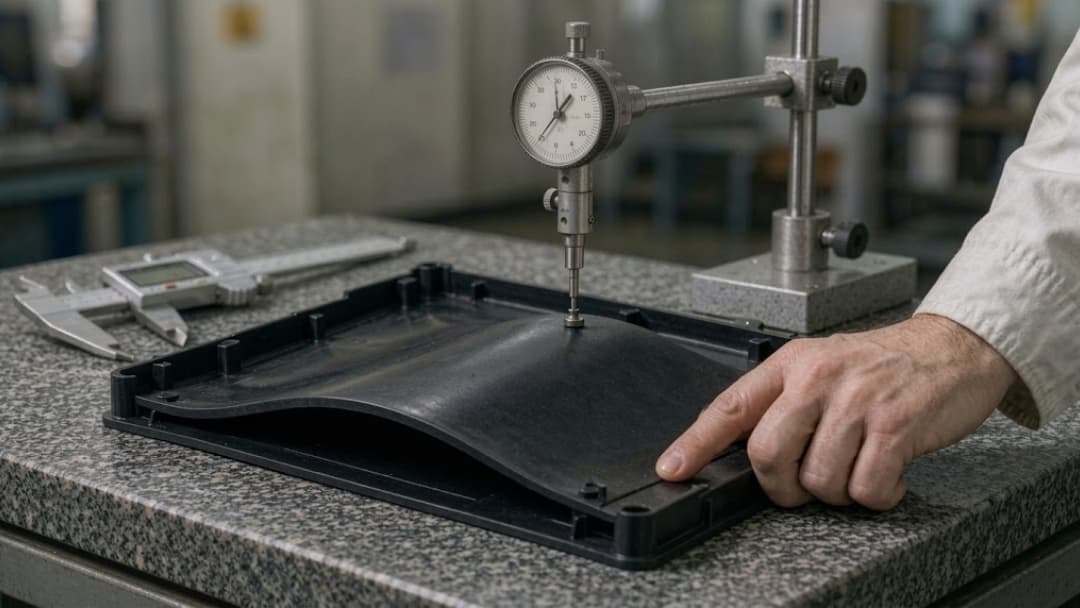
Material behaviour cannot be separated from mould design. Gate location, cooling balance, flow behaviour, part thickness, and ejection strategy can all influence the final dimensions.
Therefore, material selection and mould design should be reviewed together rather than sequentially.
6. Electrical and Regulatory Requirements
Electrical components may require insulating performance, dimensional stability, heat resistance, or application-specific compliance.
For regulated applications, the exact resin grade and documentation should be confirmed rather than assuming that every grade within a material family has the same approvals.
Where compliance matters, buyers should verify:
- Required regulatory standard
- Exact resin grade
- Supplier documentation
- End-use conditions
- Processing conditions
- Any application-specific restrictions
7. Cost and Manufacturing Constraints
Material price is only one component of total manufacturing cost.
A lower-cost resin may create higher project costs if it requires more complex processing, greater quality control, additional tooling considerations, or creates a higher risk of dimensional problems.
Evaluate total cost through:
Material + Tooling + Processing + Quality Control + Scrap Risk + Secondary Operations
This is particularly important when comparing engineering plastics with reinforced or higher-performance grades.
Engineering Plastics Commonly Considered for Injection Moulding
The appropriate material depends on the application, but several engineering and technical plastics are commonly considered for injection moulding.
| Material Family | Common Selection Driver | Key Consideration | Typical Decision Context |
|---|---|---|---|
| POM | Low friction, wear and mechanical performance | Dimensional behaviour and application conditions | Mechanical components |
| PA | Strength, toughness and wear | Moisture absorption and dimensional behaviour | Mechanical parts |
| PC | Impact performance and transparent options | Processing and appearance requirements | Housings and protective parts |
| PBT | Electrical and dimensional performance | Grade-specific processing requirements | Electrical and industrial components |
| PPS | High-performance thermal and chemical requirements | Grade selection and processing control | Demanding industrial applications |
| PEEK | Very demanding mechanical or thermal requirements | Higher material and processing considerations | Specialised engineering parts |
| PSU | Thermal and dimensional requirements | Application and grade validation | Specialised components |
| ABS | Balance of performance, appearance and processability | Application-specific grade selection | Housings and general components |
| PP | Chemical resistance and low-density design | Shrinkage and geometry | Industrial and consumer components |
| PE | Chemical resistance and low density | Material-specific moulding behaviour | Application dependent |
These categories should be treated as a starting point rather than a final material recommendation.
For example, PA can behave differently depending on grade, moisture condition, reinforcement, and application. Glass-filled PBT is not equivalent to an unfilled grade. High-performance materials such as PEEK require application-specific evaluation rather than selection based solely on their reputation for performance.
GoodTech’s custom plastic injection moulding services can be considered when the material decision needs to be evaluated together with part design, tooling, and production requirements.
How to Choose Between Similar Engineering Plastics
Many projects reach a point where two or more materials appear technically acceptable. The decision should then focus on the properties that matter most to the actual application.
POM vs PA
POM and PA can both be considered for mechanical components, but the selection criteria may differ.
Compare:
- Friction and wear requirements
- Moisture exposure
- Impact and toughness
- Dimensional stability
- Operating temperature
- Reinforcement requirements
Where moisture or dimensional behaviour is highly sensitive, the specific PA grade and application conditions should be reviewed carefully.
PC vs PC/ABS
PC and PC/ABS may both be considered for housings and other engineering components.
The evaluation can include:
- Impact performance
- Appearance
- Rigidity
- Processing behaviour
- Temperature requirements
- Chemical exposure
The final decision should be based on the required performance of the finished part rather than choosing solely by material family.
PBT vs PA
For electrical and mechanical components, PBT and PA may both enter the shortlist.
The comparison should include:
- Moisture exposure
- Electrical requirements
- Dimensional requirements
- Mechanical load
- Temperature
- Surface and appearance requirements
Standard Resin vs Glass-Filled Resin
Adding glass reinforcement can change the behaviour of a plastic significantly.
Potential selection drivers include:
- Higher stiffness
- Improved dimensional performance
- Strength requirements
- Temperature performance
However, reinforcement can also affect:
- Fibre orientation
- Flow behaviour
- Surface appearance
- Shrinkage behaviour
- Tool wear considerations
The resin grade, reinforcement level, part geometry, and mould design therefore need to be considered together.
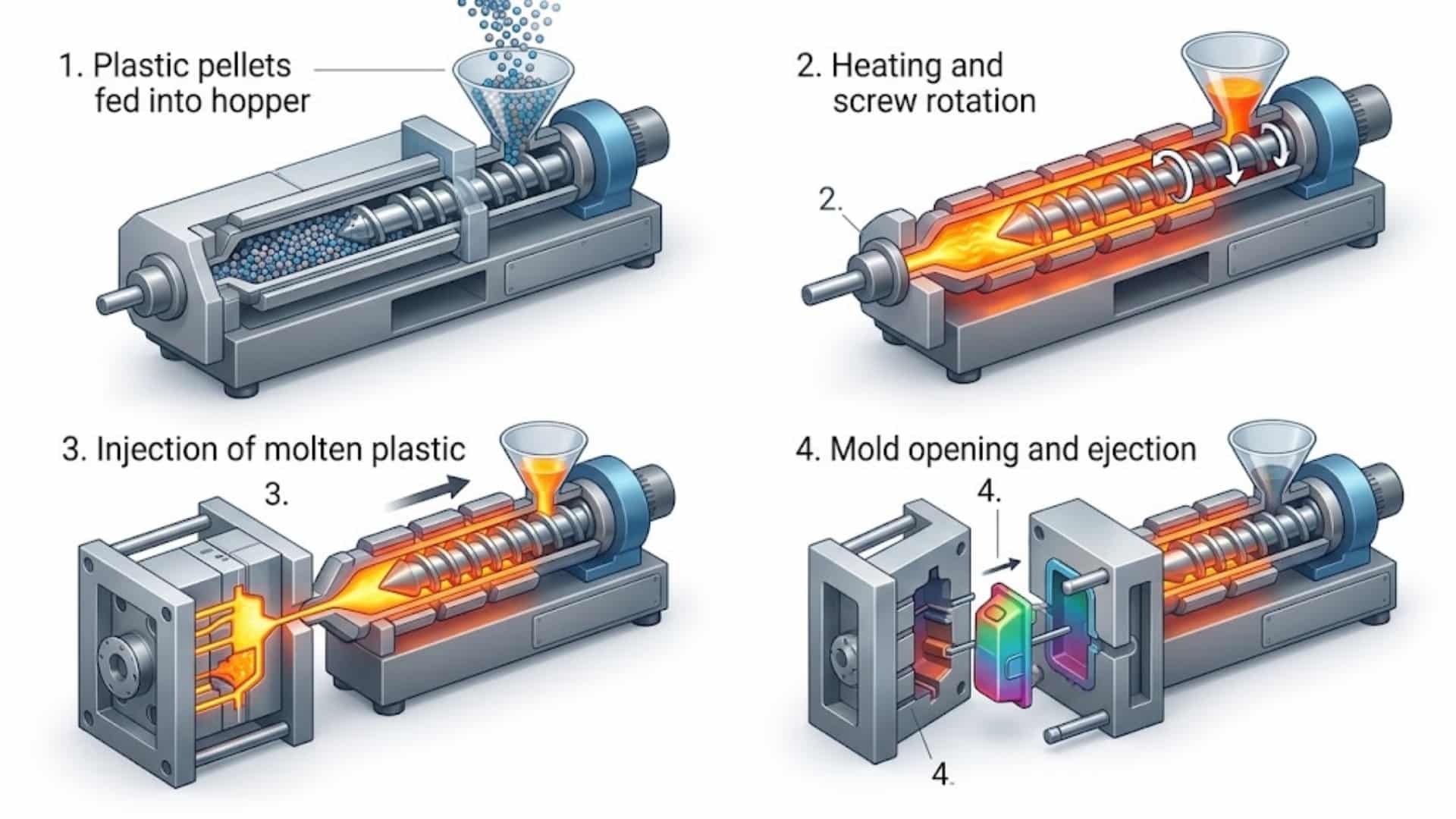
How Material Selection Changes the Injection Moulding Process
Material selection affects more than the final part properties. It can change how the material flows, how the mould is designed, how moisture is controlled, and how dimensional stability is managed.
Melt Flow and Filling Behaviour
Different materials and grades can behave differently during filling.
The engineering review should consider:
- Part thickness
- Flow length
- Gate location
- Runner design
- Filling behaviour
- Injection pressure requirements
- Potential weld-line locations
A material that meets the specification on paper may still be difficult to mould if the part geometry is poorly matched to its flow behaviour.
Moisture and Material Preparation
Some engineering plastics are sensitive to moisture and may require controlled drying and storage before processing.
The production team should confirm:
- Material storage requirements
- Drying requirements
- Handling procedures
- Moisture control
- Material traceability
Actual requirements should always be established for the specific resin grade.
Shrinkage and Warpage
Shrinkage and warpage are affected by both material characteristics and moulding conditions.
Factors can include:
- Material family
- Reinforcement
- Part geometry
- Wall thickness
- Fibre orientation
- Cooling balance
- Gate position
- Processing conditions
This is why a material selection decision should be reviewed alongside tooling design.
Mould Design Considerations
Material properties can influence:
- Gate design
- Venting
- Cooling
- Draft
- Ejection
- Flow path
- Surface appearance
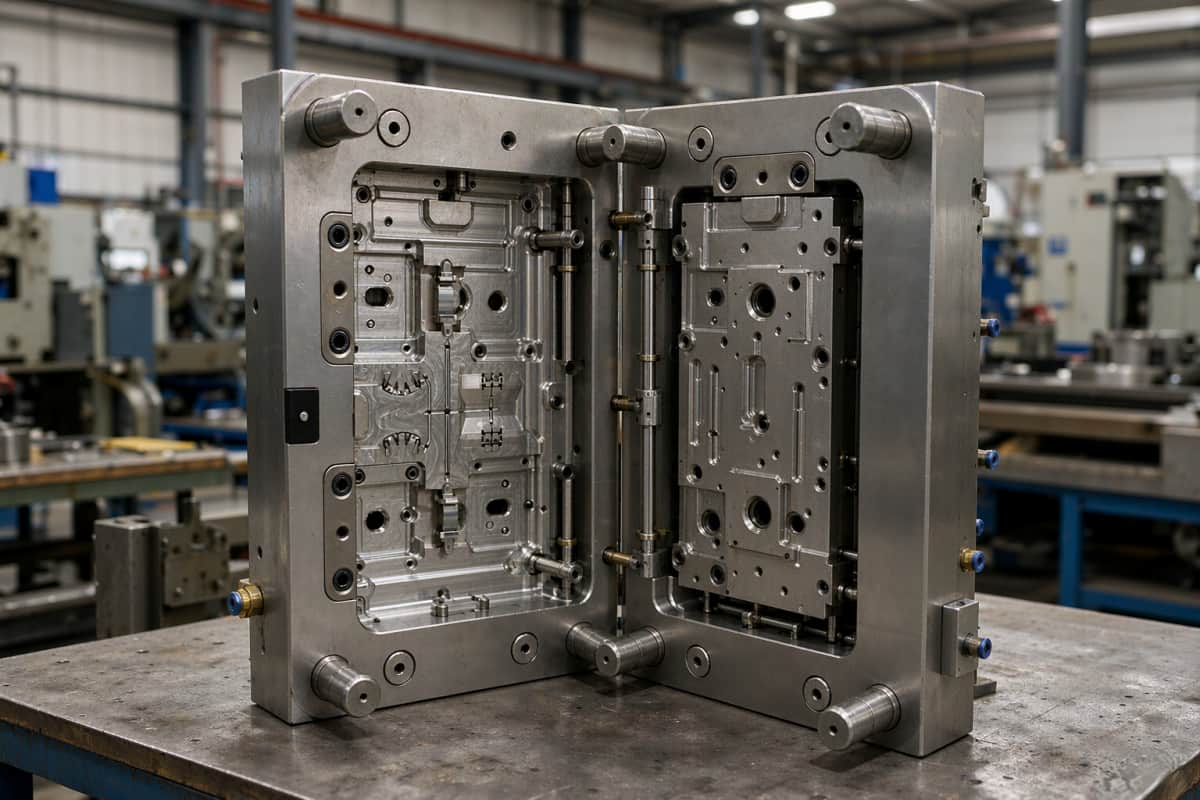
For projects requiring complex tooling, consider linking to GoodTech’s plastic mould fabrication service when discussing the connection between resin selection and tooling.
Why Material Selection Should Be Engineering-Driven
A practical engineering-driven process connects every decision:
Application Requirements → Material Selection → Part Design → Mould Design → Moulding Process → Quality Validation → Mass Production
This approach reduces the risk of selecting a technically attractive material that is difficult to mould consistently or creates avoidable tooling and quality problems.
When Should You Consider Reinforced Engineering Plastics?
Unfilled engineering plastics are not always sufficient for demanding structural or dimensional requirements. Reinforced grades can be evaluated when additional stiffness, dimensional performance, or application-specific properties are required.
Glass Fibre Reinforcement
Glass-filled plastics may be considered when the design requires greater stiffness or improved dimensional performance.
However, reinforcement can introduce additional design considerations:
- Fibre orientation
- Anisotropic behaviour
- Surface appearance
- Flow behaviour
- Shrinkage differences
- Tool wear
The correct reinforcement level should therefore be selected according to the actual design requirements rather than simply choosing the highest available percentage.
Glass Bead and Other Fillers
Glass beads and other fillers may also be used for application-specific performance.
The decision should consider:
- Dimensional requirements
- Stiffness
- Appearance
- Processing behaviour
- Part geometry
- Final application
The exact formulation should be confirmed against the resin supplier’s technical documentation.
Material Compatibility for Overmoulding and Two-Shot Moulding
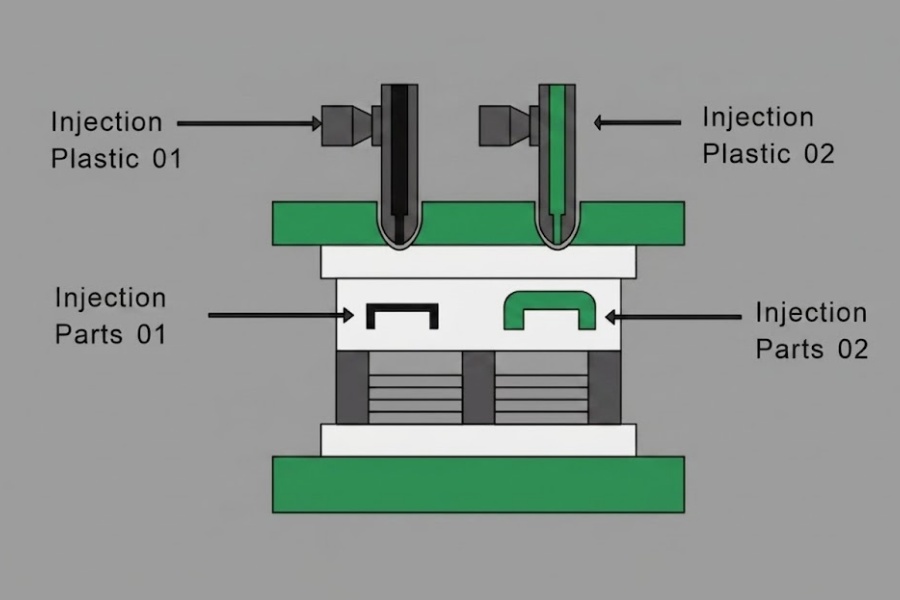
Material selection becomes more complex when a part uses multiple materials.
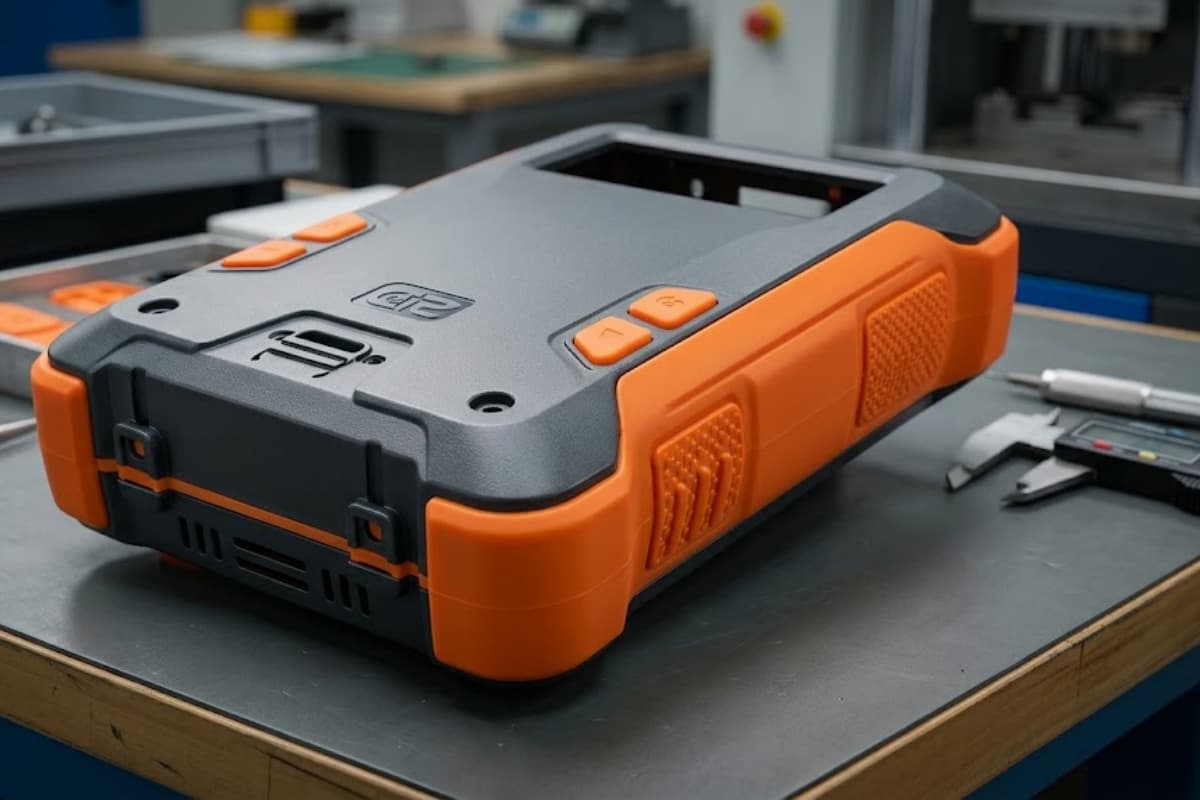
Plastic overmoulding and two-shot moulding require evaluation of the relationship between the materials as well as the properties of each material individually.
When Material Compatibility Matters
Consider:
- Bonding behaviour
- Thermal compatibility
- Shrinkage differences
- Surface condition
- Mechanical interlocking
- Processing temperatures
- Substrate stability
A material that works well as a standalone component may not automatically be suitable for a multi-material structure.
Overmoulding vs Two-Shot Moulding
| Factor | Overmoulding | Two-Shot Moulding |
|---|---|---|
| Basic concept | One material is moulded over an existing substrate | Two materials are moulded as part of an integrated process |
| Material compatibility | Critical | Critical |
| Tooling strategy | Project dependent | More specialised tooling may be required |
| Typical purpose | Combine functions or materials | Produce an integrated multi-material component |
| Main selection issue | Bonding and substrate compatibility | Material/process/tooling coordination |
GoodTech’s custom injection moulding offering can be evaluated when a project combines material selection with overmoulding or other specialised moulding requirements.
Thermoplastics vs Thermoset Plastics: Which Route Fits the Application?
Not every demanding application should automatically use an engineering thermoplastic.
Thermoset plastics can be evaluated when the application calls for particular thermal, electrical, chemical, or dimensional performance.
When Thermoplastics Are a Strong Starting Point
Thermoplastics may be appropriate when the project requires:
- Complex moulded geometry
- Engineering material options
- Established injection moulding routes
- Specific combinations of mechanical and thermal performance
- Material and process flexibility appropriate to the application
When Thermoset Plastics May Be More Appropriate
Thermoset plastics may be considered for applications where their cured structure and application-specific properties provide advantages.
Typical evaluation factors include:
- Elevated-temperature service
- Electrical insulation
- Chemical exposure
- Dimensional stability
- Application-specific performance requirements
GoodTech provides thermoset moulding as a separate manufacturing route. The correct choice between thermoplastic and thermoset materials should be based on the full application and production requirements.
Injection Moulding vs Thermoforming and Other Processes
Material selection and process selection are closely connected. Sometimes the best solution is not simply choosing a different resin, but choosing a different manufacturing process.
When Injection Moulding Makes Sense
Injection moulding can be considered when the project requires combinations of:
- Complex geometry
- Integrated features
- Repeatable production
- Controlled part dimensions
- A production method aligned with the expected volume
When Thermoforming May Be Better
Plastic thermoforming may be considered for projects involving large formed parts, sheet-based construction, or production conditions where thermoforming provides an appropriate tooling and manufacturing route.
When Vacuum Casting or RIM Should Be Considered
Alternative processes may be useful during prototype or lower-volume stages.
Relevant options can include:
The objective is not to identify one universally superior manufacturing process. It is to select a process that fits the part geometry, material, production volume, tooling needs, and validation stage.
A Practical Engineering Plastics Selection Workflow
A structured decision process helps engineers and purchasing teams reduce unnecessary material changes later.
Step 1: Define the Operating Environment
Document:
- Temperature
- Chemical exposure
- Humidity
- UV exposure
- Electrical conditions
- Contact conditions
Step 2: Define Mechanical Requirements
Identify:
- Strength
- Stiffness
- Impact
- Wear
- Fatigue
- Static or dynamic loading
Step 3: Define Dimensional and Appearance Requirements
Confirm:
- Critical dimensions
- Dimensional stability
- Warpage sensitivity
- Surface finish
- Transparency or opacity
- Colour requirements
- Assembly interfaces
Step 4: Shortlist Material Families
Create a shortlist based on the dominant requirements.
For example:
General-purpose → Engineering → High-performance → Reinforced
The shortlist should remain open until the specific resin grade is evaluated.
Step 5: Validate Processing and Tooling
Review:
- Part geometry
- Flow behaviour
- Gate strategy
- Cooling
- Venting
- Ejection
- Drying
- Reinforcement effects
- Mould construction
Step 6: Validate the Specific Resin Grade
Before approving the material, confirm:
- Manufacturer
- Exact grade
- Reinforcement
- Additives
- Datasheet
- Regulatory documentation where required
- Processing recommendations
- Application suitability
The final selection should be based on documented requirements rather than a generic material name.
How to Validate Material Choice Before Mass Production
Material selection should be validated before the project becomes dependent on production tooling and large material purchases.
Prototype Validation
Prototypes can help verify:
- Form and fit
- Basic functionality
- Assembly
- Ergonomics
- Appearance
- Design assumptions
Where appropriate, rapid prototyping can provide an earlier validation stage before committing fully to production tooling.
First Article Inspection
The first production parts should be evaluated against the agreed requirements.
Depending on the project, this can include:
- Critical dimensions
- Appearance
- Material identification
- Functional characteristics
- Assembly interfaces
The exact inspection plan should be agreed according to the product’s quality requirements.
Production Quality Control
A robust project should connect material control with moulding and inspection.
Useful controls may include:
- Material batch traceability
- Process records
- Inspection records
- Critical-dimension monitoring
- Non-conformance handling
- Corrective action
GoodTech’s quality system can be referenced when evaluating how engineering requirements are connected to production quality.
Quality Control Should Start Before the First Production Run
For a B2B project, quality should not be treated as a final inspection activity.
A stronger workflow is:
Material Review → Engineering Review → Tooling Review → Trial → Inspection → Process Validation → Production
This provides more opportunities to identify material or moulding risks before they become production problems.
What to Look for in an Engineering-Driven Injection Moulding Partner
Selecting the material is only part of the project. The manufacturing partner also affects how effectively the material decision is translated into a production-ready component.
Engineering-Driven Decision Making
An engineering-driven supplier evaluates the relationship between:
Material + Part Design + Mould + Process + Quality
before production.
The supplier should be able to identify potential manufacturing issues early, explain trade-offs, and connect material recommendations to the actual part requirements.
For international buyers, this approach can reduce the gap between a material specification on a drawing and what is realistically achievable during production.
Quality Control From Material to Finished Part
Quality control should cover more than final dimensional inspection.
Buyers should ask how the supplier manages:
- Material identification
- Material traceability
- Process control
- Inspection
- Non-conformance
- Corrective action
- Production records
GoodTech’s quality control and quality system resources can be used as part of this supplier evaluation.
IP Protection and NDA for Custom Manufacturing
Custom injection moulding projects often involve sensitive information such as:
- CAD files
- Product drawings
- Technical specifications
- Prototypes
- Tooling information
- Product concepts
Before sharing engineering data, buyers should confirm how confidential information is handled and whether an NDA can be established.
A practical IP protection checklist includes:
| Item | What Buyers Should Confirm |
|---|---|
| CAD files | How digital design information is handled |
| Product drawings | Who can access technical documents |
| Prototypes | How samples are stored and controlled |
| Tooling information | Ownership and confidentiality arrangements |
| NDA | Whether confidentiality terms can be established |
Specific contractual terms should always be reviewed and agreed by the relevant parties.
Cross-Cultural Communication for Global Manufacturing Projects
For international manufacturing, technical communication can directly affect tooling and quality.
Potential sources of misunderstanding include:
- Drawing interpretation
- Material specifications
- Tolerance requirements
- Design changes
- Approval procedures
- Engineering terminology
- Production feedback
A clear communication workflow can reduce unnecessary back-and-forth:
RFQ → Engineering Review → DFM Feedback → Tooling Approval → Trial → Production → Quality Feedback
Cross-cultural communication is therefore not simply a customer-service issue. It is part of engineering risk management.
Quick Response During Engineering and Production
Fast communication matters when an engineering team needs clarification about:
- Material selection
- Drawing details
- DFM concerns
- Design revisions
- Tooling changes
- Quality issues
- Production questions
Quick response should be evaluated as part of the supplier’s project-management process rather than as a promise of a specific response time.
Fast Turnover Without Sacrificing Quality
Fast project turnover does not mean removing engineering or inspection steps.
Efficient turnover is more realistically achieved by coordinating:
Engineering Review + Communication + Tooling Coordination + Production Planning + Quality Control
The goal is to reduce avoidable delays while maintaining the controls needed for a stable production process.
Procurement Checklist for Custom Injection Moulded Parts
Before requesting a quotation from a plastic injection moulding manufacturer, provide as much relevant technical information as possible.
A useful RFQ package may include:
- CAD file
- 2D drawing
- Part dimensions
- Material preference
- Operating temperature
- Chemical exposure
- Mechanical requirements
- Surface finish
- Colour
- Estimated production volume
- Regulatory requirements
- Assembly requirements
- Critical dimensions
Also ask the supplier:
- Can the proposed material meet the application requirements?
- Is an alternative material worth evaluating?
- Will reinforcement affect dimensions or appearance?
- What tooling considerations should be addressed?
- What material information should be approved before production?
- How will quality requirements be monitored?
- What information is required before tooling begins?
Injection Moulding Supplier Selection Matrix
When comparing suppliers, technical capability should be assessed alongside communication and project execution.
| Evaluation Factor | What Buyers Should Look For |
|---|---|
| Engineering capability | Ability to evaluate material, part design, tooling, and process together |
| Quality control | Documented inspection and production quality practices |
| IP protection | Clear confidentiality and NDA arrangements |
| Communication | Accurate technical communication across languages and cultures |
| Response speed | Efficient handling of engineering questions and changes |
| Project turnover | Effective coordination from engineering to tooling, trial, and production |
This is particularly relevant when sourcing from an overseas plastic injection mould factory. A supplier should be evaluated on the complete project workflow rather than price alone.
Why Work With an Engineering-Driven Manufacturing Partner?
The right material is only valuable when it can be translated into a manufacturable, controlled, and validated product.
For GoodTech, the preferred approach is built around six practical principles:
Engineering Driven
Material selection is evaluated together with part design, mould design, processing, and quality requirements.
Quality Control
Material, process, inspection, and production controls should form one connected quality workflow.
IP Protection / NDA
Custom manufacturing requires appropriate handling of drawings, CAD data, tooling information, and product concepts.
Cross-Cultural Communication
Clear technical communication helps reduce misunderstandings during RFQ, engineering review, tooling, and production.
Quick Response
Efficient communication helps engineering decisions move forward without unnecessary delays.
Fast Turnover
Efficient coordination across engineering, tooling, production, and quality can support a smoother project flow without removing necessary controls.
Conclusion: Choose the Material as Part of the Manufacturing System
The best engineering plastics for injection moulding cannot be selected by resin name alone.
A reliable selection process starts with the application and evaluates:
Mechanical Requirements → Temperature → Chemical Exposure → Wear → Dimensional Stability → Regulatory Needs → Manufacturing Constraints
The shortlisted materials should then be evaluated against mould design, processing behaviour, reinforcement, quality requirements, and the intended production process.
For B2B buyers, the supplier evaluation should go one step further. Engineering capability, quality control, IP protection and NDA practices, cross-cultural communication, response speed, and project turnover can all influence the success of a custom injection moulding project.
The practical next step is to provide the part drawing, application conditions, material preference, and production requirements for an engineering review. This allows the material decision to be evaluated together with tooling and manufacturing feasibility rather than in isolation.
Key Takeaways
- Engineering plastics should be selected from the application requirements backwards, beginning with load, temperature, chemical exposure, wear, dimensional stability, and regulatory needs.
- There is no universally “best” engineering plastic. Resin grade, reinforcement, additives, geometry, and processing conditions can materially change the final result.
- Material selection and mould design should be evaluated together. Shrinkage, warpage, fibre orientation, gate location, cooling, venting, and ejection can all affect production outcomes.
- POM, PA, PC, PBT, PPS, PEEK, PSU, ABS, PP, and PE can all be considered depending on the application, but exact grades require separate technical validation.
- Glass-filled materials can improve selected performance characteristics but may introduce trade-offs involving fibre orientation, appearance, shrinkage, and tooling.
- Plastic overmoulding and two-shot moulding require material compatibility analysis, not simply individual material selection.
- Thermoplastics, thermoset plastics, thermoforming, vacuum casting, and RIM should be evaluated according to the product and production requirements, rather than assuming injection moulding is always the best route.
- For international B2B projects, the manufacturing partner should be assessed on Engineering Driven, Quality Control, IP Protection / NDA, Cross-Cultural Communication, Quick Response, and Fast Turnover.
FAQ
What are the best engineering plastics for injection moulding?
There is no single best engineering plastic for every application. POM, PA, PC, PBT, PPS, PEEK, PSU, and reinforced grades may all be appropriate depending on mechanical load, temperature, chemical exposure, wear, dimensional requirements, and the specific resin grade.
How do I choose the right plastic for injection moulding?
Start with the application’s operating conditions and performance requirements. Evaluate mechanical load, temperature, chemicals, wear, dimensional stability, appearance, regulatory requirements, and manufacturing constraints before comparing specific resin grades.
Is nylon better than POM for injection moulded parts?
Neither is universally better. The choice should be based on factors such as moisture exposure, wear, mechanical requirements, dimensional behaviour, temperature, and the specific application.
When should I use glass-filled engineering plastics?
Glass-filled plastics can be considered when increased stiffness, strength, or dimensional performance is required. Fibre orientation, appearance, shrinkage behaviour, processing, and mould design should also be reviewed before selecting a reinforced grade.
Can engineering plastics be used for overmoulding?
Yes, depending on the material combination and product design. Overmoulding requires evaluation of bonding, shrinkage, thermal compatibility, surface condition, processing temperatures, and mechanical interlocking.
What is the difference between engineering plastics and thermoset plastics?
Engineering plastics commonly refer to thermoplastic materials selected for demanding performance requirements, while thermoset plastics undergo curing that creates a permanent cross-linked structure. The appropriate route depends on the application’s thermal, electrical, chemical, dimensional, and manufacturing requirements.
How does material choice affect injection mould tooling?
Material choice can influence shrinkage, warpage, flow, gate design, cooling, venting, draft, ejection, and reinforcement-related tool wear. Material and tooling decisions should therefore be reviewed together.
Should I choose the resin before designing the mould?
Material selection should be established early enough to influence mould design, but the two decisions should be developed together. Final resin grade, reinforcement, geometry, processing behaviour, and tooling requirements can interact significantly.
Request an Engineering Review for Your Plastic Part
Share your part drawing, application conditions, material preference, and production requirements with GoodTech. The engineering review can consider material selection together with mould design, manufacturing feasibility, quality requirements, and production planning.
Suggested CTA Button:
Request a Custom Injection Moulding Review → https://goodtech-mfg.com/contact-us/