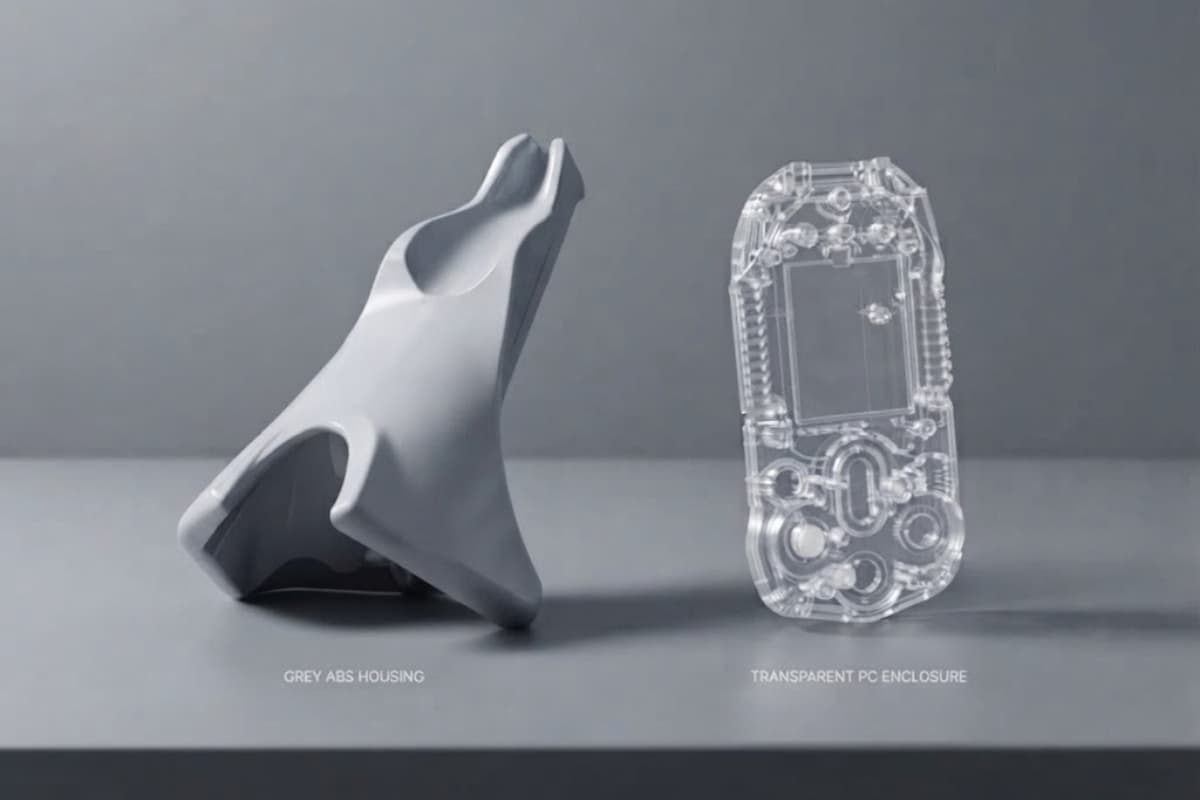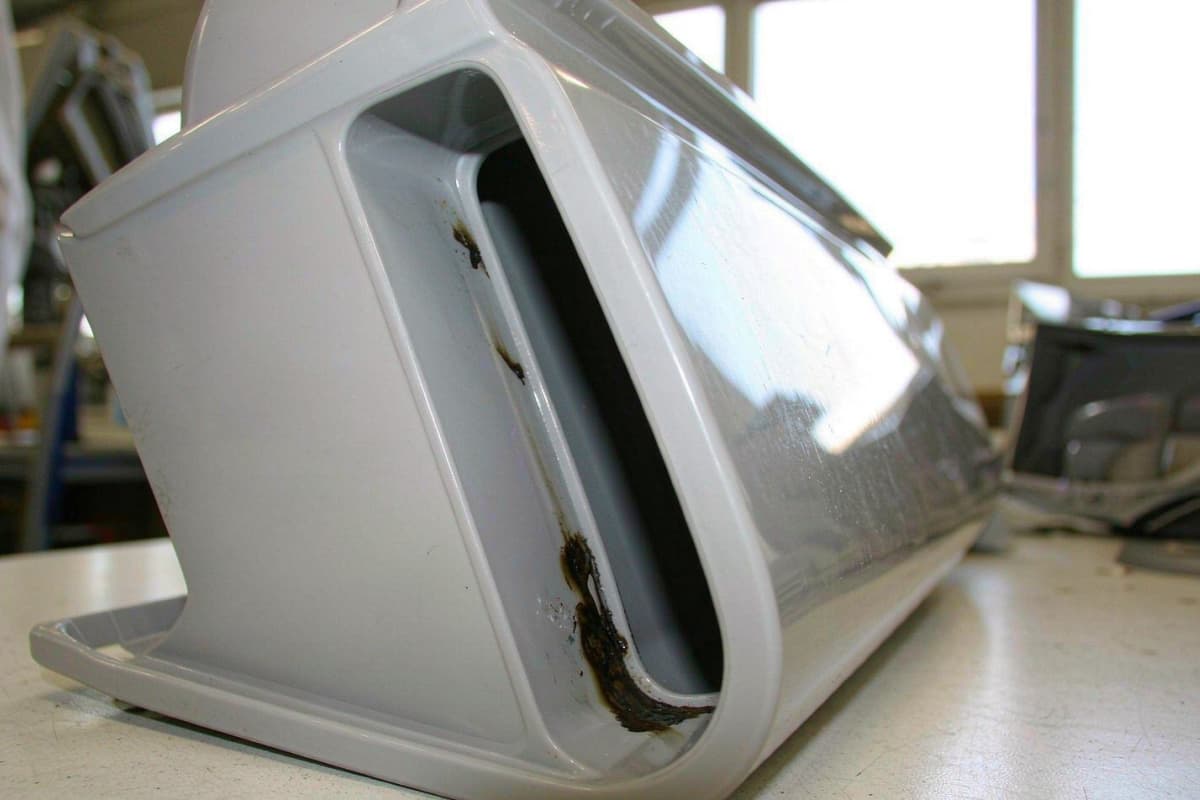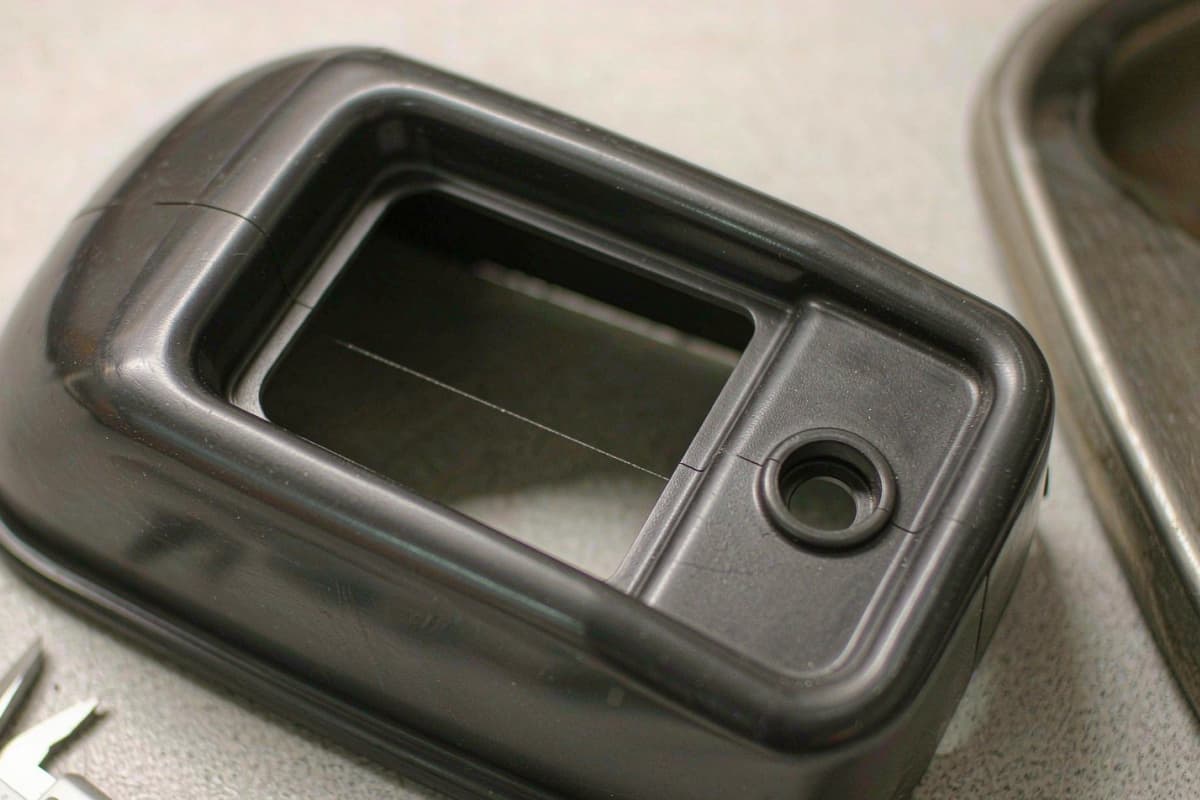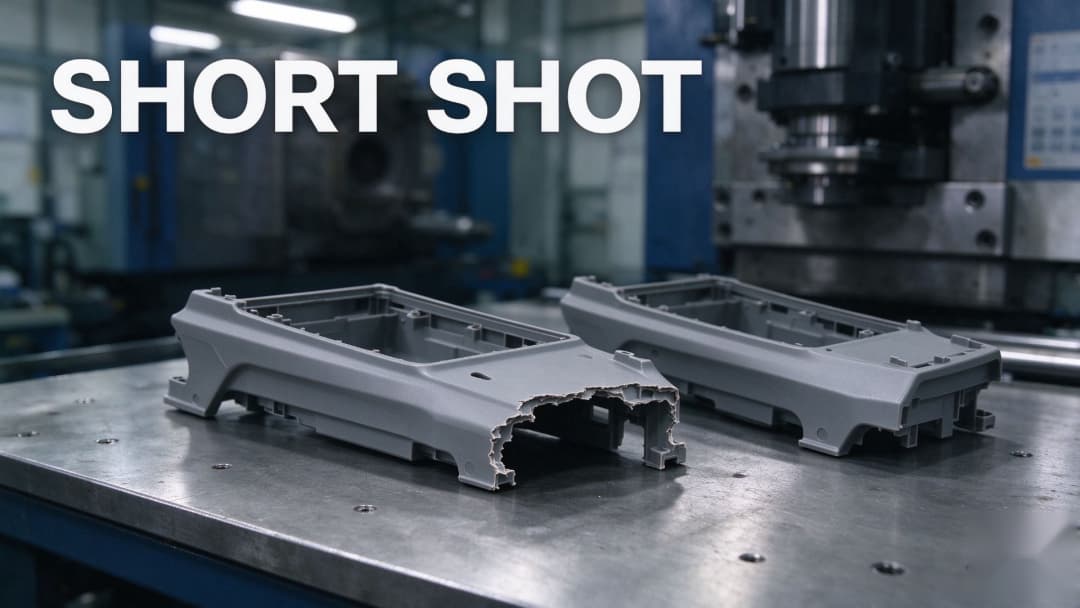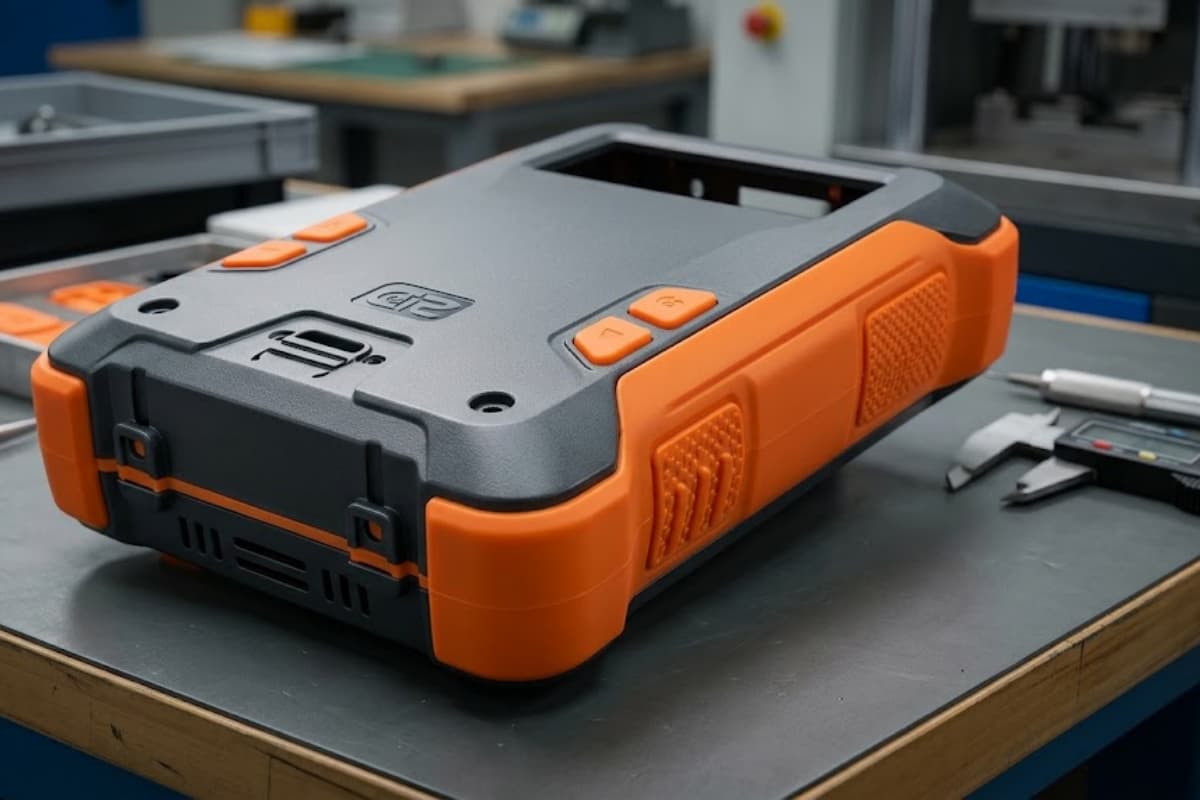

ABS and PC are the two most requested plastics for molded housings and covers, and they look similar on a quote sheet. The short answer: pick ABS when cost and ease of molding matter most; pick PC when the part needs impact strength, heat resistance, or transparency. PC costs roughly 30–60% more per kilogram, but it survives drops and 120 °C+ environments where ABS would crack or warp. Most real-world decisions come down to three questions — how hard is the part hit, how hot does it get, and how much transparency do you need? This guide compares both materials side by side, then gives simple rules for when each one wins. For how each material processes, see our ABS injection molding guide and PC injection molding guide.
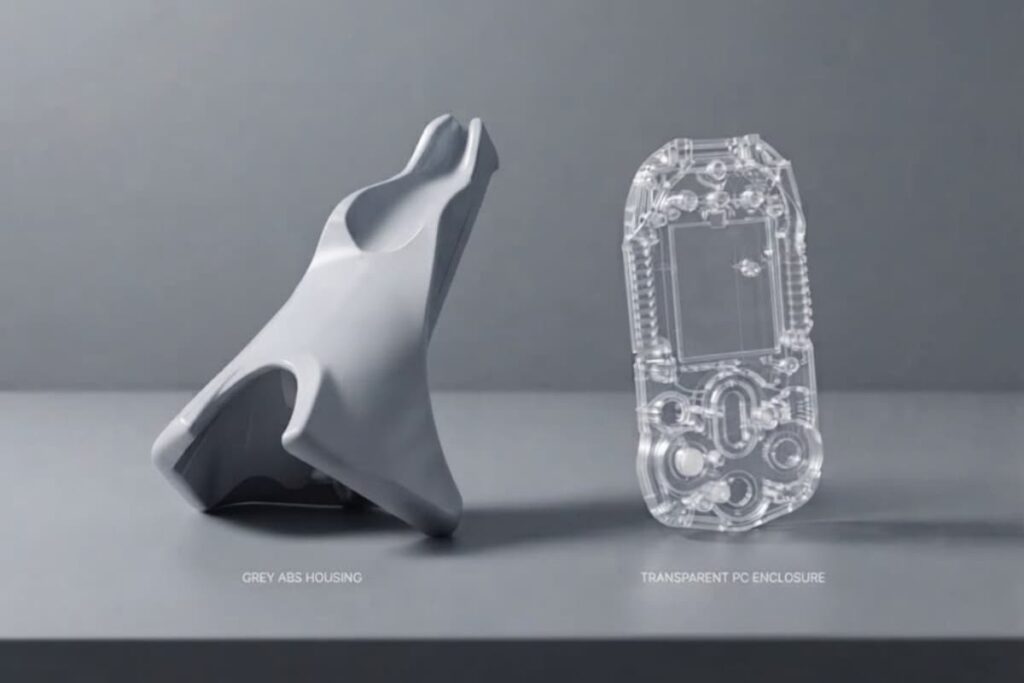
1. Side-by-Side Comparison
| Property | ABS | PC | Winner |
|---|---|---|---|
| Impact strength | Good (brittle in cold) | Excellent — survives drops and hammer blows | PC |
| Heat resistance | ~85–95 °C continuous | ~120–135 °C continuous | PC |
| Transparency | Opaque only | Optically clear grades available | PC |
| Material cost | Lower | ~30–60% higher | ABS |
| Molding ease | Easy — wide process window, low mold temp | Harder — high melt temp, needs drying, higher tonnage | ABS |
| Scratch resistance | Moderate | Softer surface, scratches visibly | ABS |
| Chemical resistance | Poor against solvents | Poor against solvents (both attack with strong cleaners) | Tie |
| Flame rating | Flame-retardant grades common (UL94 V0 at 1.5 mm) | Flame-retardant grades available, usually cost more | ABS |
2. When to Choose ABS
ABS is the practical choice for most housings and covers — it molds easily, paints and textures well, and keeps unit cost down:
- Consumer electronics housings — remotes, enclosures, appliance panels. Most never see heat above 60 °C or real impact.
- Parts that get painted, plated, or textured — ABS takes secondary finishes better than almost any other plastic.
- High-volume parts where every cent counts — at a million units, the ABS price gap is real money.
- Flame-retardant electrical parts — FR-ABS grades hit UL94 V0 cheaply.
The trade-off to remember: ABS gets brittle in cold weather and softens near 90 °C, so outdoor products in cold climates and anything near a heat source need a second look.
3. When to Choose PC
PC costs more and is fussier to mold — it must be dried before molding (moisture causes defects like splay) and runs at higher temperatures — but it earns its price where ABS fails:
- Anything that gets dropped or hit — power tool housings, protective covers, safety equipment. PC survives impacts ABS would crack under.
- Hot environments — under-hood automotive parts, light fixtures, anything near electronics that run warm.
- Transparent or translucent parts — lenses, light pipes, sight glasses. This is PC alone; ABS can’t do it.
- Outdoor products — UV-stabilized PC grades hold up for years; standard ABS chalks and yellows.
The trade-off: PC’s surface scratches more easily, and the material needs careful drying and processing discipline — a job you hand to a molder with the right controls.
4. What About PC/ABS Blends?
When you want a middle ground, the industry’s usual answer is a PC/ABS blend — typically 70/30 or 80/20 PC-to-ABS. The blend keeps most of PC’s impact strength and heat resistance, adds ABS’s processability and lower cost, and is the standard material for laptop housings, dashboards, and telecom enclosures. Choose the blend when pure PC is over-specified but ABS under-delivers — for example, a housing that must pass a 1 m drop test but sits in a 70 °C car cabin. Keep in mind blends need the same drying discipline as PC.
5. The Decision in Three Questions
- Does the part take hits or drop? Yes → PC (or PC/ABS). No → ABS.
- Does it see over 90 °C, or live outdoors? Yes → PC. No → ABS.
- Does it need to be transparent? Yes → PC. No → ABS, and bank the savings.
If two answers point different ways — say, a part that drops AND must stay cheap — that’s exactly when to bring your molder in. Material choice affects shrinkage, mold steel, cycle time, and scrap rate; a quote built on the wrong resin gets re-quoted later. For a broader walk through the options, see our material selection guide or the 20 common plastics overview.
FAQ
Which is cheaper, ABS or PC?
ABS. Raw material typically runs 30–60% less per kilogram than PC, and ABS is also easier to mold — lower melt temperature, less drying, faster cycles — so the real gap per part is even bigger than the resin price suggests.
Is PC stronger than ABS?
In impact, yes — significantly. PC absorbs hits that crack ABS, especially in cold conditions. For static loads and stiffness the two are closer, and glass-filled ABS narrows the gap further.
Can ABS and PC be molded together?
Yes, in two ways: as a premixed PC/ABS blend (the common laptop-housing material), or as separate materials in overmolding or two-shot parts, where compatibility between the two is well proven.
Does PC need drying before injection molding?
Yes — PC is hygroscopic and must be dried to below roughly 0.02% moisture, or the part shows splay and loses strength. ABS needs drying too in humid conditions, but it is far more forgiving.
Related Reading
- ABS Plastic Explained: Properties, Processing, and Applications
- PC Plastic Injection Molding Process
- Engineering Plastics for Injection Moulding: Material Selection Guide
- 20 Types of Plastic Materials: Properties and Uses
Still torn between the two? Send us the part drawing, the environment it lives in, and your annual volume — our engineers will recommend the resin, run the DFM check, and quote your custom injection molding project with the right material the first time.