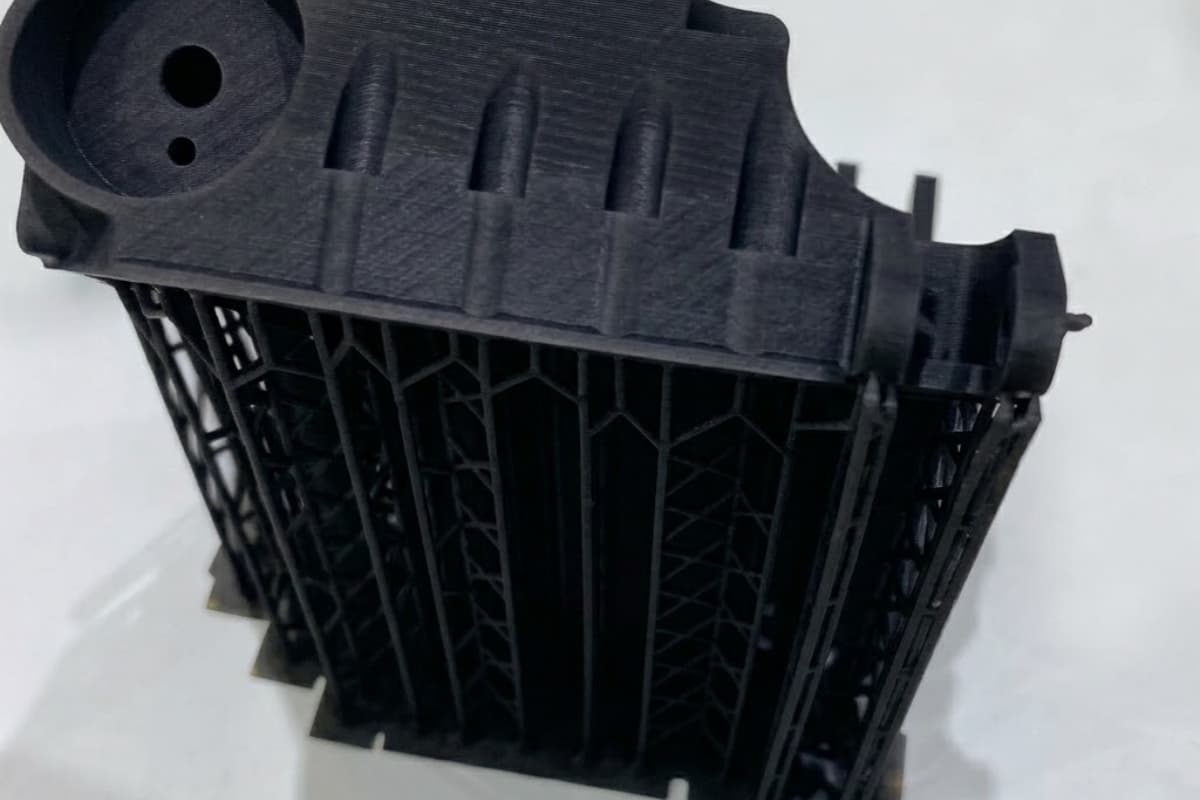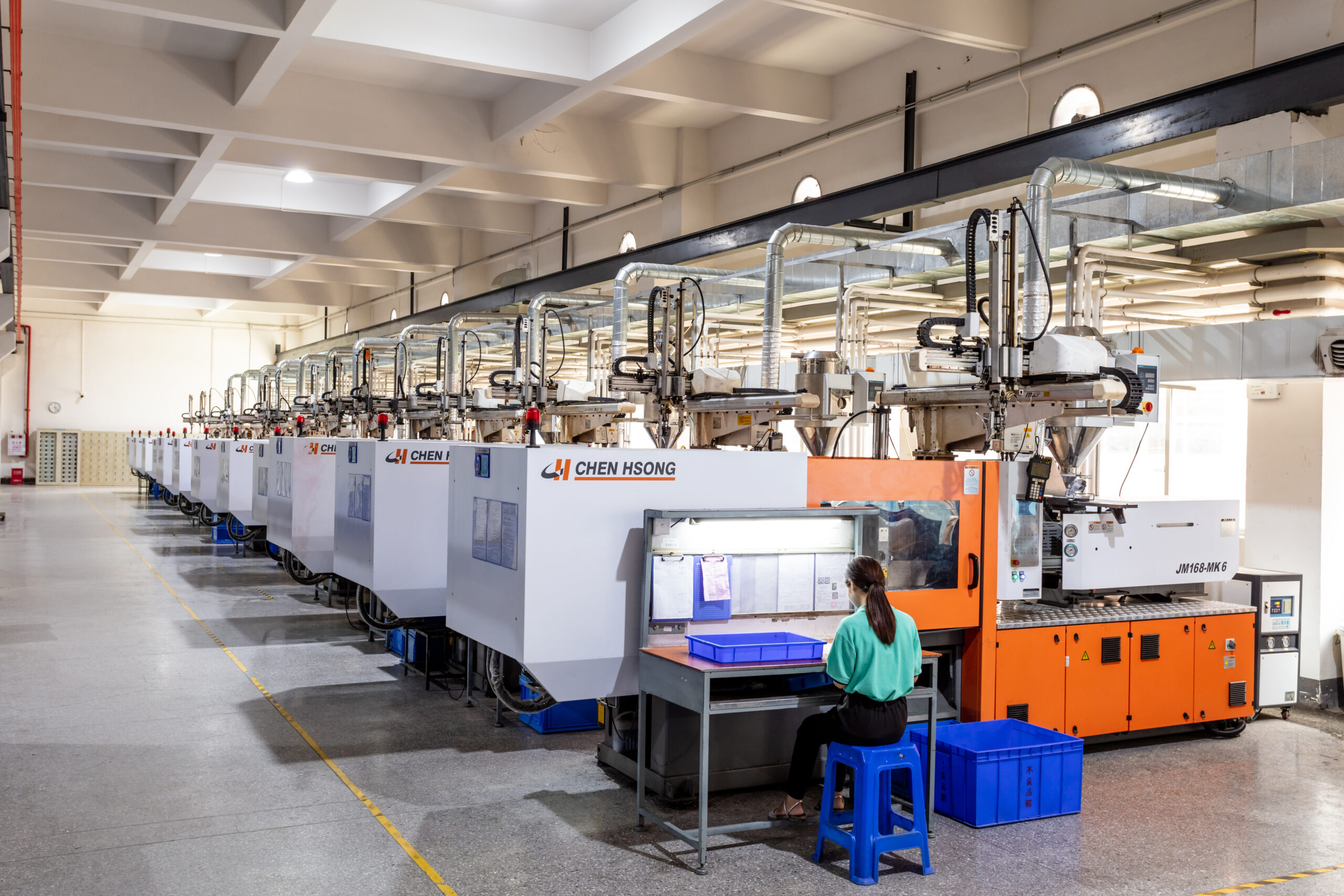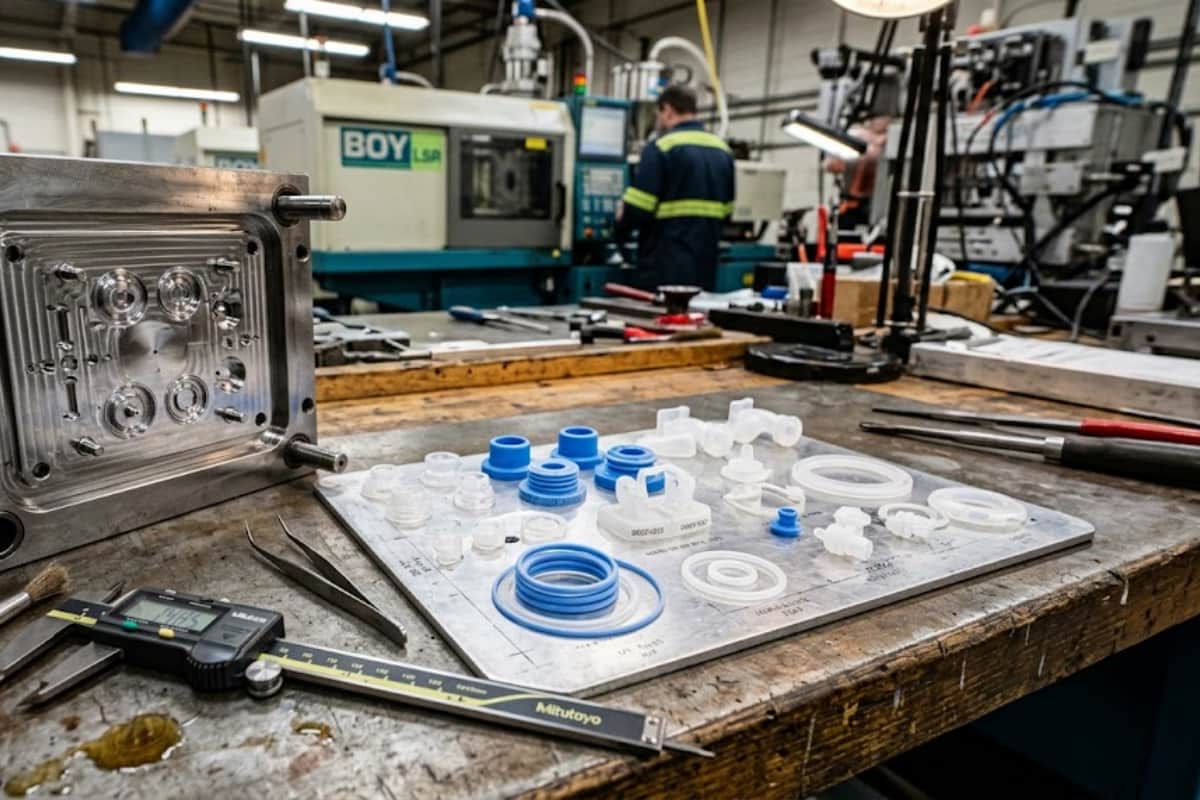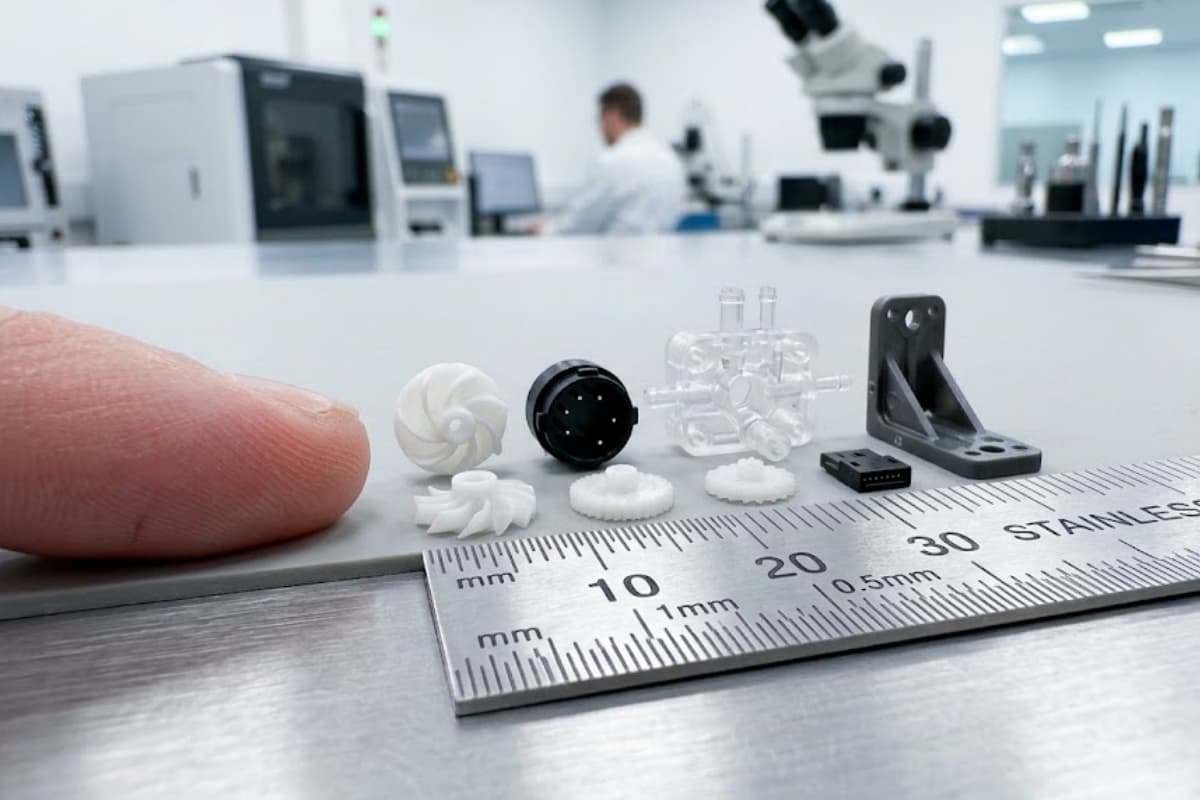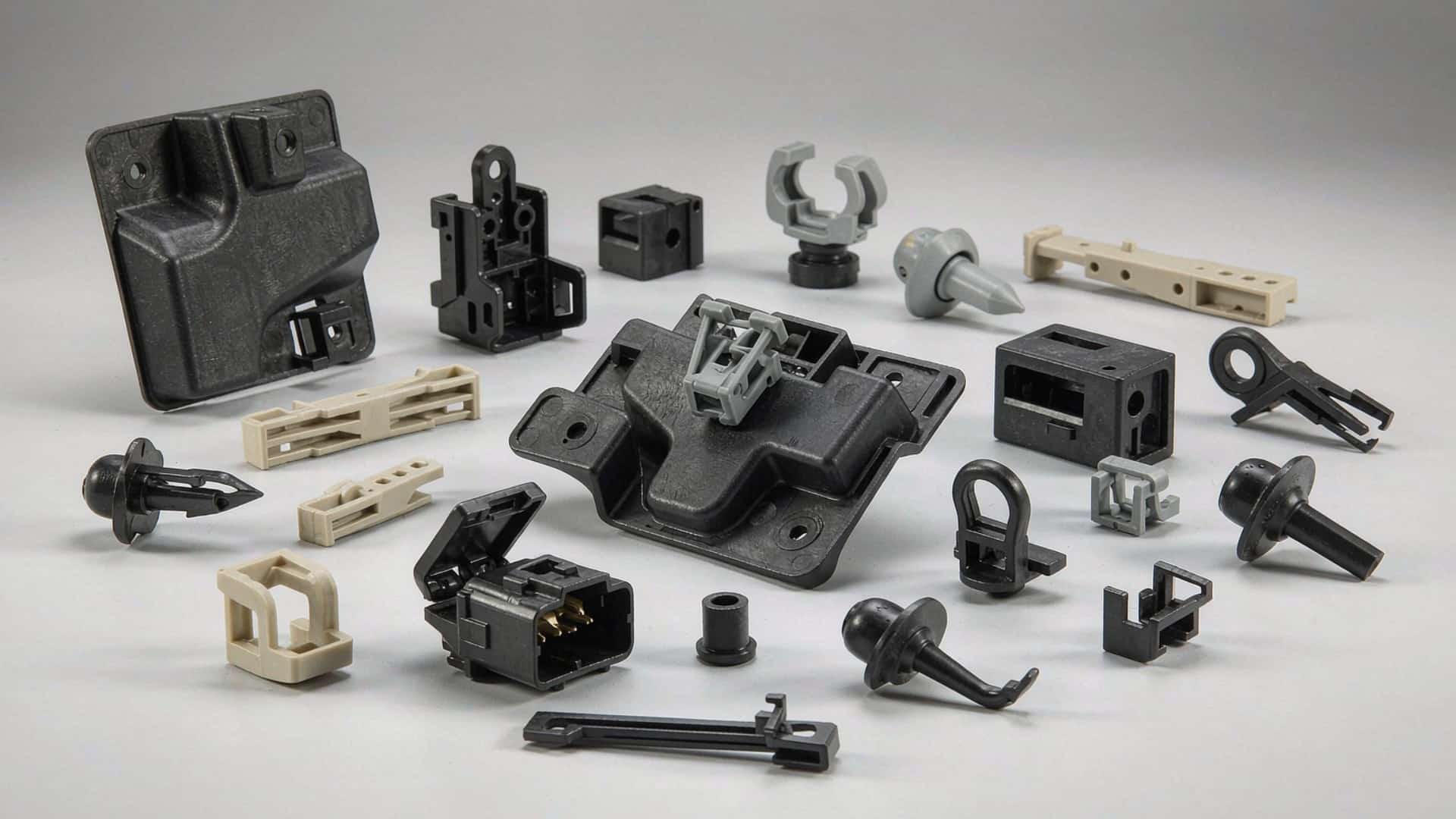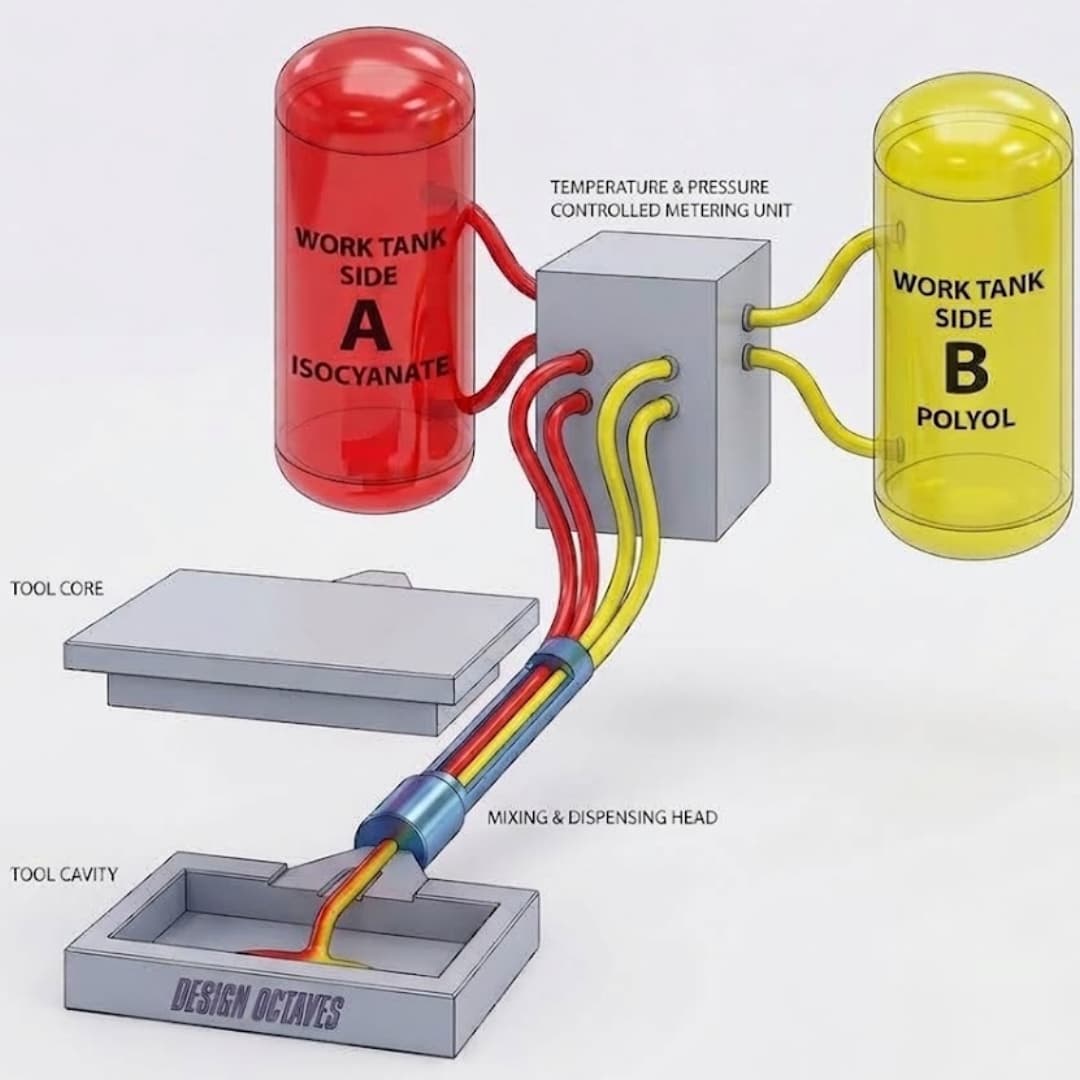

Custom plastic injection molding is the right choice when you need production-grade plastic parts built to your own geometry, in your own material, at volumes where unit cost matters. The decisions that determine project success are process control, achievable tolerances, material fit, and—most often underestimated—supplier capability. This guide covers how custom molding works, what your design can realistically achieve, what drives cost, and a six-criteria framework for qualifying a supplier, including the IP and communication risks of sourcing overseas.
Capability at a Glance
| Capability | Typical range |
|---|---|
| Part weight | 0.2 g – 4,500 g |
| Clamping force | 60 T – 1,000 T |
| Standard tolerance | ±0.1 – 0.25 mm |
| Precision tolerance | ±0.025 – 0.05 mm (feature-dependent) |
| Press count | 45 machines |
| Tooling throughput | 60+ molds per month |
Exact values depend on part geometry, material, and press configuration; confirm the working window with the supplier.
What Counts as Custom in Plastic Injection Molding?
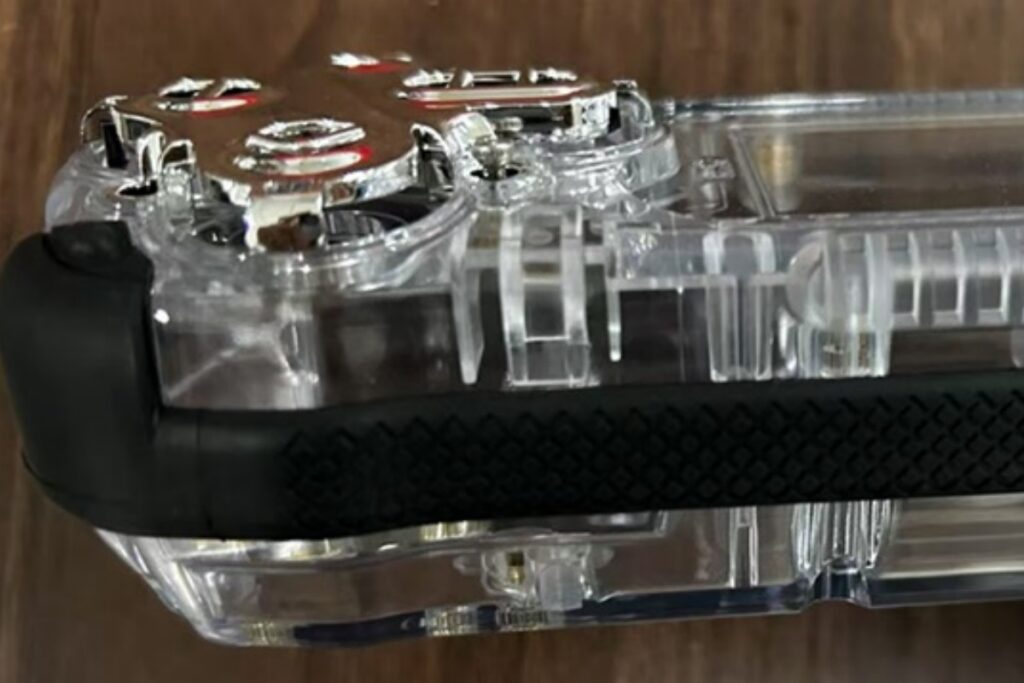
Custom plastic injection molding means the tool, the part geometry, and usually the material and finish are built for one specific product rather than pulled from a catalog. Four dimensions define it:
- Part-specific tooling: a mold designed and machined for your component only.
- Part geometry: features, wall sections, and tolerances defined by your design.
- Material and color: resin grade and color matched to your application, not a standard off-the-shelf compound.
- Secondary customization: surface finish, printing, insert molding, or assembly built into the production process.
Standard or catalog molding, by contrast, runs existing tools for commodity shapes. If your part needs a unique mold, custom molding is the path. See how custom injection mold fabrication differs from catalog tooling.
The Custom Injection Molding Process, Step by Step
A disciplined custom molding program runs engineering-first, not sales-first. The typical sequence:
- DFM review: your 3D model is checked for moldability—draft, wall thickness, gating, and ejection—by engineers, not just quoted by sales.
- Mold design and flow analysis: the tool is laid out and mold-flow simulation confirms fill, pack, and warpage before steel is cut.
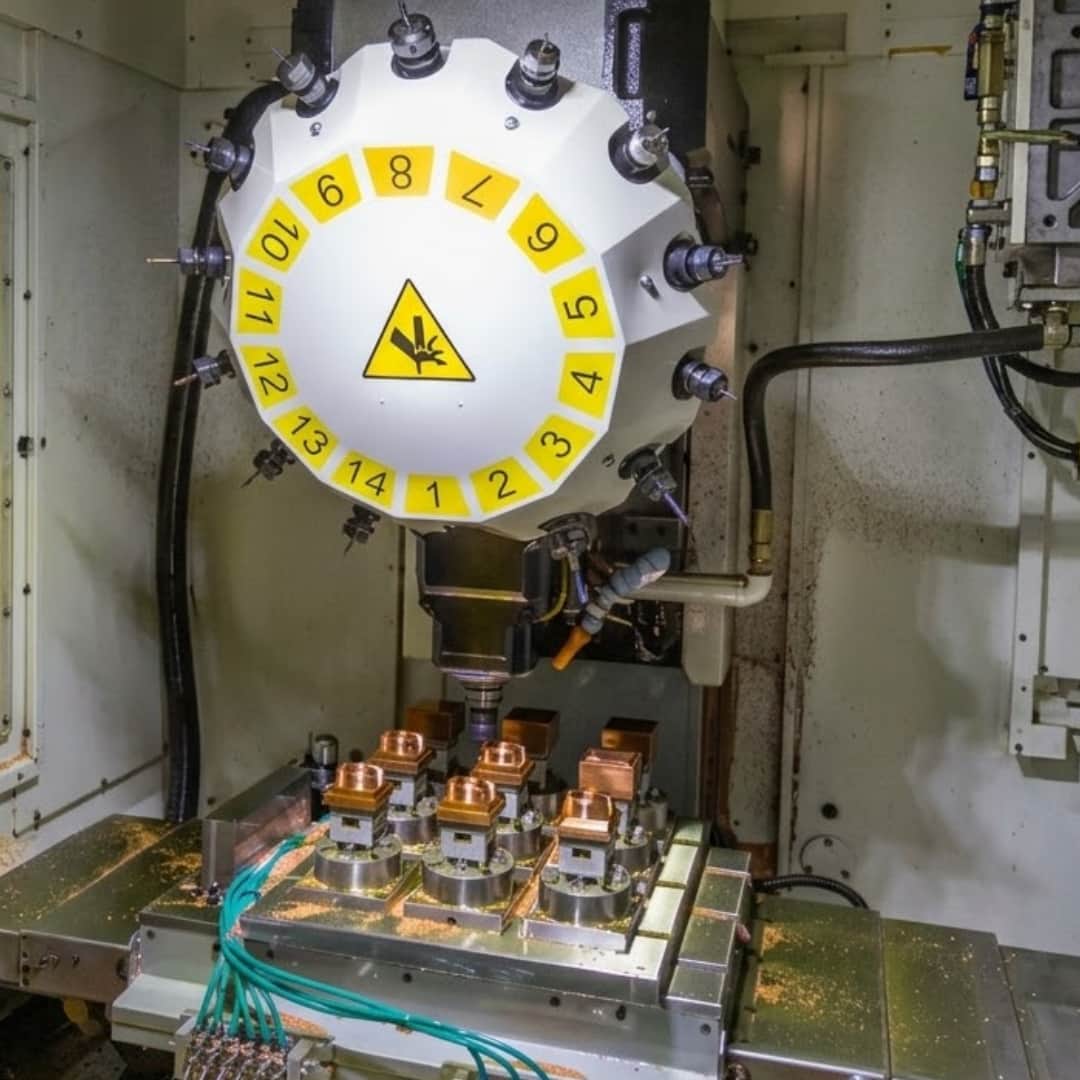
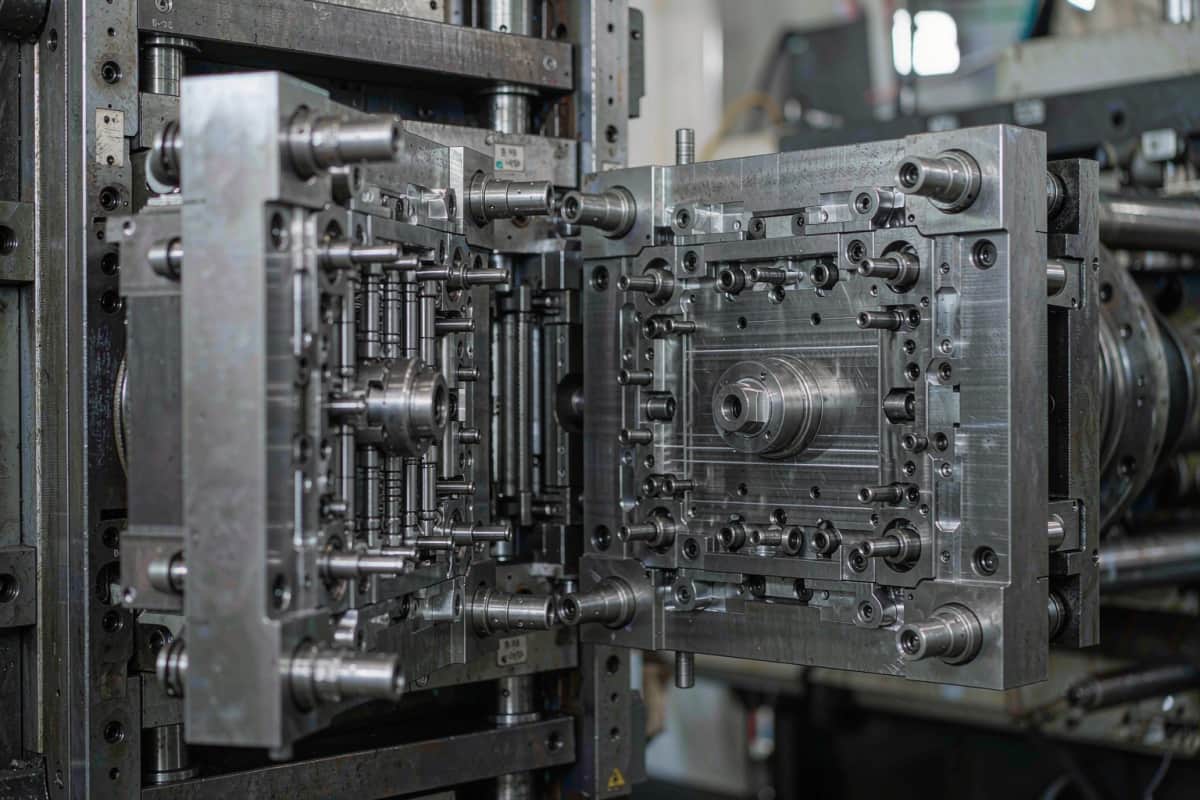
- Tooling: the mold is machined (CNC, EDM) and fitted to the press class your part requires.
- T1 sampling: first molded parts are produced and measured.
- Dimensional report and correction: a full inspection report drives any mold adjustments.
- Validation and production: once the part is approved, the program moves to volume runs.
- Secondary operations and shipment: finishing, printing, or assembly is completed and parts are inspected before shipping.
Each step should produce a document you can verify—especially the DFM report and the first-article dimensional report. Our injection molding DFM design guide explains what a usable DFM review covers, and how to create the perfect injection mold details the six elements that decide tool quality.
What to Prepare Before Requesting a Custom Injection Molding Quote
A precise quote depends on a precise RFQ. Prepare:
- 3D CAD files (.STEP or .IGES) plus 2D drawings with critical dimensions
- Target material or acceptable alternatives
- Annual volume and per-order batch size
- Tolerances that actually matter (not every dimension at tight tolerance)
- Surface finish and any color specification
- Required certifications (for example ISO 13485 for medical)
- Target unit cost, if you have one
If you are still finalizing the design, rapid prototyping before tooling can de-risk geometry before you commit to a mold.
Capabilities: Materials, Tolerances, and What Your Design Can Realistically Achieve
Before choosing a supplier, confirm the process can hold what your design demands. The table above shows typical ranges for a mid-size custom molder.
Material Selection for Custom Parts
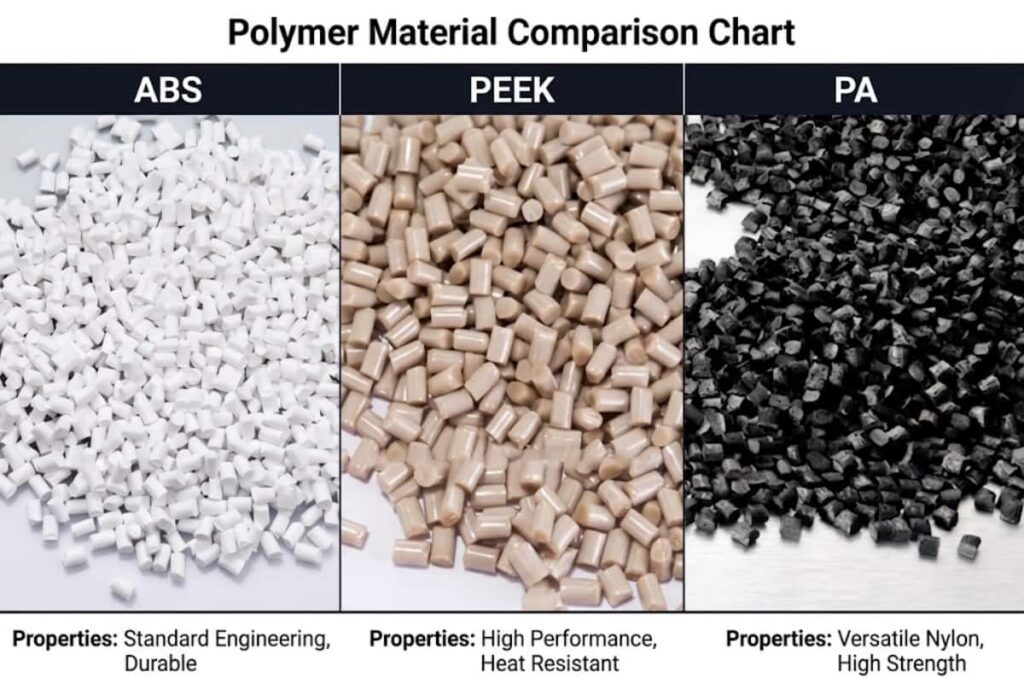
Choose resin by what the application demands, then narrow by cost and certification:
| Application driver | Material family | Watch for |
|---|---|---|
| General housings, clips | ABS, PP, PE | Chemical and temperature limits |
| Structural, heat, chemical resistance | Engineering plastics (PA, POM, PC, PBT) | Moisture absorption, processing window |
| High temperature, chemical, medical | Specialty (PEEK, PEI, LCP) | Cost, molding temperature |
| Regulatory / medical | ISO 13485-program resins | Traceability and lot control |
Our engineering plastics selection guide covers grade trade-offs in detail.
Tight-Tolerance and Precision Features
Precision is defined at the feature level, not claimed as a slogan. Standard molded tolerance runs about ±0.1–0.25 mm; tighter features can reach roughly ±0.025–0.05 mm depending on material, geometry, and process control. Achievable injection molding tolerances depend on shrink rate, wall uniformity, and gating—see the tolerances reference for how to specify them without over-constraining the tool.
Multi-Material Options: Insert, Overmolding, and Two-Shot Molding
| Process | Best when | Note |
|---|---|---|
| Insert molding | A metal or pre-formed part is molded into plastic | Reduces assembly steps |
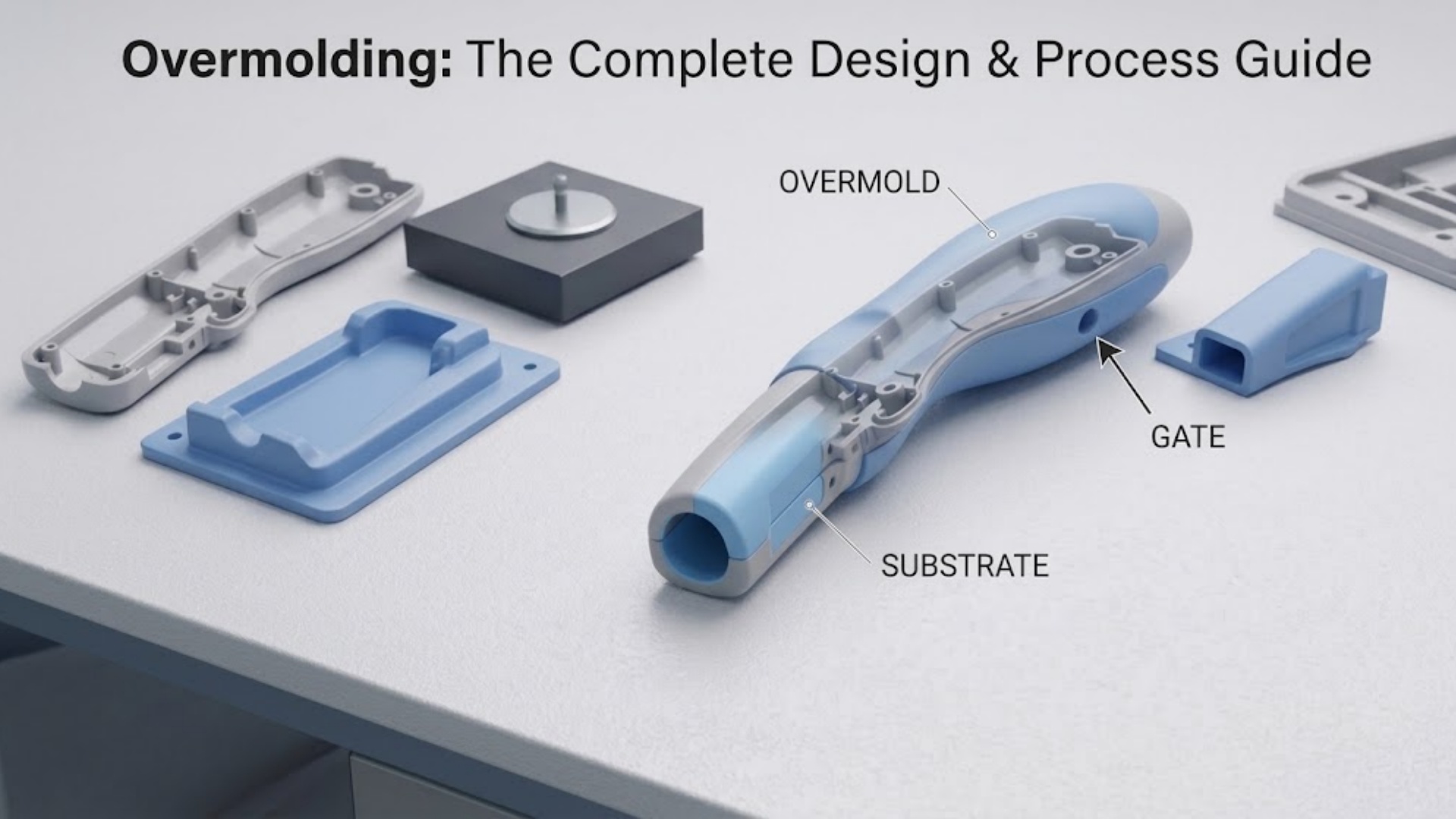
| Overmolding | A soft layer (TPE) over a rigid substrate | Grip, seal, or cushion |
| Two-shot molding | Two materials in one cycle | Highest consistency, needs dedicated tooling |
Our insert molding guide and two-shot vs. overmolding comparison explain design trade-offs.
Surface Finishing and Secondary Operations
Finishes range from polished (SPI A class) through semi-gloss (SPI B), matte (SPI C/D), to textured (Mold-Tech / VDI). The achievable result depends on tool steel, polish, and material. Secondary operations—pad printing, laser engraving, ultrasonic welding, or assembly—let one supplier deliver a finished component instead of fragmenting the supply chain. Review the surface finishing options available for your program.
Custom Injection Molding Cost: What Drives Price and When It Beats Alternatives
Price is dominated by two things: the mold and the per-part cycle. The mold is a fixed cost amortized across the run; the part cost is driven by material, cycle time, and scrap rate.
| Annual volume | Usually best process | Why |
|---|---|---|
| Prototype / bridge | 3D printing, CNC, or vacuum casting | Avoids mold cost |
| Low volume | Custom injection molding (aluminum or soft tool) | Balances speed and unit cost |
| Production volume | Hardened steel tooling | Lowest per-part cost at scale |
Injection molding wins once volume spreads the tool cost across enough parts. Below that threshold, the mold cost dominates and a bridge process is cheaper. Our injection molding cost breakdown shows the levers—material choice, wall thickness, and cycle time—that move unit price.
How to Evaluate a Custom Injection Molding Supplier: Six Criteria That Predict Project Success
The supplier decision is where most projects succeed or fail. Use these six criteria, each with a way to verify it—not just trust a website claim.
1. Engineering-Driven Capability
Ask whether DFM and mold-flow analysis are done by engineers before quoting. A molder that returns a moldability report with your quote is operating engineering-first. Verify by requesting a sample DFM report from a past (non-confidential) project.
2. Quality Control System and Traceability
Look for documented ISO 9001 compliance and, for medical, ISO 13485, with certificate numbers you can check—not vague claims. Require first-article inspection (FAI) and full-dimensional CMM reports. Medical programs should map to a controlled resin and lot-traceable process; see our medical device injection molding guidance.
3. IP Protection and NDA Enforcement
For overseas work, IP terms must be written, not assumed. Confirm a mutual NDA, file-access controls on your drawings, and—critically—mold ownership in writing. Our guide on protecting IP when outsourcing injection molding to China covers the clauses that matter.
4. Cross-Cultural Communication That Prevents Defects
Miscommunication, not machine tolerance, causes many defects. A bilingual engineering team that answers technical questions directly—rather than routing through sales—reduces interpretation errors. Test it: send a technical question and see whether an engineer or a translator replies.
5. Quick Response and RFQ Turnaround
Response speed signals how the whole project will run. Agree on a response window for quotes and engineering questions up front, and treat missed windows as a data point during qualification.
6. Fast Turnover: From PO to First Shipment
Turnover depends on tooling lead time and changeover flexibility. A molder with in-house tooling and flexible scheduling can iterate after T1 faster than one outsourcing its molds. Ask how quickly they can revise a tool after first samples.
Supplier Evaluation Scorecard
| Criterion | What to verify | Red flag |
|---|---|---|
| Engineering-driven | Sample DFM report, in-house tooling | No DFM before quote |
| Quality system | Certificate numbers, FAI/CMM samples | Vague high quality claims |
| IP / NDA | Written mold ownership, file controls | Refuses mold-ownership clause |
| Communication | Engineer replies to technical Qs | Only sales responds |
| Response | Agreed quote window | Misses deadlines in qualification |
| Turnover | In-house tooling, revision speed | Outsources all tooling |
Use our injection molding supplier audit checklist to run the qualification systematically.
Sourcing Custom Injection Molding Overseas Without the Usual Risks
| Risk | Mitigation |
|---|---|
| Time-zone gaps | A China + U.S. team gives near-24-hour engineering coverage |
| IP exposure | Mutual NDA, file controls, written mold ownership |
| Logistics / tariff | Alternate capacity (for example Vietnam) and a local U.S. engineering window |
| Verification | On-site audit and third-party inspection before shipment |
A supplier with engineering presence in both Shenzhen and Chicago, plus alternate capacity, lets you source cost-effectively while keeping oversight local. Compare shop capabilities in our plastic injection molding manufacturers overview.
FAQ: Custom Plastic Injection Molding
How much does custom injection molding cost?
Cost splits into a one-time mold and a per-part price. Volume, material, and tolerances drive the part price; the mold is amortized across the run. See the cost breakdown for the levers.
What tolerances can injection molding hold?
Standard molded tolerance is about ±0.1–0.25 mm; precision features can reach roughly ±0.025–0.05 mm depending on material and geometry. Confirm the working window for your part.
What file formats do I need for a quote?
Provide 3D CAD in .STEP or .IGES plus 2D drawings marking critical dimensions and tolerances.
Can you do low-volume custom injection molding?
Yes. Low-volume runs use aluminum or soft tooling to spread mold cost over fewer parts; the right approach depends on volume and lead time.
Who owns the injection mold?
Ownership must be agreed in writing—typically the customer owns the mold and the molder stores and maintains it. Confirm this in the contract, not verbally.
How do you protect my design files?
Through a mutual NDA, restricted file access, and written handling terms. See the IP protection guide.
Get an Engineering DFM Review Before You Commit to Tooling
Choosing a custom plastic injection molding partner comes down to engineering depth, verified quality, protected IP, and responsive communication. Before you pay for a mold, get an independent read on whether your design is moldable and what it will cost.
Submit your 3D CAD files (.STEP / .IGES) for a free DFM analysis and quote—reviewed by our engineering team under NDA.
Request a DFM Review & Quote — custom plastic injection molding services.