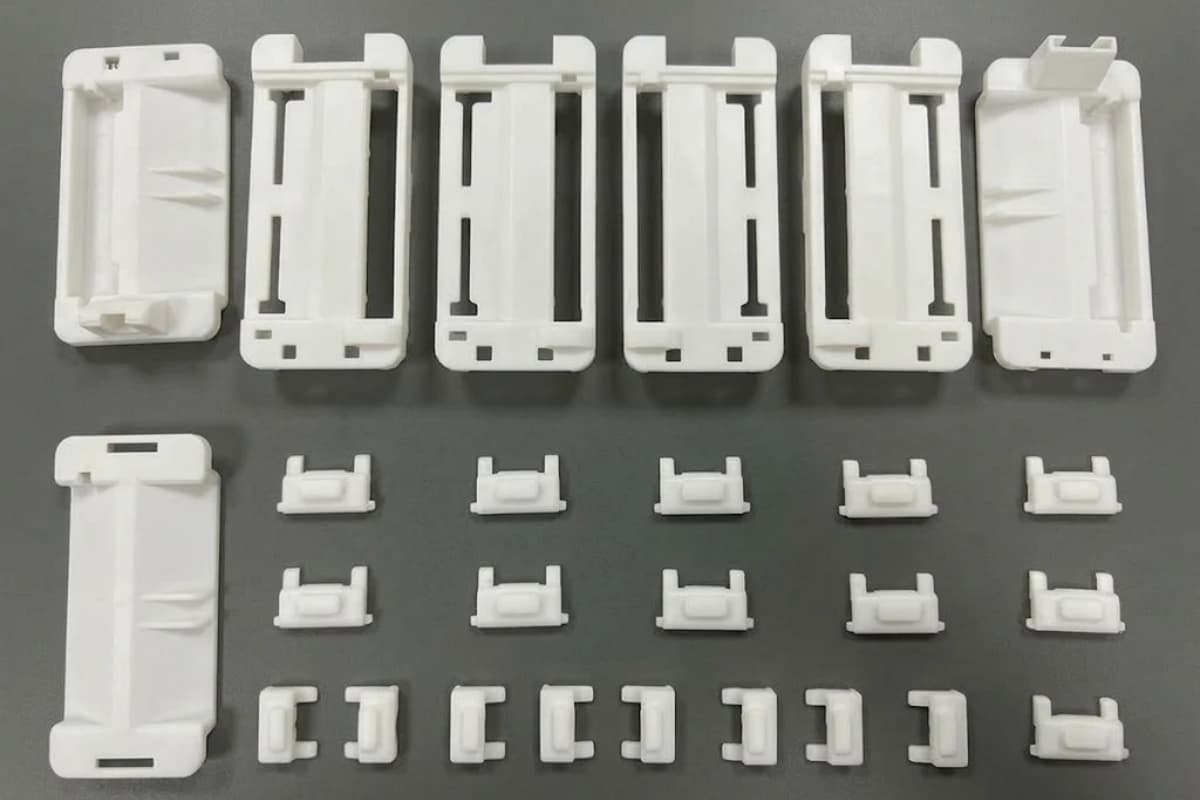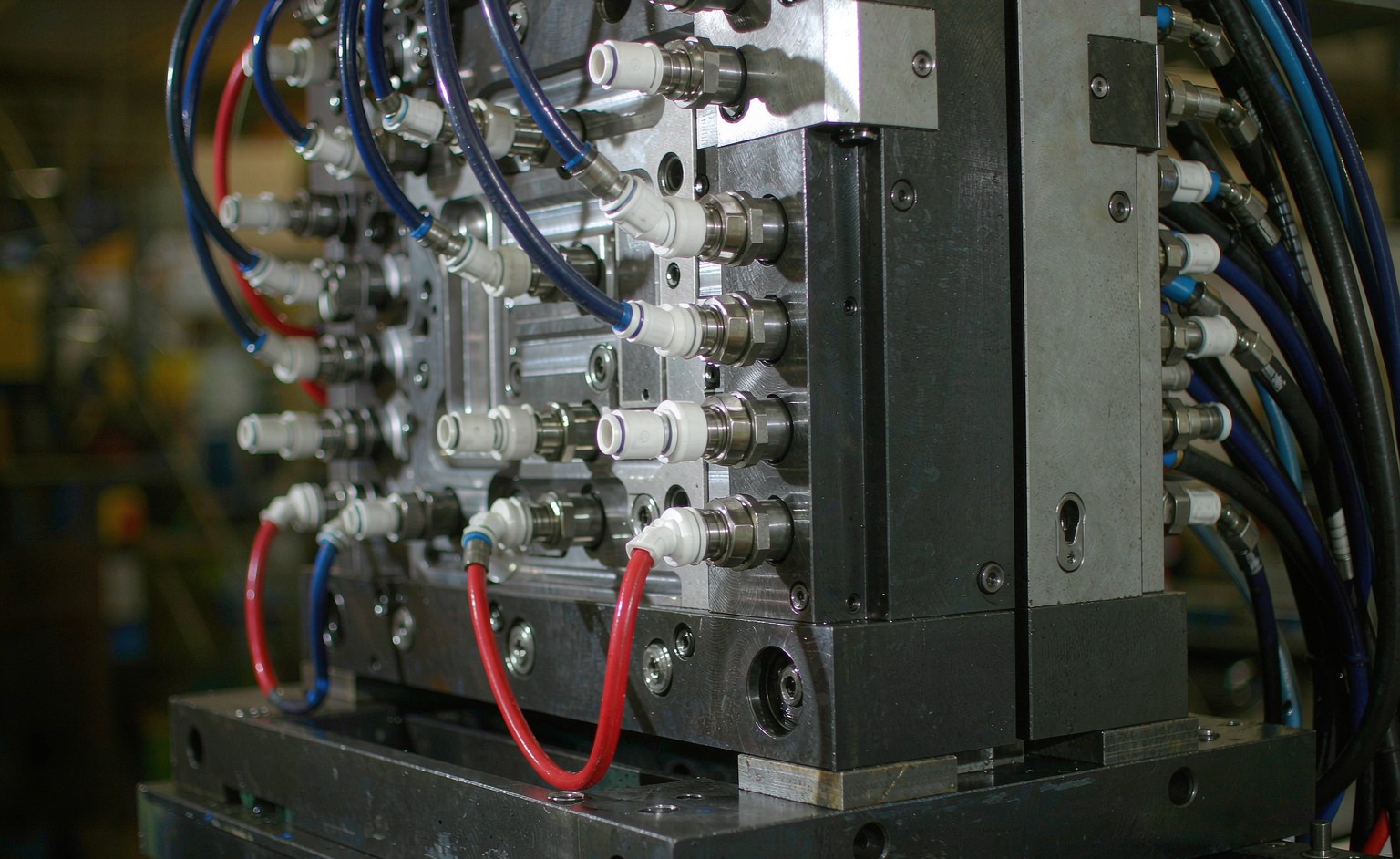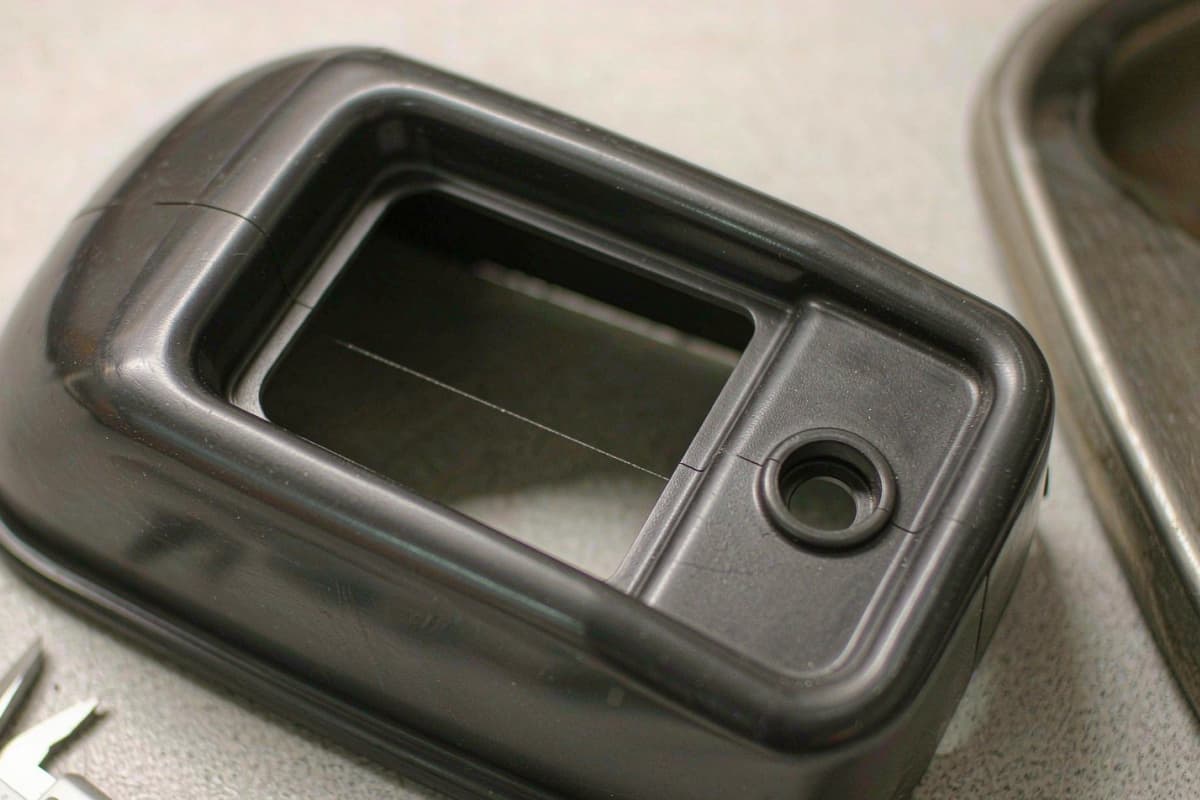

Low volume injection molding produces real, production-grade plastic parts in runs of roughly 100 to 10,000 pieces using bridge tooling — usually an aluminum or P20 steel mold costing $6,000–$15,000 instead of a $40,000+ hardened production tool. It is the right choice when demand is still unproven, when you need parts that match final material properties before committing to production steel, or when you need to keep supplying customers while the production tool is being built. Below every number is the same trade: you accept shorter tool life in exchange for keeping upfront investment and lead time low. This guide walks through when low volume molding makes sense, what it should cost, which mold to pick, and how to compare suppliers.
The economics behind it are simple. A production mold is only “cheap” when its cost is spread over hundreds of thousands of parts — at 500 parts, a $40,000 tool adds $80 to every single part. Low volume tooling flips that math: a simpler mold costs more per shot over its life, but the total project cost at small quantities drops by 60–80%. The sections below show exactly where that crossover happens and how to plan for it.
What Counts as Low Volume Injection Molding?
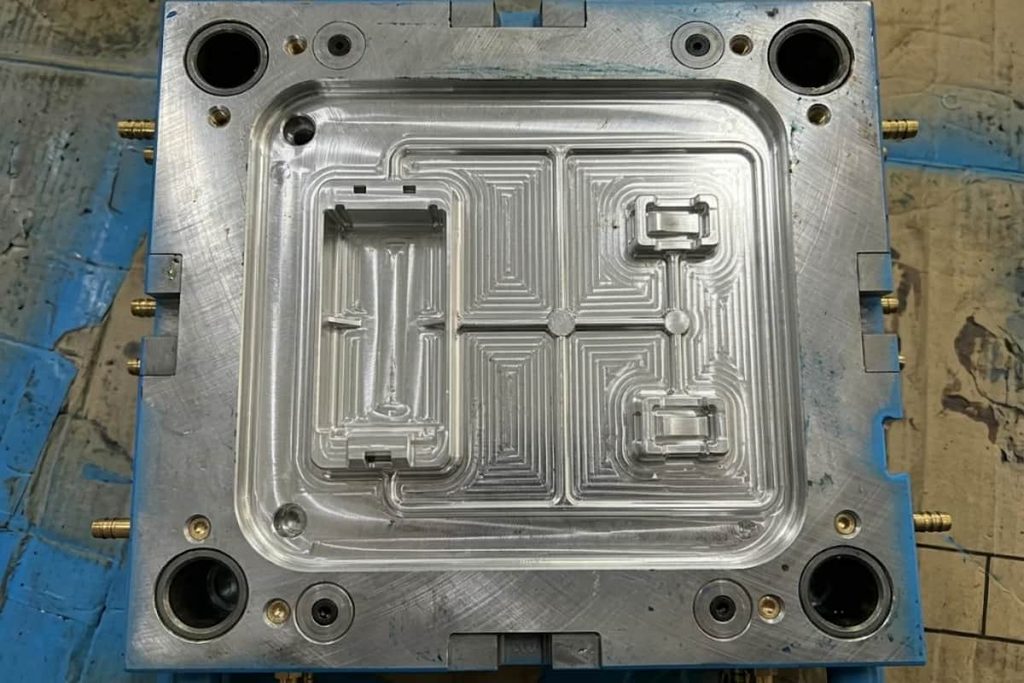
There is no fixed industry number, but most molders treat 100–10,000 parts as the low volume range. The defining feature is not the quantity itself — it is the tooling strategy. Low volume runs use molds built for hundreds to tens of thousands of shots (aluminum or pre-hardened steel, single cavity, simpler construction) rather than the multi-cavity hardened tools that make sense at a million parts.
Two things push a project into low volume territory:
- Uncertain demand. The product, the market, or the annual volume is not yet proven, so a production tool would be a bet rather than an investment.
- Timing. You need real parts sooner than an 8–16 week production tool can deliver — for market tests, clinical builds, pilot assemblies, or bridge supply.
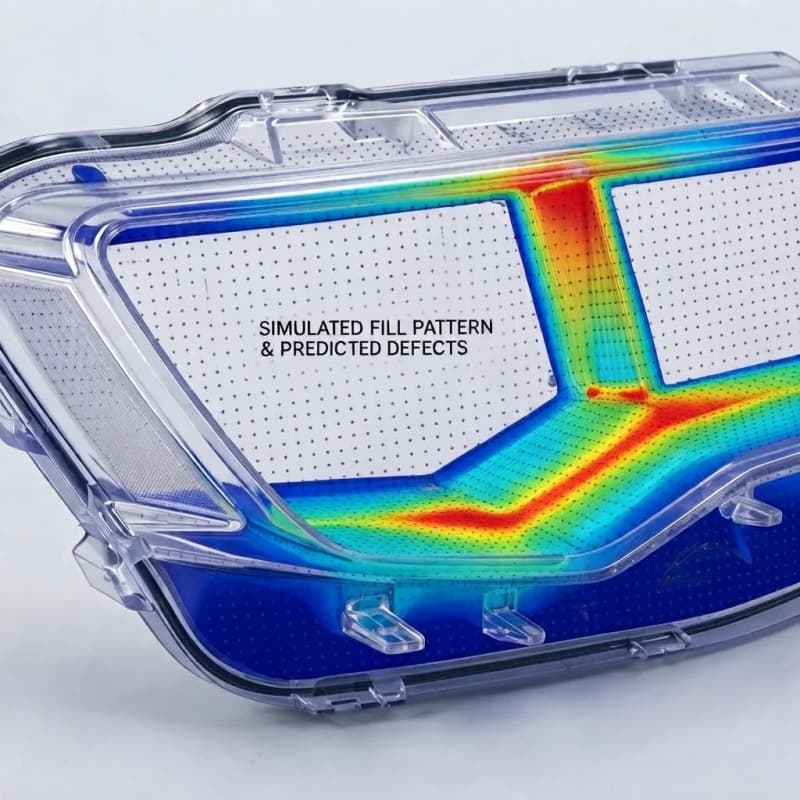
If the annual forecast is genuinely above 50,000 parts and the design is frozen, skip the low volume stage entirely — a production tool with a mold flow analysis upfront will be cheaper per part from day one. Low volume molding earns its keep in the gray zone between prototype and mass production. The injection molding tooling overview explains how these tool classes relate.
When Does Low Volume Injection Molding Make Sense?
Five scenarios cover the large majority of low volume projects we see. Each one has a different reason for avoiding production tooling — and a different risk to watch:
| Scenario | Why Low Volume Molding Fits | What to Watch Out For |
|---|---|---|
| Market validation / first sales | Real molded parts in real resin for launch batches of 500–5,000, without betting $40k+ on unproven demand | Design the bridge tool so features can carry over into the production tool |
| Bridge production | Keeps customers supplied while the hardened production tool is built (8–16 weeks) | Plan the transition date; bridge tools are not designed for years of runs |
| Medical / clinical builds | Patient populations are small; production resin and clean molding without mass-production economics | Confirm documentation needs (material certs, lot traceability) before quoting |
| Industrial / B2B equipment | Annual volumes of a few hundred parts never justify production steel — low volume is the production plan | Match tool life to a realistic total program volume, not just year one |
| Design iteration after pilots | Cheaper to cut a revised aluminum insert than to rework a hardened tool | Lock which dimensions are frozen before each new cut |
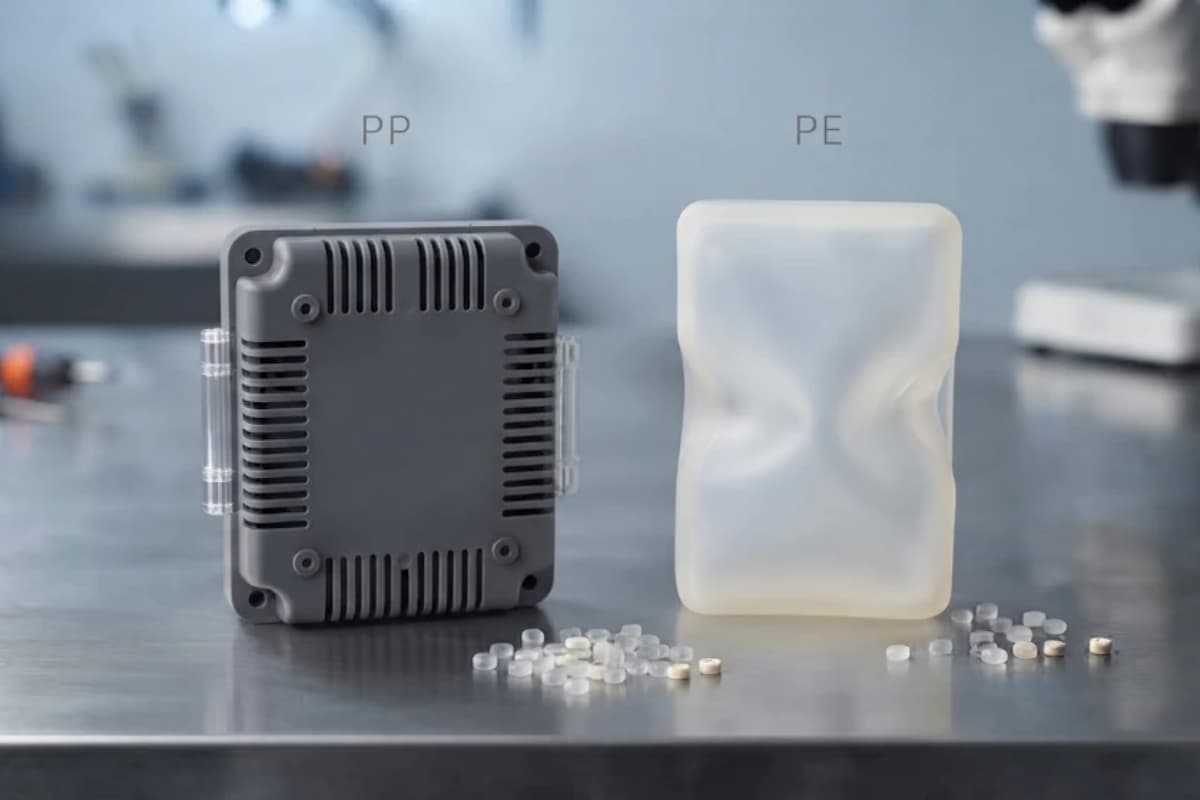
The common thread: parts from low volume molding are made by the same process as final production — same resin, same shrinkage behavior, same weld lines and gate marks. That is what separates it from 3D printing, where material properties and surfaces only approximate the molded result, and why test results on molded pilots reliably predict production performance.
How Much Does Low Volume Injection Molding Cost?
Low volume costs split into the same three layers as any molding project — tooling, per-part price, and conditions — detailed in our injection molding cost breakdown. The difference is the ratio: at low volumes, tooling dominates the first invoice, and per-part price is what you watch over time. Typical public benchmark ranges (2024–2026):
| Run Size | Typical Tooling | Tooling Cost | Typical Per-Part Price |
|---|---|---|---|
| 100–500 parts | Soft aluminum, single cavity | $3,000 – $8,000 | $2 – $15 (part-size dependent) |
| 500–5,000 parts | Aluminum or P20 bridge tool, single cavity | $6,000 – $15,000 | $0.80 – $5 |
| 5,000–10,000 parts | P20 steel, 1–2 cavities | $12,000 – $25,000 | $0.40 – $2.50 |
The crossover against alternatives is what surprises most buyers. Using a worked example — a palm-sized electronics enclosure, ABS, aluminum bridge tool at $8,000, ~$1.80 per part in molding versus ~$10 per part for 3D printing — the amortized molding cost looks like this:
| Quantity | Molding: $8,000 tool amortized + $1.80/part | 3D Printing @ ~$10/part | Cheaper Option |
|---|---|---|---|
| 500 parts | $17.80 | $10.00 | 3D printing |
| 1,000 parts | $9.80 | $10.00 | ≈ crossover point |
| 2,500 parts | $5.00 | $10.00 | Molding |
| 5,000 parts | $3.40 | $10.00 | Molding |
| 10,000 parts | $2.60 | $10.00 | Molding |
Three practical readings of that table: below roughly 1,000 parts, printing or CNC usually wins on pure cost — but molding still wins on material fidelity, so validation builds often mold anyway. Between 1,000 and 10,000 parts, molding pulls ahead quickly and the gap widens with every order. And note the other lever: if your part is above ~200 g or needs glass-filled resin, the per-part numbers shift in molding’s favor even earlier. A supplier who offers a DFM review before quoting will flag these shifts — it is one of the clearest quality signals during supplier selection.
Should You Use an Aluminum Mold or a Steel Mold?
This is the single biggest cost decision in a low volume project, and it should follow from total program volume — not from the quote price alone. The full trade-offs are in our aluminum vs. steel molds guide; the short version:
| Mold Option | Tooling Cost | Typical Tool Life | Mold Lead Time | Best For |
|---|---|---|---|---|
| Aluminum (soft tool) | $3,000 – $8,000 | 500 – 10,000 shots | 1–3 weeks | Validation builds, market tests, uncertain demand |
| P20 pre-hardened steel | $8,000 – $20,000 | 50,000 – 300,000 shots | 3–6 weeks | Multi-year B2B programs, glass-filled resins, volumes that may scale |
| Hardened steel (S136/H13) | $20,000 – $80,000+ | 500,000 – 1,000,000+ shots | 8–16 weeks | Proven products above ~50,000 annual parts |
Two rules prevent most mistakes here. First, glass-filled resins eat aluminum: if your material is GF-PA or GF-PC, start from P20 even at modest volumes, or price the aluminum tool knowing its life will be shorter. Second, plan the upgrade path before the first cut: a bridge tool designed with the production tool’s gate concept, shrinkage data, and interchangeable inserts in mind can hand a validated process to the production mold instead of starting over. Ask the supplier to state, in writing, whether the low volume tool can carry over — and what would block it.
How Long Does Low Volume Injection Molding Take?
The main reason teams choose low volume molding is speed. A typical timeline for a single-cavity bridge tool:
| Step | Typical Duration | Notes |
|---|---|---|
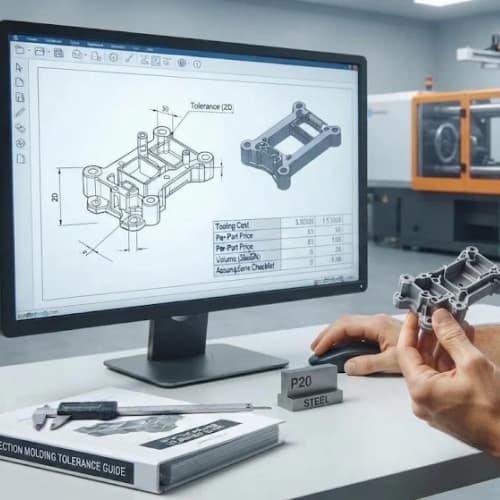
| DFM review and quote | 2–5 business days | Include tolerances and resin grade to avoid re-quotes; see the tolerances design guide |
| Mold design + tool build | 1–3 weeks (aluminum), 3–6 weeks (P20) | Simpler part geometry and no side actions keep this at the low end |
| T1 samples shipped | 3–5 days after tool trial | Evaluate against pre-agreed criteria; see the T1 sample evaluation guide |
| Production run | 1–2 weeks for 1,000–10,000 parts | Depends on cycle time and part size |
End to end, that is 3–6 weeks from PO to a box of production-grade parts on an aluminum tool — roughly a quarter of the production-tool timeline. The schedule risk concentrates in one place: T1 iterations. If the first samples reveal sink, warpage, or short shots, each correction loop adds days to weeks. That is why the pre-quote DFM review matters more in low volume than anywhere else — the problems it catches are the ones your schedule cannot absorb.
How Do You Choose a Low Volume Injection Molding Supplier?
Low volume sourcing has one trap: the cheapest quote usually assumes the shortest tool life. Since the tool itself is the project, judge suppliers on how they engineer the tooling decision, not just the numbers. Checklist:
| Check | What a Good Supplier Does | Red Flag |
|---|---|---|
| Tooling rationale | Recommends aluminum vs. P20 based on your total program volume, states expected tool life in writing | Quotes the cheapest mold option without asking about volumes beyond the first run |
| DFM before quote | Flags draft, wall thickness, undercuts, and gate location that would complicate a small tool | Two-hour quote with zero questions asked |
| Material fidelity | Molds in the exact production resin grade, including glass-filled and engineering grades | “Equivalent material” substitutions without consultation |
| Sampling terms | States how many T1/T2 shots are included and what a correction loop costs | Sampling priced only after you ask |
| Upgrade path | Documents shrinkage and process data so the production tool inherits a validated process | Treats bridge tooling as throwaway with nothing to hand over |
| Quality scope | Offers FAI or Cpk on critical-to-function dimensions when the parts feed a regulated or assembled product | Visual inspection only, regardless of part function |
For a structured way to compare the quotes themselves — steel, cavities, sampling, inspection, Incoterms line by line — see our guide to getting an accurate injection molding quote, and our custom injection molding supplier guide for how we work with customers from prototype through production.
Frequently Asked Questions: Low Volume Injection Molding
How many parts count as low volume in injection molding?
Most projects fall between 100 and 10,000 parts, but there is no fixed number — the real test is whether the quantity justifies production tooling. A few hundred parts a year for a B2B product can be permanent low volume; 5,000 parts may be a bridge run for a product heading to 500,000 annually.
How much does low volume injection molding cost?
Bridge tooling typically runs $3,000–$15,000 depending on mold material, size, and complexity, with per-part prices from roughly $0.40 to $15 depending on run size and part weight. At 1,000–10,000 parts, total project cost is usually 60–80% lower than running the same parts on a production tool — and per-part cost falls quickly as the tool cost amortizes.
Is low volume injection molding cheaper than 3D printing?
Per part, usually not below ~1,000 pieces — the tool hasn’t amortized yet. Above the crossover, molding gets cheaper fast: at 5,000 parts a molded enclosure often lands at $3–$4 all-in versus ~$10 printed. Molding also uses the exact production resin, so many teams mold validation builds even when printing is cheaper per unit.
Should I use an aluminum or steel mold for low volume production?
Choose aluminum for validation builds, market tests, and runs under ~10,000 shots with unfilled resins. Choose P20 pre-hardened steel when volumes may scale, the program runs multiple years, or the resin is glass-filled. The decision should come from total program volume, not from which quote is cheapest upfront.
How long does low volume injection molding take?
Typically 3–6 weeks from PO to production parts on an aluminum bridge tool: 1–3 weeks to build the mold, a few days for T1 samples, then 1–2 weeks for the run. P20 tools add 2–3 weeks on the front end. Each T1 correction loop adds time, which is why a thorough DFM review before quoting protects the schedule.
Can a low volume mold be upgraded to a production mold?
Sometimes — but plan it, don’t assume it. Inserts, gate concepts, shrinkage data, and process parameters can carry over into the production tool when the bridge tool was designed for it. In other cases a new production tool is simply more economical. Ask the supplier to state in writing what carries over and what doesn’t, before the first steel is cut.
Get a Low Volume Injection Molding Quote for Your Part
If you’re weighing a bridge tool against printing or CNC for an upcoming run, send us the 3D model, the annual volume you expect, and the size of the first batch — even if the design still has open questions. We review manufacturability before quoting, recommend aluminum or P20 tooling based on your total program volume rather than the cheapest first invoice, and state expected tool life and sampling terms in writing. Request a low volume injection molding quote and we’ll come back with a tooling path you can defend to your finance team.