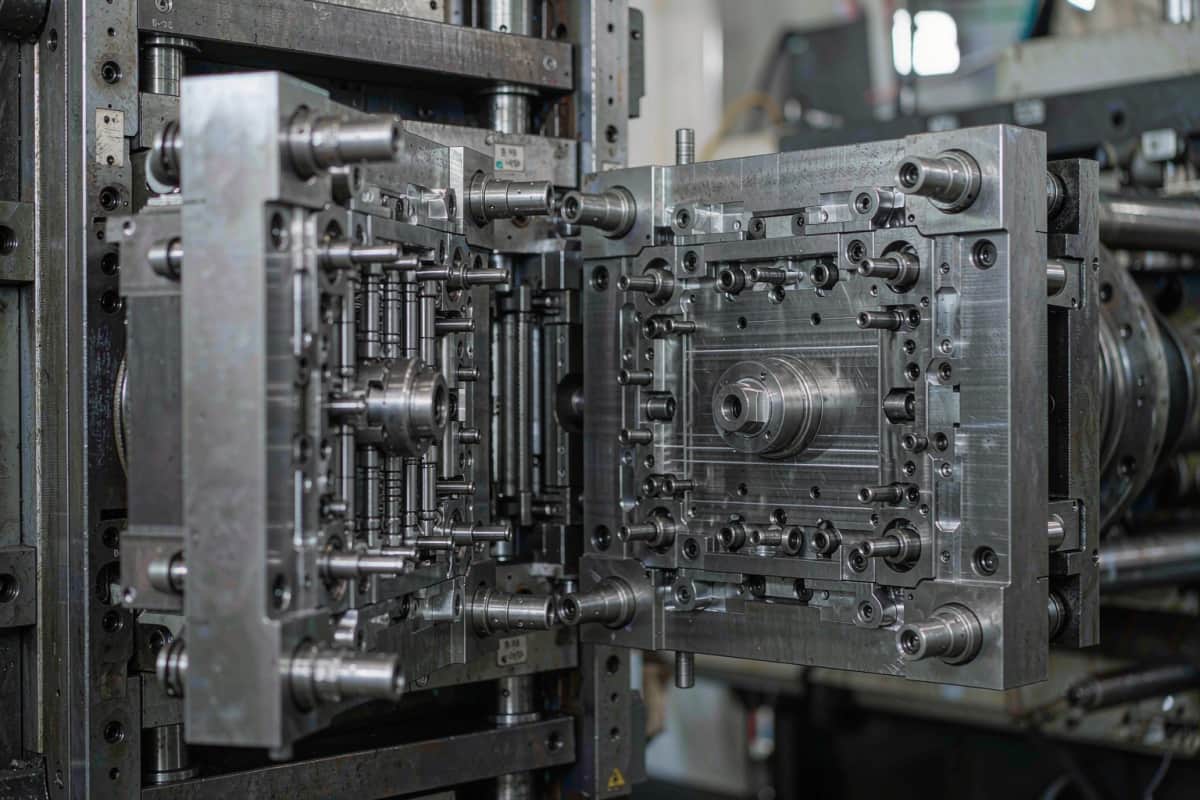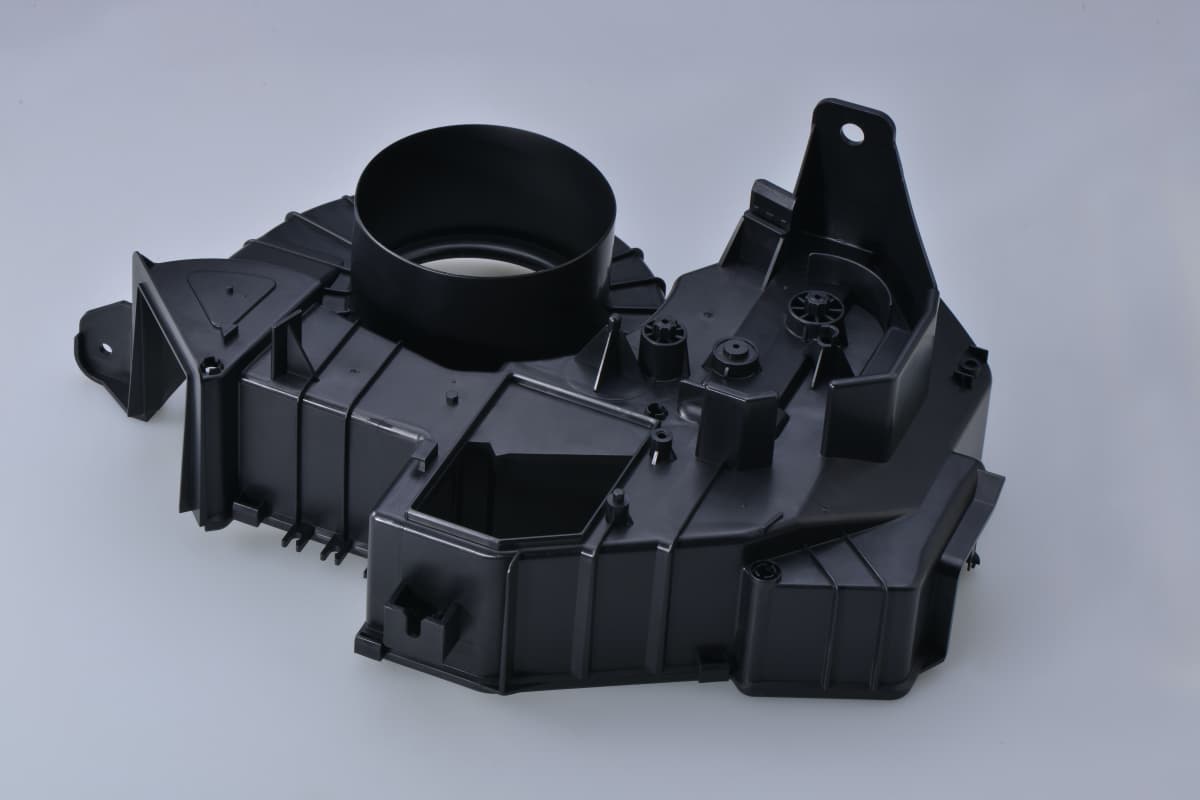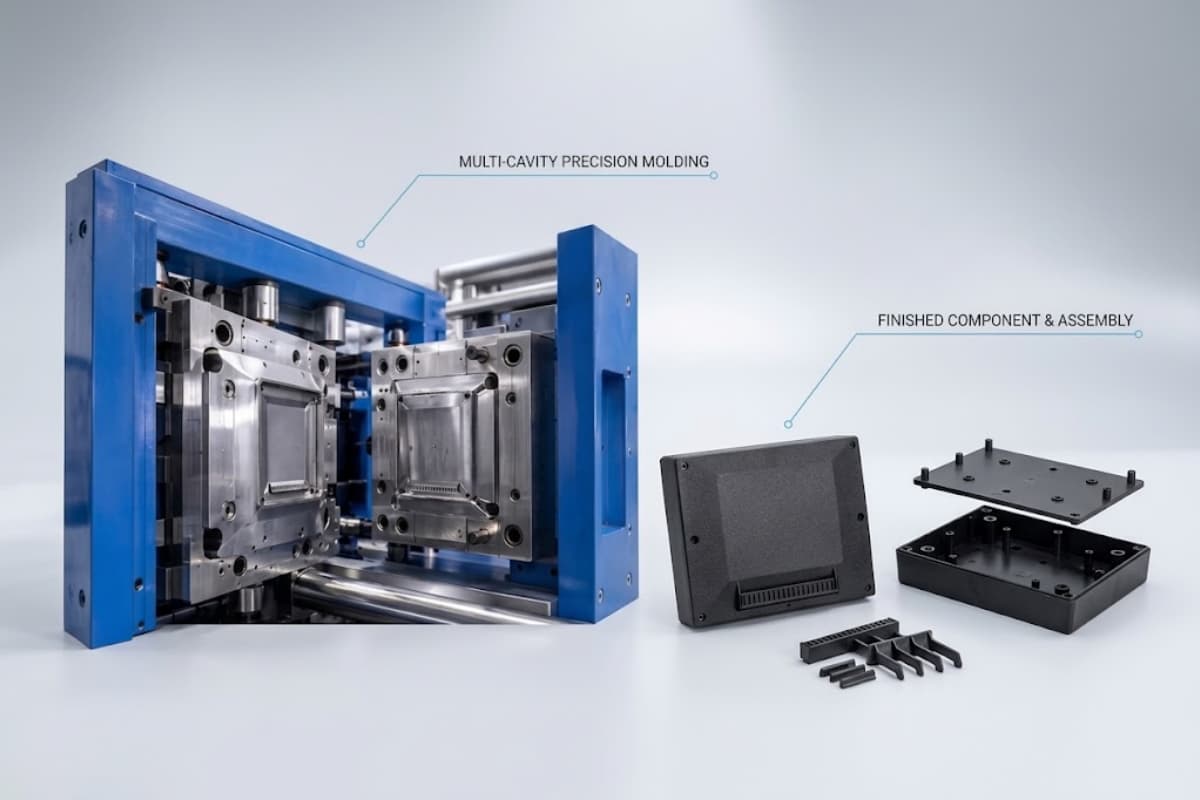

Plastic mold fabrication — the process often called mold manufacturing — is the engineering and machining sequence that turns a part design into a production tool: a steel or aluminum mold with cavities, cooling lines, gating, and ejection that forms consistent parts at volume. The decisions that determine whether the tool pays off are the mold type (prototype vs production, single vs multi-cavity), the runner and cooling design that set cycle time and part quality, and the fabricator’s machining and quality discipline. This guide explains how a mold is fabricated step by step, the main mold types and when each fits, the design fundamentals that decide tool performance, quality and maintenance practices, and how to select a mold fabricator.
How Plastic Mold Fabrication Works (Process Steps)
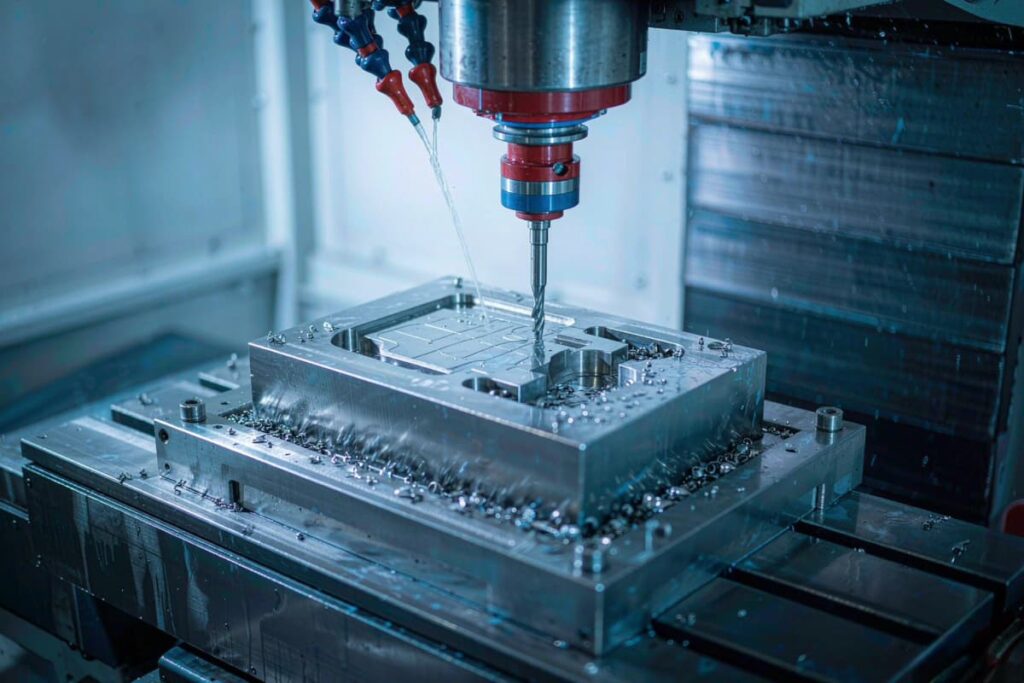
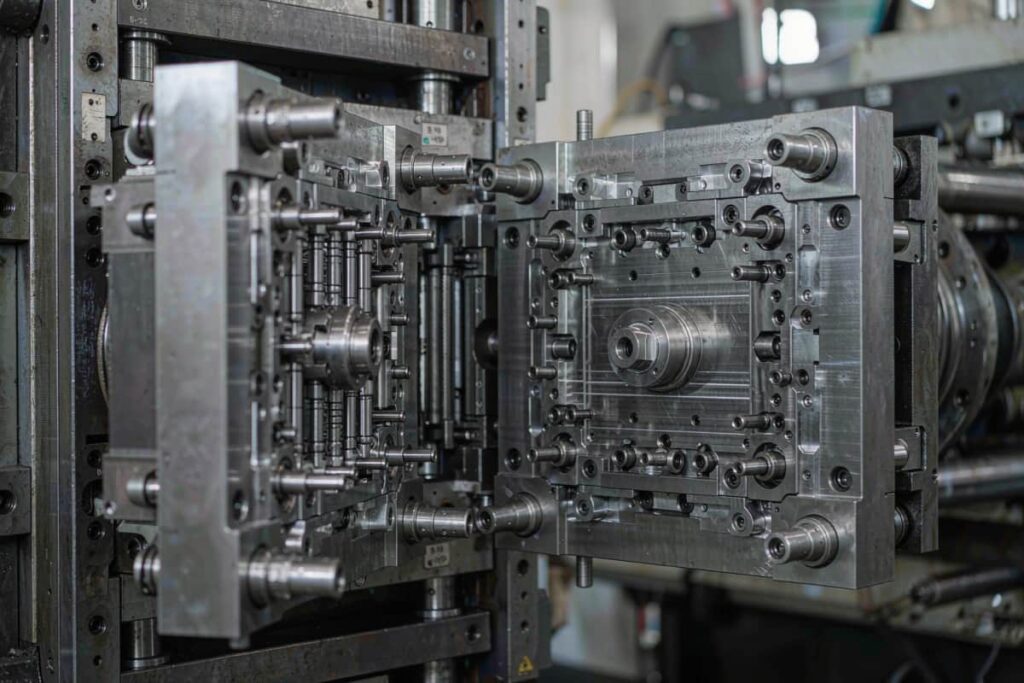
A mold is not bought off a shelf; it is built through a sequence of design and precision machining operations. Understanding the workflow helps a buyer scope cost, lead time, and risk before committing steel.
- Mold design and flow analysis. The tool layout is created from the 3D part model — cavity and core geometry, gating, cooling channels, ejection, and shutoffs. Mold-flow simulation confirms fill, pack, and warpage before machining begins.
- CNC roughing and finishing. High-speed CNC machines cut the mold base, cavities, and cores to dimension. For fine surface detail, mirror-finish EDM sinks the shape using a copper or graphite electrode; the discharge gap is typically 0.08–0.25 mm.
- Wire cutting and drilling. Precision wire cutters separate sliders and fine features; cooling-line drilling creates the channels that control cycle time.
- Polishing and fitting. Technicians polish cavity surfaces to the required finish and fit side actions, sliders, and ejector systems so the tool assembles to drawing.
- CMM inspection and assembly. Coordinate measuring machines verify copper masters and steel components against the design; measurements are logged for traceability before final assembly.
- Trial and correction. The first molded samples (T1) are measured; any deviation drives a tool correction before the program enters production.
GoodTech’s plastic mold fabrication operation runs this workflow in-house — CNC, mirror EDM, wire cutting, CMM, and fitting — and ships roughly 60 mold sets per month, with copper and steel components tracked through its ERP system from machining to assembly.
Types of Injection Molds: Prototype, Production, Multi-Cavity & Family
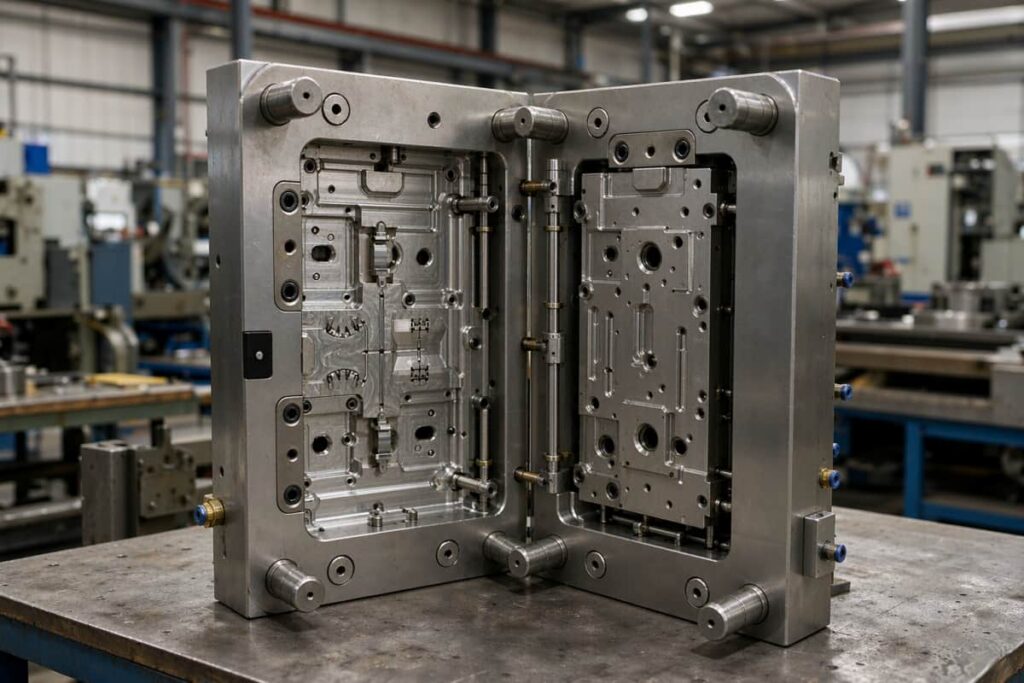
The right mold architecture follows the production volume and the number of parts the tool must make. Choosing the wrong type either overpays on tooling or caps output.
| Mold type | Best volume | Tooling cost | Changeover / flexibility | Typical use |
|---|---|---|---|---|
| Prototype (soft / aluminum) | Bridge to production | Low | Fast to modify | Design validation, low-volume runs |
| Single-cavity production | Low–mid volume | Moderate | Simple | One part, moderate annual volume |
| Multi-cavity | High volume | Higher | Less flexible | Identical parts at scale, lower unit cost |
| Family mold | Multiple related parts | Higher | Runs all cavities together | Kits, assemblies in one shot |
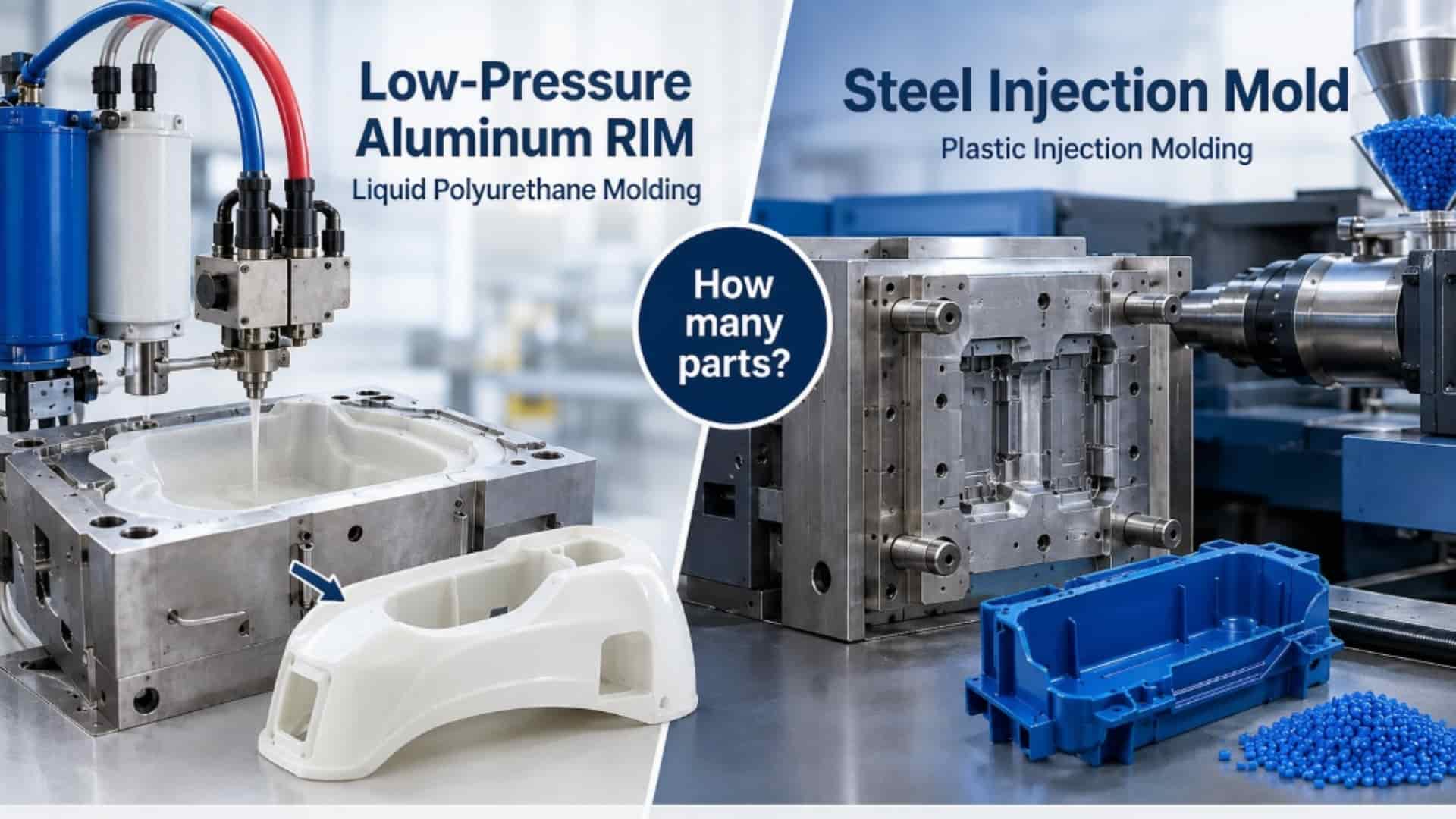
A prototype or aluminum tool lets you validate geometry and material before committing to hardened steel; the trade-off is shorter tool life. A multi-cavity mold lowers per-part cost once volume justifies the extra machining, but it locks the tool to one part geometry. A family mold produces several related components in a single cycle, which suits kits but complicates balancing fill across cavities. All of these tools are built to run on a plastic injection molding press, so the mold architecture should match the molder’s machine class. For programs that need parts before any steel is cut, rapid prototyping validates the design with CNC, 3D printing, or vacuum casting ahead of tooling.
Mold Design Fundamentals: Cooling, Gating, Venting & Ejection
Tool performance is decided in the design phase, not on the shop floor. Four elements determine whether a mold delivers good parts at a sensible cycle.
- Cooling. Cooling channels (and conformal cooling where geometry allows) remove heat uniformly. Poor cooling lengthens cycle time and causes warpage; balanced channels shorten it and stabilize dimensions.
- Gating. Gate type and location control how the melt fills each cavity. A gate placed at the thickest section and directed along the longest flow path reduces weld lines and short shots.
- Venting. Trapped air must escape as the cavity fills; inadequate vents cause burn marks and incomplete fill at the far end of the flow.
- Ejection. Ejector pins, sleeves, or stripper plates must release the part without marking or deforming it, especially on deep or fragile geometries.
These four are interdependent: a gate that fills cleanly is useless if cooling is uneven or vents are blocked. GoodTech’s plastic mold fabrication team treats design as the foundation of tool life and part cost, covering cooling, venting, gating, and ejection before any steel is cut. For medical programs, resin and traceability constraints add a layer — see the medical injection molding materials guide for material-specific tooling considerations.
Cold Runner vs Hot Runner: Which Tooling Fits Your Part
The runner is the channel that delivers melt to the cavity, and its design changes scrap, cycle time, and maintenance load.
| Criterion | Cold runner | Hot runner |
|---|---|---|
| Material waste | Sprue and runner are scrap | Minimal scrap; gate is at the cavity |
| Cycle time | Longer (runner solidifies) | Shorter |
| Up-front tool cost | Lower | Higher |
| Maintenance | Low | Higher (heaters, thermocouples, nozzles) |
| Best for | Low–mid volume, easy materials | High volume, tight color / consistency |
A cold runner mold is simpler and cheaper to build and maintain, which suits lower volumes and materials that degrade if held hot. A hot runner mold removes the solidified runner, cuts cycle time, and improves consistency at scale, but it adds heaters and nozzles that need upkeep. The choice follows volume and material sensitivity more than part shape.
Quality Control & Mold Maintenance
A mold’s output quality depends on how it is measured when built and how it is kept healthy in production. Two practices separate a tool that runs for years from one that drifts.
- Measurement and traceability. CMM inspection of masters and steel components catches deviation before assembly; logging each dimension in a database lets a fabricator track wear and reproduce repairs. GoodTech records copper and graphite masters and steel parts in its ERP system for this reason.
- Scheduled maintenance. A planned maintenance interval — commonly around every 100,000 shots — removes the mold for cleaning and repair of mating surfaces, ejector systems, cooling lines, vents, sliders, and hot runner components. Skipping it lets wear accumulate into dimensional drift and unplanned downtime.
Buyers should ask for the maintenance interval and what the service covers, because the answer predicts long-term part consistency more than a tolerance claim on the quote.
How to Choose a Plastic Mold Manufacturer
Selecting a mold fabricator (the shop that builds the tool) is different from selecting a molder (the shop that runs it). The fabricator controls tool quality, lead time, and whether the mold can be transferred or maintained elsewhere. Evaluate a tool shop on these points:
- In-house machining. CNC, EDM, wire cutting, and CMM under one roof shorten lead time and keep accountability for dimensional accuracy.
- Mold design engineering. The shop should run mold-flow analysis and review cooling, gating, venting, and ejection before cutting steel — not just accept a CAD file.
- Material and heat treatment capability. Confirm the steel grade, hardness, and any surface treatment suit your volume and resin.
- Quality system and certifications. ISO 9001 is the baseline; IATF 16949 matters for automotive and ISO 13485 for medical. UL 746D and ISO 14001 cover recognition and environmental compliance where required.
- Maintenance and support. Ask about the maintenance interval, spare-part policy, and whether the mold can be serviced at your facility or a second source.
- Mold ownership and transfer. Ownership, file handover (CAD, drawings), and the right to move the tool must be written into the contract.
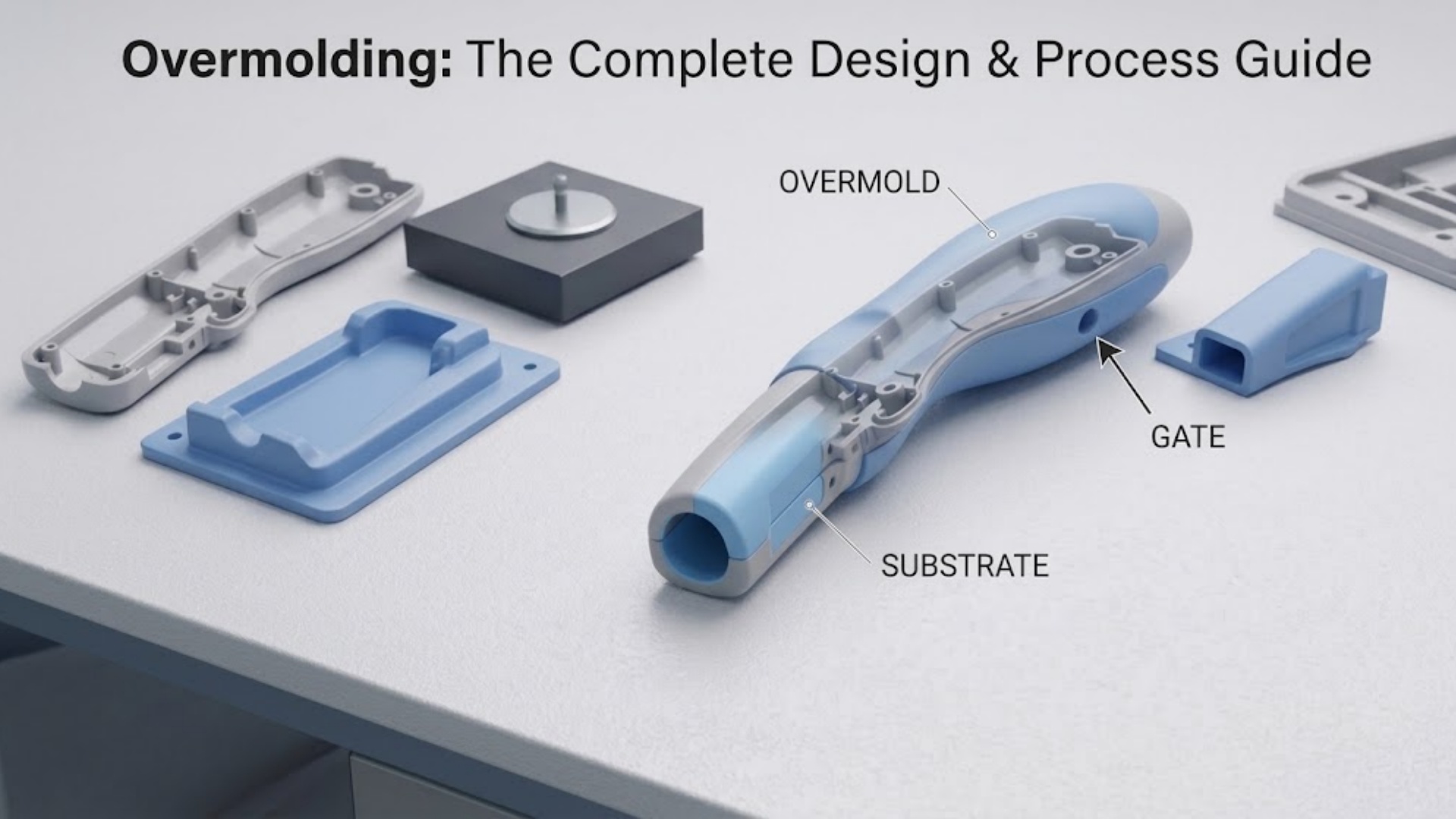
This tool-shop checklist complements the broader custom plastic injection molding supplier framework, which covers the molding-service side — engineering review, IP, and communication. For programs involving metal-in-plastic parts, the insert molding design guide explains the tooling differences those parts require.
FAQ
How long does mold fabrication take?
Lead time depends on complexity, steel grade, and the fabricator’s queue; simple aluminum prototype tools are faster than hardened multi-cavity production molds. Confirm the timeline against your volume start date with the tool shop.
What is the difference between a prototype and a production mold?
A prototype or aluminum mold is built to validate design and material quickly and is cheaper to modify, but has a shorter life. A production mold uses hardened steel for long runs and higher cavitation, at higher upfront cost.
Do I need a hot runner mold?
Only when volume and material sensitivity justify it. Hot runners cut scrap and cycle time and improve consistency, but cost more and need more maintenance than cold runner tools.
How often should a mold be maintained?
Many shops schedule a full service around every 100,000 shots — cleaning and repairing ejectors, cooling, vents, sliders, and hot runner parts. The exact interval depends on resin and duty cycle; confirm it with the fabricator.
What certifications matter for medical or automotive molds?
ISO 9001 is the baseline quality system. Automotive programs typically require IATF 16949; medical programs require ISO 13485 for traceable, controlled processes. Confirm the shop holds the certificates relevant to your industry.
Conclusion
Plastic mold fabrication is the disciplined build of a production tool — designed with mold-flow analysis, machined by CNC and EDM, verified by CMM, and kept healthy by scheduled maintenance. Choose the mold type by volume (prototype, single-cavity, multi-cavity, or family), design cooling, gating, venting, and ejection up front, and pick a fabricator with in-house machining, real design engineering, and the certifications your industry requires. A mold specified this way protects part quality and limits lifetime cost better than the lowest tooling quote.
Contact Us:Ready to scope your tool? Send your 3D model and volume target for a mold DFM review and a fabrication quote: Contact GoodTech.