How to Create the Perfect Injection Mold: Six Key Elements

Introduction: The Foundation of Zero-Defect Custom Injection Molding Mastering the creation of a zero-defect injection mold requires a strict engineering-driven approach that addresses potential geometric failures, thermal discrepancies, and material degradation before production tooling is cut. Procurement managers, industrial engineers, and manufacturing leads frequently encounter production bottlenecks, high scrap rates, and extended lead times when […]
Injection Moulding Design Guide: DFM Best Practices for Engineers

Design for Manufacturing (DFM) bridges the gap between digital CAD geometry and physical production in custom plastic injection moulding . A flawed part design forces tooling compromises, escalates mould maintenance, and introduces structural defects such as sink marks, excessive warpage, and flash. Successful production hinges on five foundational variables: wall thickness uniformity, appropriate draft angles, […]
Precision Injection Moulding Cost Breakdown: A Complete Guide to Tooling, Material, Cycle Time & Cost-Saving Strategies

Mastering the unit economics of custom plastic injection moulding requires balancing tooling investment, raw material grade, and cycle time efficiency against strict dimensional targets. Purchasing managers and engineers frequently face budget overruns because they overlook how part geometry, tolerance class, and cavity layout dictate production expenses. This guide details the structural cost drivers in precision […]
How to Reduce Injection Molding Tooling Cost: An Engineering-Driven Guide

Controlling upfront injection molding tooling cost requires balancing product geometry, mold material selection, and processing parameters before cutting any steel. When engineering teams or procurement managers receive a high mold quotation, the expense is typically driven by complex mold mechanics, tight tolerances, and intensive machining hours rather than the cost of the plastic resin itself. […]
Hot Runner vs Cold Runner Injection Molding: Which Is Right for Your Project?

Deciding between hot runner vs cold runner systems directly impacts your initial tooling investment, per-part material cost, and production cycle times. The runner system acts as the delivery channel, guiding molten plastic from the injection machine nozzle into the mold cavities. Choosing the wrong configuration can lead to excessive tooling costs for short production runs […]
Low Volume vs High Volume Injection Moulding: How to Plan Your Production

Strategizing Your Plastic Injection Moulding Production Determining whether to use low volume injection moulding or high volume injection moulding is one of the most financially impactful decisions in a product’s lifecycle. The choice directly dictates your initial tooling investment, part unit cost, and time-to-market. For purchasing managers and engineers, aligning the production scale with the […]
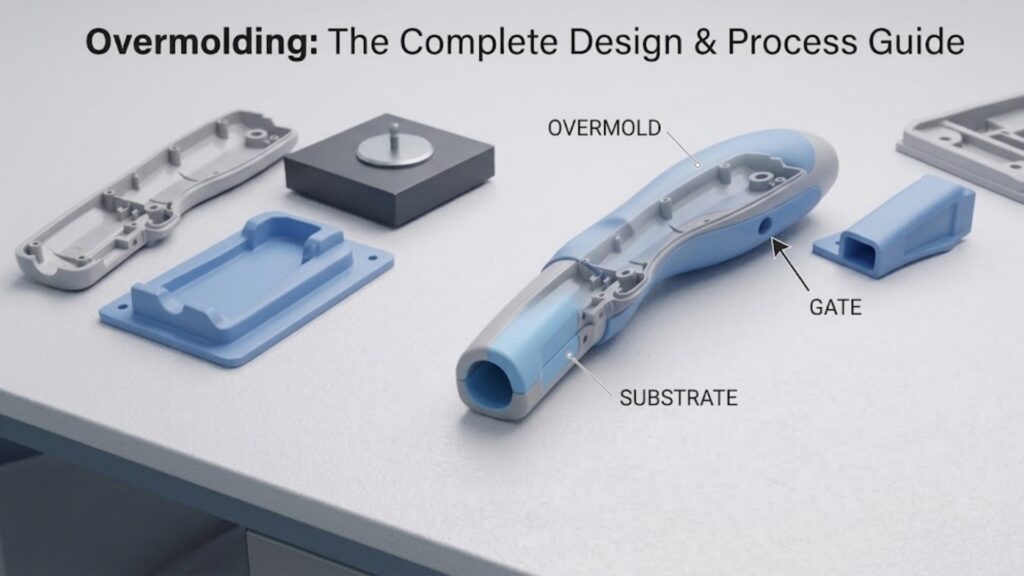
Insert Moulding vs Overmoulding: When to Use Each Process

Choosing the right multi-material manufacturing method is critical for mechanical performance, structural durability, and overall unit economics. When designing complex plastic enclosures or multi-component sub-assemblies for applications ranging from electronics‑semiconductors to automotive‑transportation, engineers and product developers frequently evaluate insert moulding and overmoulding (including two shot injection moulding). The core distinction lies in their mechanics: insert […]
How to Design Ribs and Bosses: Injection Molding DFM Rules

In plastic part engineering, increasing nominal wall thickness to gain structural strength leads to longer cycle times, higher material costs, and severe cosmetic sink marks. The standard approach in professional injection molding design is to use structural ribs for bending stiffness and cylindrical bosses for mechanical fastening. Designing these features requires strict control over wall […]
Precision Injection Moulding Guide: Advanced Process Control, Design for Manufacturability (DFM), & High-Performance Materials

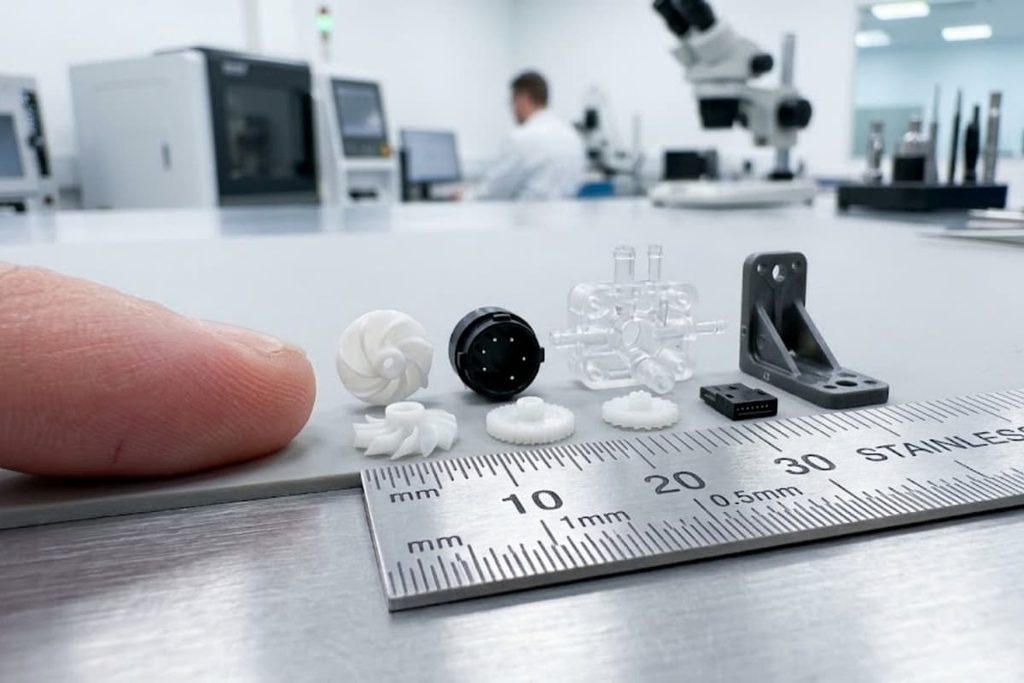
Precision injection moulding is a specialised manufacturing methodology engineered to produce complex plastic components with tight dimensional tolerances—typically within ±0.01 mm to ±0.02 mm. Achieving this level of dimensional repeatability requires synchronising four core technical pillars: tool design governed by strict Design for Manufacturability (DFM) rules, scientific in-cavity process control, advanced polymer selection, and metrology-backed […]
Injection Molding for Consumer Electronics: From Enclosures to Components

Scaling a consumer electronic product from initial CAD rendering to mass production requires balancing exterior cosmetics, internal structural integrity, and tight assembly tolerances. Precision injection molding for consumer products bridges the gap between industrial design intent and cost-effective, high-volume manufacturing. Successfully launching electronic housings and structural internal components depends on three core decisions: selecting resins […]