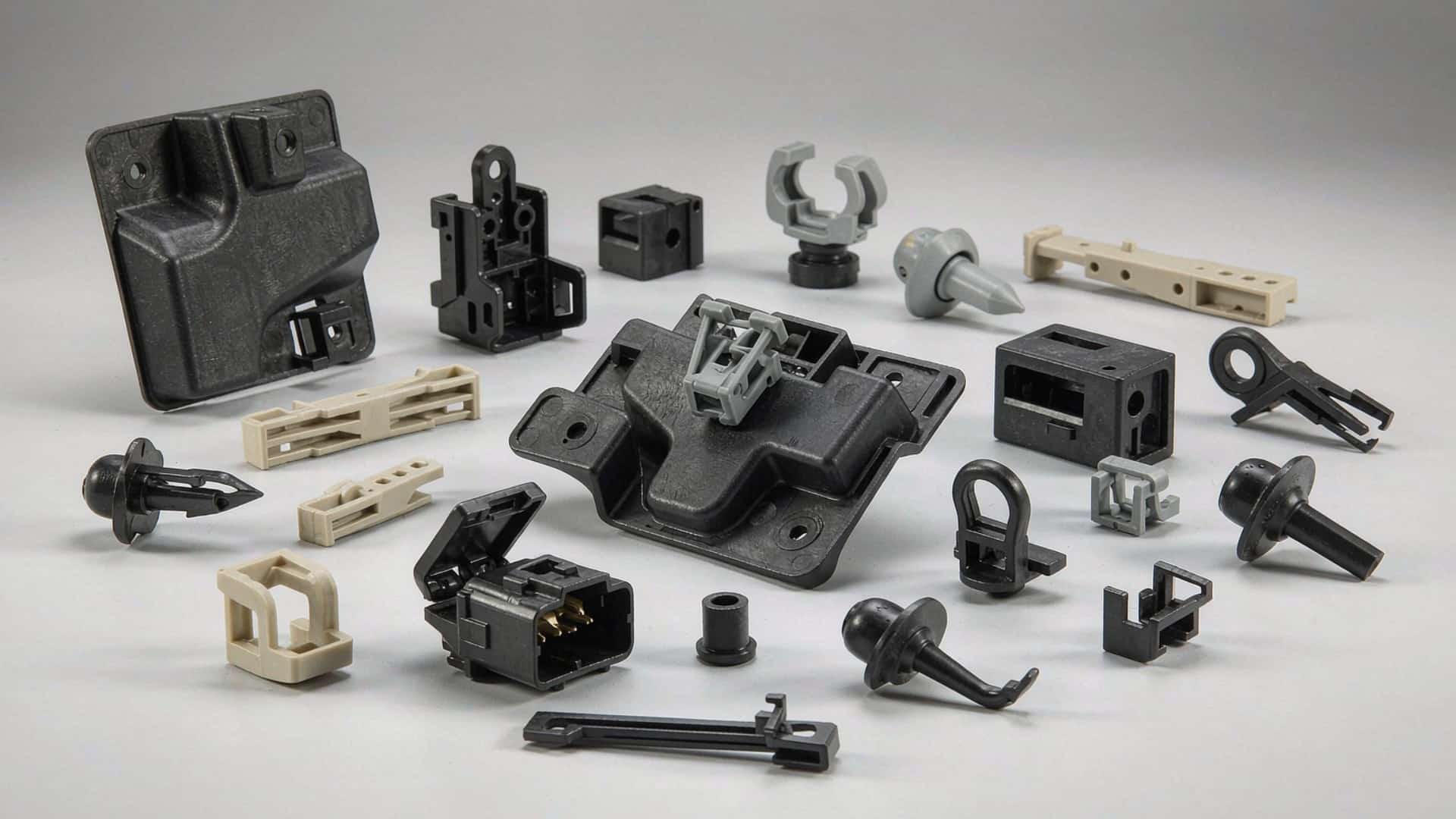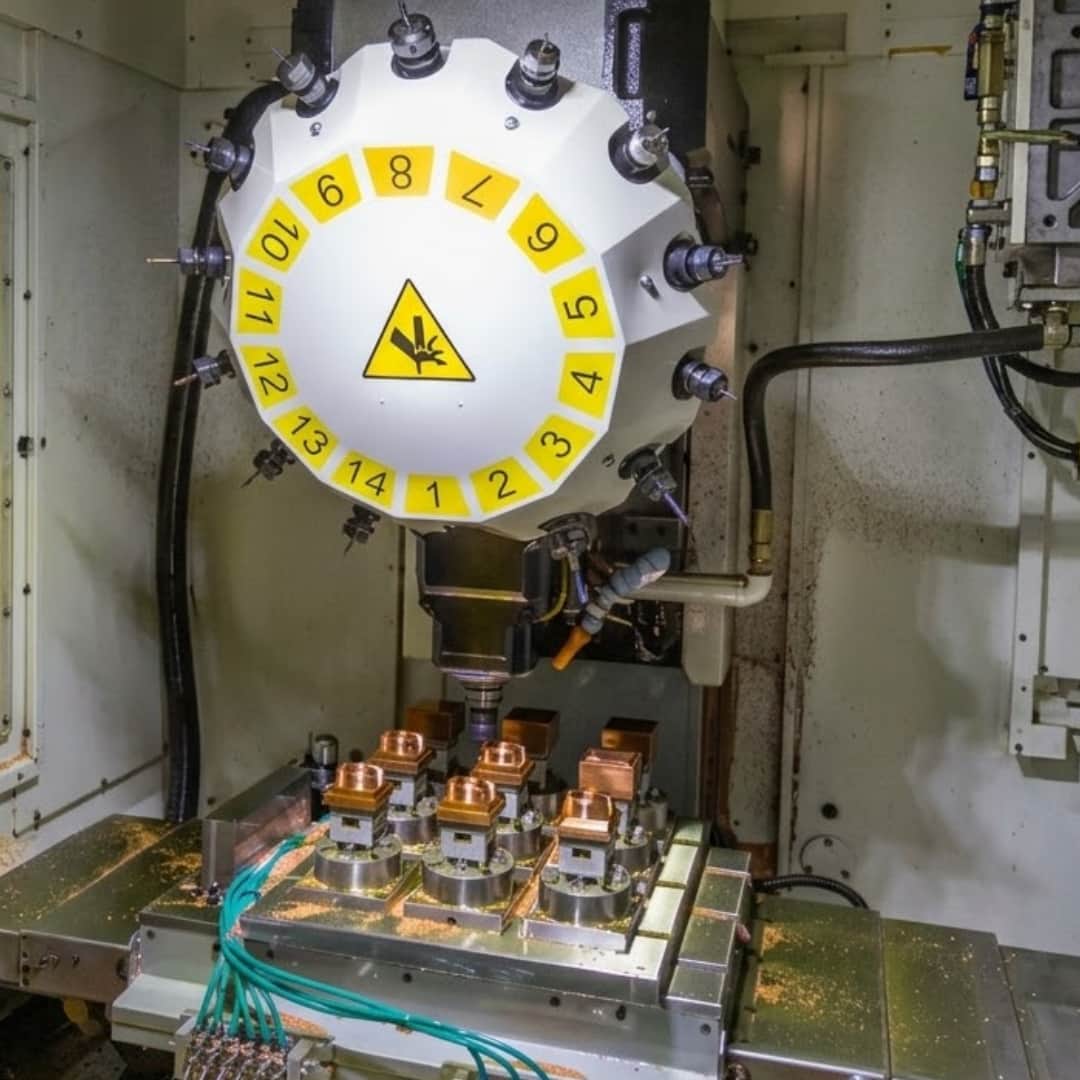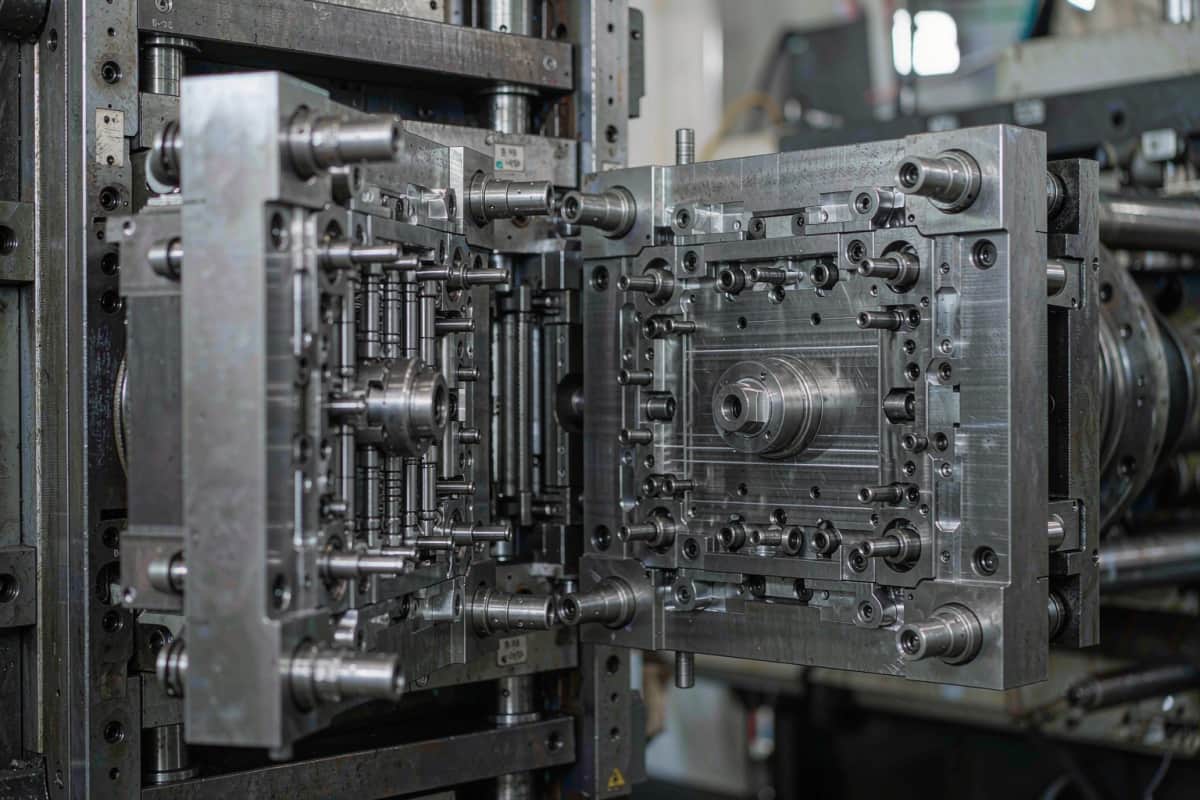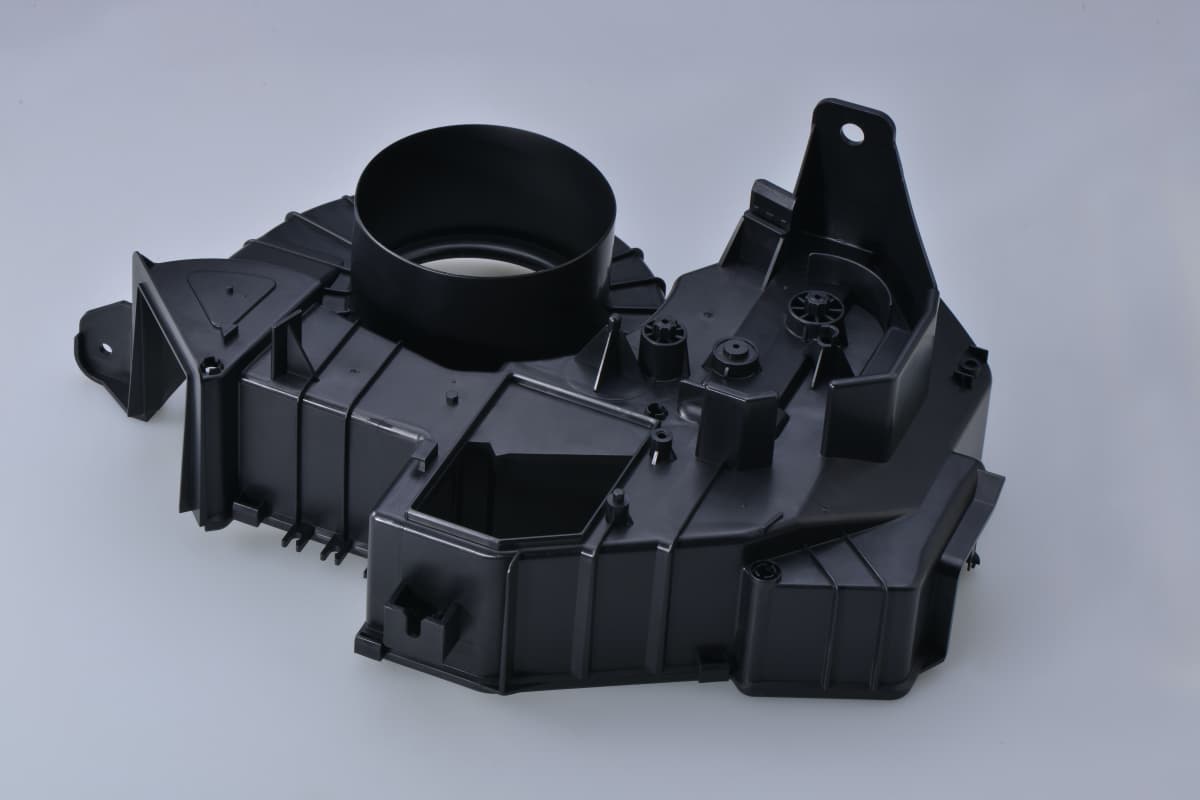

Automotive plastic injection molding differs from standard plastic molding because the parts must survive heat, UV exposure, chemicals, and continuous vibration while meeting tight, repeatable tolerances under a certified quality system. The three decisions that decide whether a program succeeds are material selection by part location, tolerance specification that matches the process, and supplier qualification built around automotive quality requirements. This guide walks through all three so you can move from a drawing to a qualified production part.
If you are evaluating a manufacturing partner, start from our plastic injection molding capabilities overview, then use the material, tolerance, and supplier checklists below to scope your project.
Why Automotive Parts Push Injection Molding Harder
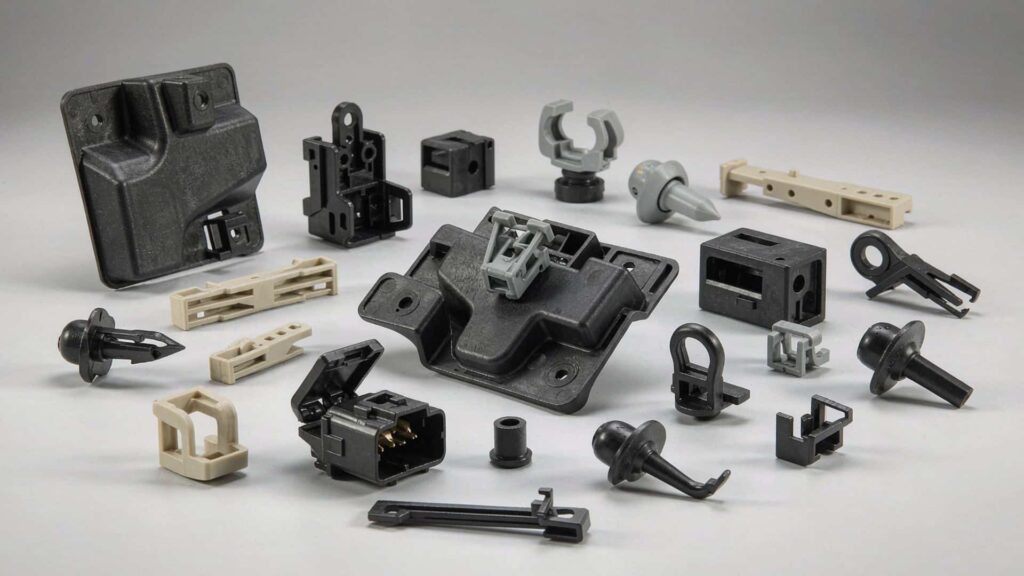
A bumper bracket and a kitchen container may both be injection molded, but the automotive part answers to a different set of constraints. Understanding these constraints explains why material, tolerance, and supplier decisions cannot be copied from consumer-product playbooks.
- Thermal and chemical exposure. Under-hood and near-engine parts see sustained heat and contact with oils, coolants, and fuels. Material choice must account for continuous-use temperature, not just room-temperature strength.
- UV and weathering. Exterior trims and lenses face years of sunlight and temperature swings, which drive material selection toward weatherable grades and UV-stable colorants.
- Flammability and cabin air quality. Interior components are frequently specified to flammability ratings and low-emission limits, which affects both resin grade and supplier documentation.
- Long service life and traceability. A part is expected to perform for the vehicle’s lifetime. That pushes suppliers toward documented process control, lot traceability, and change management rather than best-effort production.
- Batch-to-batch consistency. Automotive programs run high volumes over multiple years, so the relevant question is not “is the first part good” but “will the millionth part still be in spec.” This is where certified systems such as IATF 16949 and PPAP submissions enter the conversation.
Choosing the Right Material for Automotive Plastic Parts
Material selection should follow the part’s service environment, not a default “plastic is cheap” assumption. The same resin family behaves very differently once you add glass fiber, flame retardant, or a UV-stable additive package.
Workhorse Resins and Where They Fit
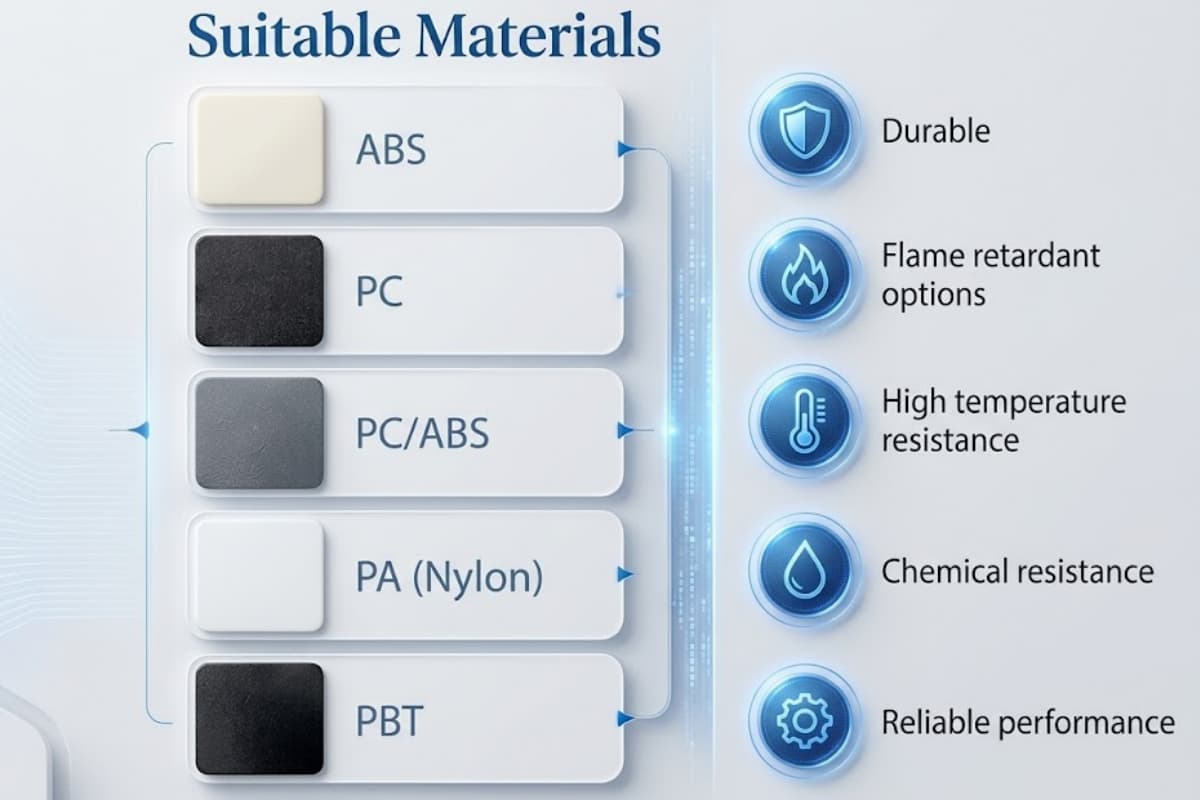
| Material | Typical automotive parts | Strengths | Watch-outs |
|---|---|---|---|
| Polypropylene (PP) | Bumpers, interior trim, battery housings | Low cost, good chemical resistance, easy to color | Lower temperature resistance, soft surface feel |
| Acrylonitrile Butadiene Styrene (ABS) | Console parts, bezels, ducting | Rigid, good dimensional stability, easy to finish | Limited UV resistance without additive package |
| Polycarbonate (PC) and PC/ABS | Lighting lenses, instrument clusters | High impact and heat resistance, clarity option | Higher cost, moisture sensitivity in processing |
| Polyamide 6 / 66 (PA6/PA66, often glass-filled) | Under-hood connectors, clips, brackets | High heat and wear resistance, structural strength | Moisture absorption affects dimensions |
| Polybutylene Terephthalate (PBT) | Connectors, sensor housings | Excellent electrical and heat performance | Brittle without reinforcement |
| Thermoplastic Elastomer (TPE/TPU) | Soft-touch grips, seals, gaskets | Flexible, paintable or overmoldable | Lower structural strength, grade-dependent temperature range |
The exact grade, filler level, and additive package should be confirmed against the part’s temperature, chemical, and regulatory requirements before tooling begins.
Interior, Exterior & Under-Hood Requirements Differ
The same molding process produces very different material demands depending on where the part lives.
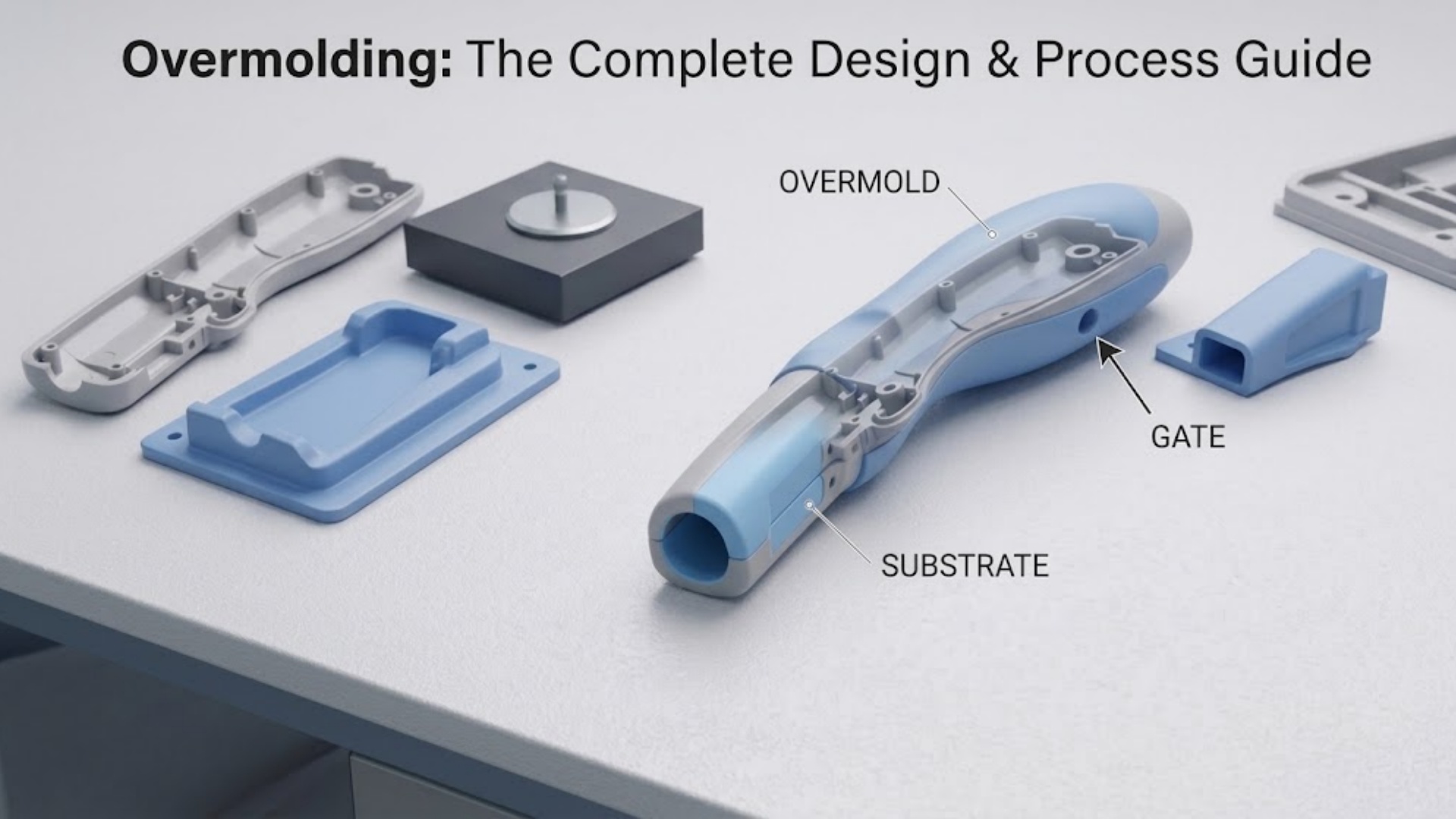
- Interior parts prioritize low odor, low emissions, surface texture, and soft-touch feel. Soft-touch surfaces are commonly produced by overmolding TPE or TPU onto a rigid substrate, which also covers the long-tail need for injection molding for automotive interiors.
- Exterior parts prioritize UV stability, paint or film compatibility, and impact resistance at low temperature. Weatherable grades and stable colorants matter more than cabin-air metrics.
- Under-hood parts prioritize continuous-use temperature, chemical resistance, and creep resistance under load. Glass-filled polyamides are common here because they hold shape and strength where unfilled resins would deform.
Specialty Grades: Flame Retardancy, UV Stability & Low VOC
Many automotive specifications call for more than base resin properties. Interior components may require flammability ratings aligned with standards such as UL 94 (commonly HB through V-0 classes depending on thickness and regulation), while exterior parts need UV-stable grades to avoid chalking and color shift. Cabin parts in some markets also face low-emission or low-odor limits that restrict the additive packages a molder can use. These requirements change both material cost and the documentation a supplier must supply, so they belong in the RFQ rather than discovered after sampling.
Setting Tolerances You Can Actually Hold
Tolerance is where many automotive programs lose time. A tight number on a drawing is only useful if the material, tool, and process can deliver it consistently. The goal is to specify the tightest tolerance the function requires, and no tighter.
Standard vs. Fine vs. Automotive-Grade Tolerances
Published reference frameworks such as ISO 20457 for molded plastic parts and the legacy SPI tolerance classes describe typical achievable ranges by feature type and material. They are a starting point, not a guarantee.
| Feature type | Standard commercial | Precision | Automotive-critical |
|---|---|---|---|
| Non-functional free dimensions | Loosest band | Mid band | Tightened only where function demands |
| Snap-fit and clip features | Functional fit checked per sample | Controlled by tool and process | Verified across cavities and over time |
| Bores and mating surfaces | General fit | Tighter fit | Dimensional and Cpk monitored |
| Flatness and warpage | Visual acceptance | Gauge checked | Controlled by fill balance and cooling |
The practical rule: the achievable number depends on material shrinkage, wall thickness, part geometry, mold construction, and process control. A supplier’s precision injection molding guide explains how scientific molding and process monitoring narrow variation. The exact tolerance your part can hold should be confirmed with the supplier against the chosen resin and feature.
What Determines Your Achievable Tolerance
Four factors dominate:
- Material shrinkage. Crystalline resins such as PP and PA shrink more and less predictably than amorphous ones such as ABS or PC, which shifts post-mold dimensions.
- Tool accuracy and wear. Cavity steel quality, gate design, and venting set the floor for repeatability.
- Process control. Consistent melt temperature, fill, pack, and cooling reduce part-to-part variation; this is where SPC and documented process windows earn their cost.
- Geometry. Long thin features, thick-to-thin transitions, and warpage-prone shapes are harder to hold than compact, uniform-wall parts.
A general injection molding design guide helps you design features that are inherently easier to hold in tolerance.
Molding Processes That Solve Automotive-Specific Problems
The process is a means to meet a requirement, not a separate decision. Match the process to the problem.
| Problem the part must solve | Process that fits | Why it helps |
|---|---|---|
| Integrate metal insert, threaded boss, or electrical contact | Insert molding | Embeds the component in one shot, removes assembly steps |
| Soft-touch surface or two-color appearance | Two-shot / overmolding | Bonds rigid and elastomer in a single molded part |
| Save space and weight in a tight cavity | Thin-wall molding | Reduces wall thickness while holding function |
A thin-wall molded automotive cable shielding component shows how wall-section control and tight tolerances combine on a real under-hood-style part. Whether insert molding or two-shot molding is right depends on the substrate, the bond requirement, and production volume, which is covered in the insert vs. overmolding comparison.
How to Qualify an Automotive Injection Molding Supplier
Selecting a supplier for automotive work is less about price per part and more about whether the partner can hold the part in spec for years. Use this procurement checklist during evaluation.
Supplier qualification checklist
- [ ] Quality system: IATF 16949 is the automotive-specific standard; confirm the certificate scope covers the processes you need, not just a generic ISO 9001 registration.
- [ ] PPAP and APQP capability: ask which PPAP level the supplier can deliver and how they handle design records, process flow, FMEA, and control plans.
- [ ] Engineering response: request a DFM review on your drawing. The depth and speed of that feedback reveal whether the team is engineering-driven or order-taking.
- [ ] Tool ownership and maintenance: clarify who owns the mold, how spare cavities are managed, and what the maintenance and storage plan is across the program life.
- [ ] Traceability and inspection: confirm lot traceability, incoming material checks, and in-process inspection frequency, especially for safety- or function-critical features.
- [ ] Communication: for cross-border programs, confirm time-zone overlap and a named engineering contact, since delayed DFM feedback is a common cause of launch slips.
A deeper supplier audit checklist for OEMs expands each of these points into audit questions.
The two capabilities that separate a capable automotive molder from a general one are engineering depth at the quoting stage and disciplined quality control during production. Both should be visible before you release the tool, not after the first bad lot.
From RFQ to Production: How a Capable Supplier Should Work With You
A predictable launch reduces risk more than a low unit price. The collaboration typically follows this sequence.
- RFQ: share drawing, material, volume, and regulatory requirements.
- DFM review: the supplier returns manufacturability feedback, gate and ejection suggestions, and tolerance feasibility.
- Tool design and build: mold flow, steel selection, and cooling strategy are agreed before cutting steel.
- T1 samples: first molded parts for fit, function, and measurement.
- PPAP submission: documentation and capability data that let you approve the process.
- Mass production: monitored runs with traceability and change control.
Volume planning changes the economics: a low-volume vs. high-volume production plan affects tool material, cavitation, and validation depth. Raise volume expectations early so the supplier sizes the tooling correctly the first time.
FAQ
What plastics are most common in automotive interiors?
Polypropylene and ABS dominate rigid interior trim, while PC/ABS appears where heat or impact resistance is higher. Soft-touch surfaces commonly use TPE or TPU applied by overmolding onto a rigid substrate. The final choice depends on the part’s temperature, appearance, and emission requirements.
What tolerances can automotive injection molding hold?
There is no single number; achievable tolerance depends on the resin’s shrinkage, the feature geometry, mold accuracy, and process control. Reference standards such as ISO 20457 describe typical ranges, but the specific value for your part should be confirmed with the molder against the chosen material and feature.
Does my supplier need IATF 16949 certification?
For production automotive parts, IATF 16949 is the expected quality-system baseline and is often a contractual requirement. Confirm the certificate scope covers your processes. For prototype or non-safety parts, the requirement may be relaxed, but the documentation discipline it enforces is still useful.
What is PPAP and when is it required?
PPAP (Production Part Approval Process) is the package of records — design, process, FMEA, control plan, and measurement data — that proves a supplier can make the part consistently. It is typically required before moving from validation to mass production on automotive programs.
Insert molding vs. two-shot molding: which one for my part?
Use insert molding when a metal or pre-formed component must be captured in the plastic. Use two-shot or overmolding when two materials form one bonded part, such as a rigid shell with a soft grip. The decision depends on the substrate bond, appearance, and production volume.
Conclusion
Automotive plastic injection molding succeeds when three decisions are made together: pick the material by where the part lives, set tolerances the process can actually hold, and qualify a supplier on engineering depth and quality discipline rather than unit price alone. Start with your drawing and material requirements, run a DFM review, and confirm tolerance and certification scope before tooling.
Contact Us:If you have a automotive plastic part at the quoting stage, send us your drawing for a DFM review and we will return material, tolerance, and process recommendations specific to your application.