
Strategizing Your Plastic Injection Moulding Production
Determining whether to use low volume injection moulding or high volume injection moulding is one of the most financially impactful decisions in a product’s lifecycle. The choice directly dictates your initial tooling investment, part unit cost, and time-to-market. For purchasing managers and engineers, aligning the production scale with the current phase of the product lifecycle is critical to controlling risk and maximizing investment returns.
This guide breaks down the economic and technical differences between production scales. It provides a practical framework to evaluate tooling costs, identify your break-even point, and transition smoothly from prototyping to mass production. Partnering with a provider of plastic injection moulding services that supports this entire lifecycle helps eliminate supply chain disruptions.
Comparing Low Volume and High Volume Injection Moulding
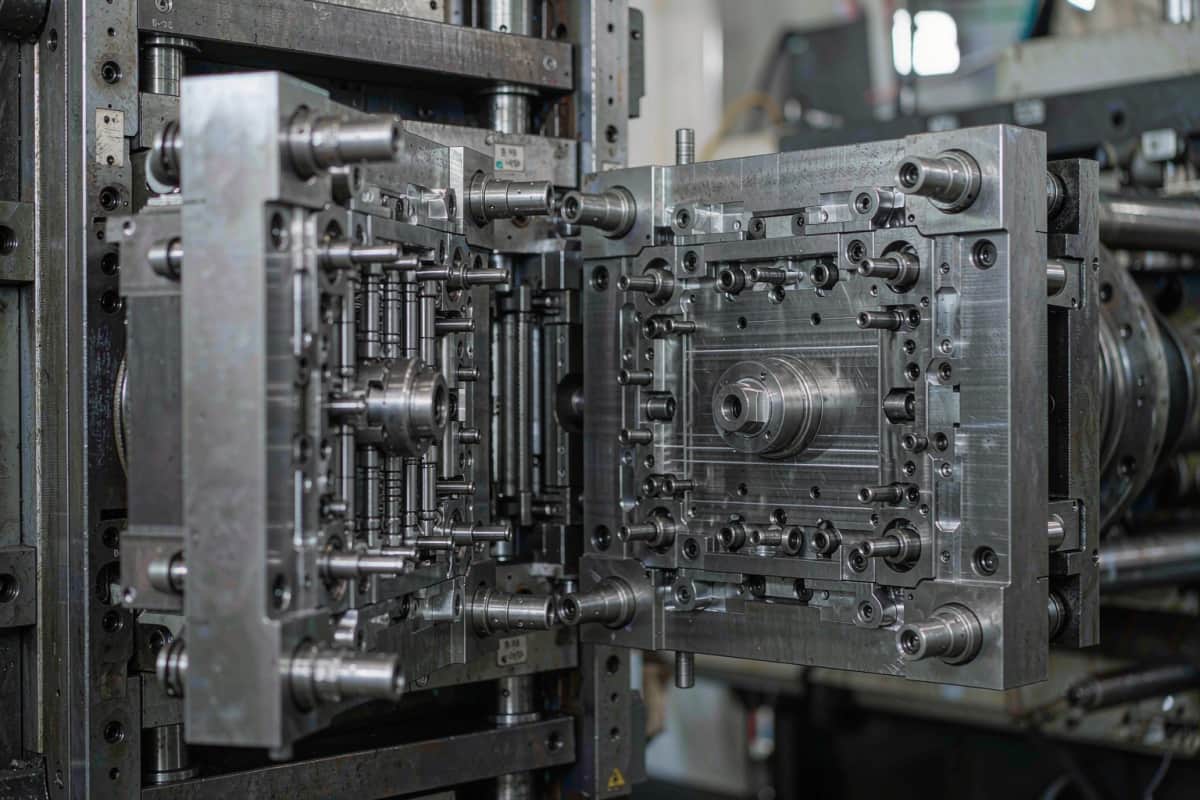
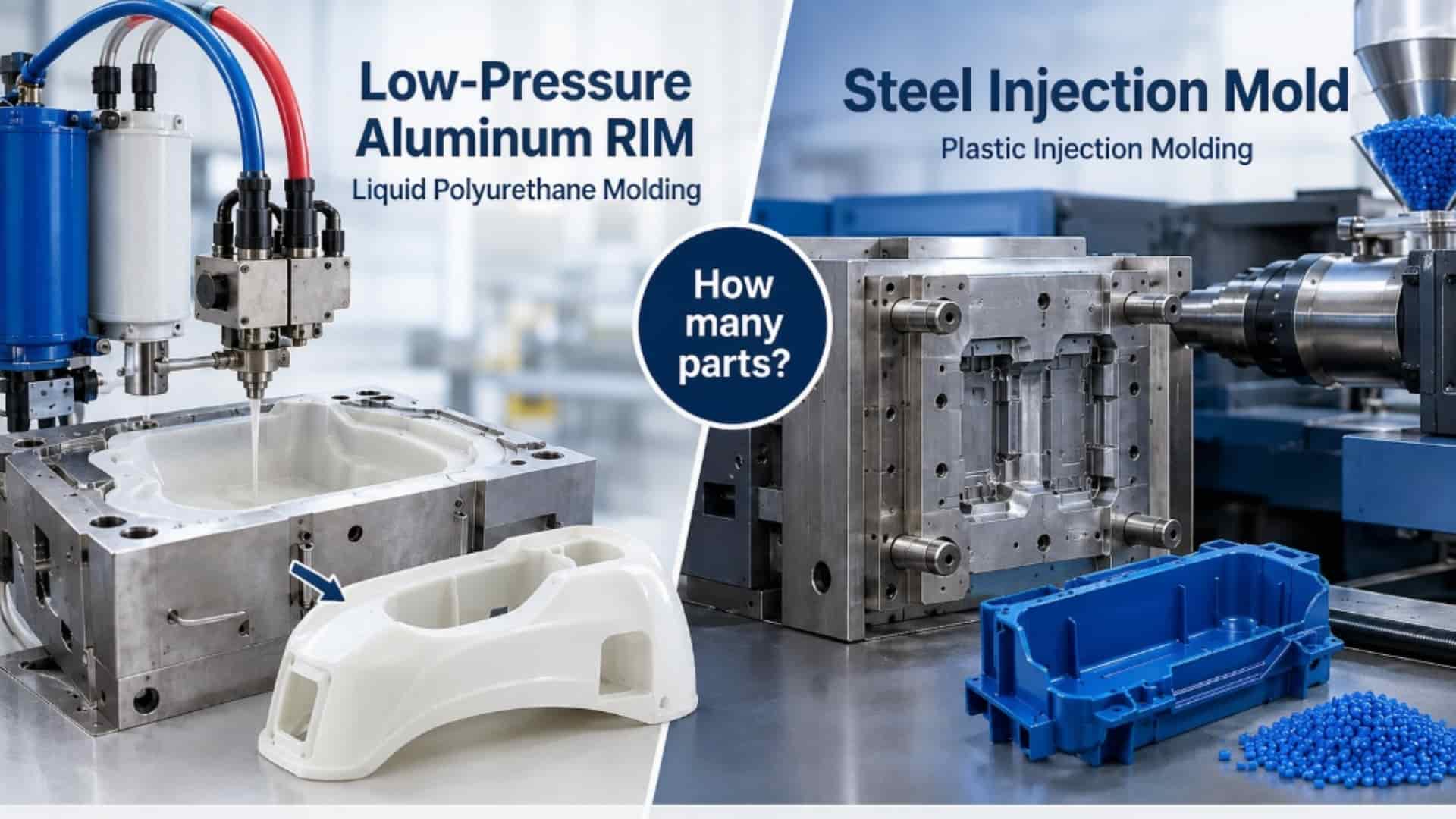
The core difference between low and high volume production lies in the tooling strategy. Low volume production utilizes softer metals or simplified mould designs to minimize upfront costs and accelerate delivery. High volume production requires robust, multi-cavity tooling engineered to withstand millions of cycles, which increases initial costs but drives the per-part price down to a fraction of the prototyping cost.
Comparison Table: Production Scale Strategies
| Production Strategy | Initial Tooling Cost | Part Unit Cost | Typical Mould Material | Estimated Tool Life Cycle | Best For |
| Low Volume Moulding | Lower | Higher | Aluminum, Mild Steel (P20) | Thousands to tens of thousands of cycles (depending on material) | Market testing, bridge tooling, niche products |
| High Volume Moulding | Higher | Lower | Hardened Tool Steel (H13, S136) | Hundreds of thousands to millions of cycles | Established products, mass market distribution |
When budgeting for injection mould making, engineers must weigh the lower initial tooling investment of low volume processes against the long-term unit cost savings provided by high volume steel tooling.
When to Utilize Low Volume Production and Rapid Prototyping
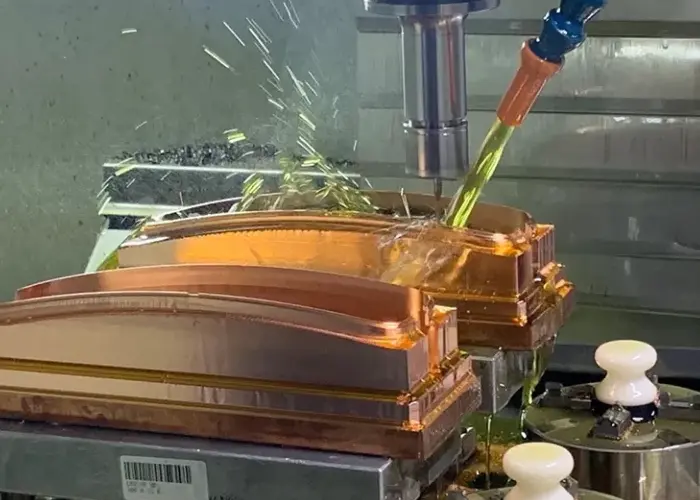
Low volume injection moulding serves as a strategic bridge between initial design and full-scale manufacturing. It allows companies to test the market, validate designs with production-grade materials, and generate early revenue without committing significant capital to permanent steel moulds.
Application Matrix: Strategic Uses for Low Volume Production
- Design Validation: Verifying complex geometries and material performance before locking in mass-production tooling designs.
- Bridge Production: Supplying initial inventory to fulfill early orders or crowdfunding campaigns while high volume moulds are being machined.
- Niche Market Fulfillment: Producing specialized components with limited annual demand, such as specific medical and dental applications.
- Agile Iteration: Utilizing rapid prototyping and low volume runs to allow for affordable design adjustments based on early user feedback.
The Business Case for High Volume Injection Moulding
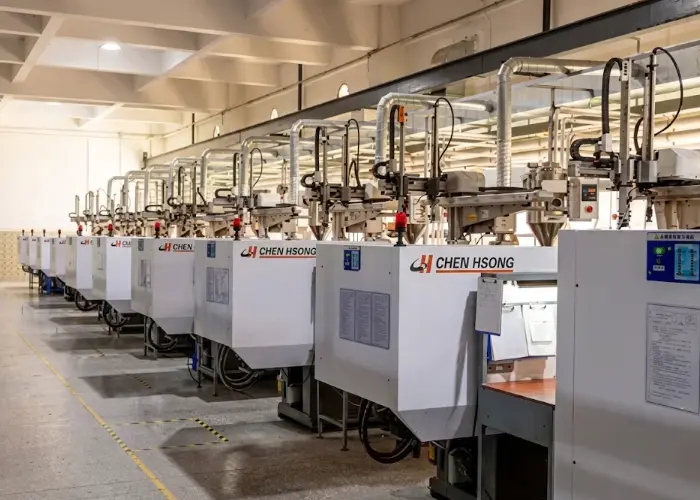
Once a product has proven market demand and stable design specifications, high volume injection moulding becomes the most profitable strategy. Through the use of multi-cavity moulds and automated production cells, manufacturers can achieve extreme economies of scale.
ROI Checklist for High Volume Production
Before committing to high volume tooling, evaluate the following conditions:
- Design Stability: Are the part dimensions and material specifications finalized?
- Market Demand: Is there a consistent, predictable demand that justifies producing hundreds of thousands of parts annually, such as high-output automotive manufacturing demands?
- Budget Availability: Is there sufficient capital allocated for hardened steel mould fabrication?
- Unit Cost Targets: Does the required profit margin necessitate driving the per-part cost down to its absolute minimum?
Decision Framework: Finding Your Break-Even Point
Choosing between production scales requires calculating the financial break-even point. This is the production quantity where the total cost (tooling plus unit costs) of high volume moulding becomes lower than the total cost of low volume moulding.
To find your break-even point, compare:
(Low Volume Tooling Cost) + (Low Volume Unit Price × Target Quantity)
vs.
(High Volume Tooling Cost) + (High Volume Unit Price × Target Quantity)
- If your required quantity is below the break-even point, choose low volume production to protect capital.
- If your required quantity is above the break-even point, invest in high volume tooling.
Working with an experienced injection moulding supplier China can help you map out these cost curves accurately based on your specific 3D CAD files and material requirements.
Maintaining Injection Moulding Quality Control at Any Volume
Whether producing 5,000 or 5,000,000 parts, maintaining dimensional accuracy and material integrity is non-negotiable. Transitioning from low to high volume should not introduce defects or inconsistencies.
Specification Checklist: Ensuring Quality Across Scales
- Material Verification: Ensuring the resin used in the prototype phase performs identically when injected into a multi-cavity mass-production mould.
- First Article Inspection (FAI): Comprehensive dimensional reporting on the first parts off the line before authorizing the full production run.
- Process Parameter Mapping: Documenting injection pressure, cooling time, and temperature requirements to guarantee repeatability.
- Tool Maintenance Protocols: Establishing a preventative maintenance schedule for high volume moulds to prevent flash or dimensional drift over time.
Relying on a manufacturer with strict injection moulding quality control ensures that your product functions flawlessly regardless of the production batch size.
Partnering with an Integrated Injection Moulding Supplier in China
Fragmenting your supply chain by using one company for prototyping and another for mass production introduces significant risk. Design knowledge is often lost during the handover, leading to delays and tooling errors.
Procurement Checklist: Evaluating a Manufacturing Partner
When selecting an injection moulding contract manufacturer China, verify their ability to handle the entire product lifecycle:
- In-House Tooling Capabilities: Do they manage comprehensive plastic mould fabrication under their own roof?
- Scalability: Can they seamlessly transition your project from a single-cavity aluminum mould to a 32-cavity hardened steel mould?
- Engineering Support: Do they provide Design for Manufacturability (DFM) feedback during the low volume phase to optimize the part for eventual high volume production?
- Quality Certification: Do they hold relevant ISO certifications that align with your industry requirements?
Transitioning Smoothly from Prototype to Mass Production
Planning your production scale requires a clear understanding of your initial budget, market demand, and long-term cost targets. Low volume injection moulding provides the agility to test and refine, while high volume injection moulding delivers the efficiency needed for aggressive market expansion. Identifying the correct transition point ensures your capital is deployed effectively at every stage of the product lifecycle.
Key Takeaways
- Low volume moulding minimizes upfront risk and accelerates time-to-market, making it ideal for validation and bridge production.
- High volume moulding requires significant initial investment in durable steel tooling but yields the lowest possible per-part cost.
- Calculating the break-even point between tooling costs and unit price is the most accurate way to decide when to scale up.
- Partnering with a single, integrated manufacturer for both prototyping and mass production prevents knowledge loss and delays.
FAQ
What is considered low volume injection moulding?
Low volume injection moulding typically refers to production runs ranging from a few hundred to tens of thousands of parts. It focuses on speed and lower upfront tooling costs using softer mould materials.
Can I use the same mould for low volume and high volume production?
Generally, no. Low volume moulds are often made from aluminum or mild steel, which degrade under the pressures of high volume production. High volume requires hardened tool steel to withstand millions of cycles without losing dimensional accuracy.
How do I know when it is time to switch to high volume production?
The switch is justified when your market demand stabilizes and your production volume exceeds the financial break-even point—where the savings on part unit costs offset the higher expense of manufacturing a hardened steel mould.
Actionable Next Step
Unsure whether low volume or high volume injection moulding is the most cost-effective choice for your current project stage?
Contact GoodTech’s engineering team today to share your CAD files for a comprehensive design-for-manufacturability (DFM) review, break-even analysis, and tailored tooling cost estimate.