
Hot runner vs cold runner injection molding comes down to one number: your lifetime production volume. Below roughly 50,000 shots, cold runner tooling usually wins, because its lower build cost outweighs the runner waste it generates on every cycle. Above roughly 100,000–200,000 shots, a hot runner typically pays back its 30–100% tooling premium through zero runner waste and cycle times that run 15–30% shorter. This guide breaks down the tooling cost, cycle time, material and maintenance trade-offs behind that break-even point, so your engineering and purchasing teams can specify the right runner system for your next custom injection molding program.
How Your Runner System Shapes Injection Mold Tooling ROI
Choosing a runner system is a financial decision before it is an engineering one. Every injection mold tooling program balances the upfront capital expenditure (CapEx) of building the tool against the ongoing operational expenditure (OpEx) of running it.
The runner system sits at the center of that balance. It determines three things: how much resin is thrown away on every shot, how long the mold must stay closed to cool, and how much injection pressure is lost between the machine nozzle and the cavity. Get those three wrong and you either over-engineer a short-run tool or under-invest in a high-volume one — both of which destroy margin.
That is why a serious injection mold tooling quote should never present the runner system as a fixed assumption. It should show you the break-even volume and let you decide where your program sits. See how we approach injection mold tooling across both architectures.
Core Differences: Hot Runner vs. Cold Runner Systems
The physical difference between hot runner vs cold runner injection molding comes down to temperature control.
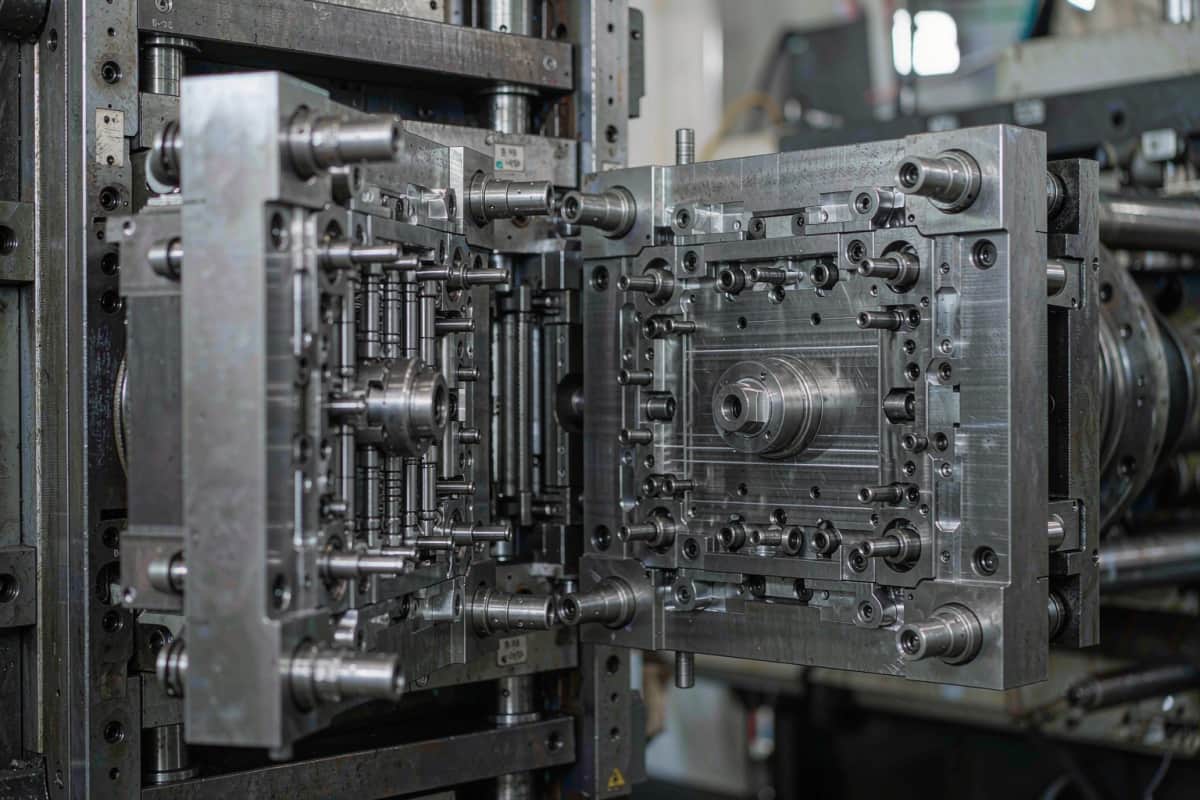
A cold runner is unheated. The plastic in the runner channel cools and solidifies alongside the part, and that solid runner skeleton must be ejected and separated every cycle. A hot runner uses a heated manifold and temperature-controlled nozzles to keep the polymer molten all the way to the cavity gate. When the mold opens, only the finished part comes out.
| Evaluation Criteria | Cold Runner | Hot Runner |
| Initial tooling cost | Lower (simpler mold structure) | +30% to +100% (manifold, heaters, controllers) |
| Material waste | 5–15% of shot weight (up to 40% on small multi-cavity parts) | Near zero |
| Cycle time | Longer (runner must cool) | 15–30% shorter |
| Maintenance | Simple | Complex (heaters, thermocouples, wiring) |
| Color / material change | Fast (runner clears every cycle) | Slow (full manifold purge, 50–200 shots) |
| Typical break-even | — | ~100,000–200,000 shots |
Figures reflect published industry ranges; actual values depend on resin price, runner weight and machine hourly rate.
Cold Runner Injection Molding: Advantages and Ideal Use Cases
Cold runner systems remain the default in mold making because they are simple, fast to build and forgiving to run. With no manifold, heaters or temperature controllers, the tool is cheaper to machine and far easier to maintain.
Key advantages
- Lower initial investment. Removing the heated manifold is the single biggest lever on the upfront price of a mold.
- Thermal versatility. Because the runner is not held at processing temperature, cold runner tooling handles heat-sensitive polymers — including most thermoset injection molding compounds and PVC — that would degrade in a heated manifold.
- Rapid material and color changes. The runner solidifies and ejects each cycle, leaving the feed system completely clear for the next resin or color.
Ideal applications
Cold runner is the practical answer for low volume injection molding programs, where the long-term material savings of a hot runner would never repay the tooling premium. It is also standard for rapid tooling injection molding and bridge tools, for prototype validation, and for any project with frequent resin or color changeovers.
If your annual requirement sits under about 50,000 shots, a low volume injection molding tool with a cold runner is almost always the lower total cost of ownership.
Hot Runner Injection Molding: Maximizing Efficiency for High Volumes
Hot runner systems are engineered for scale. By holding the polymer molten right up to the gate, they remove the runner from the equation entirely.
Key advantages
- Zero runner waste. Nothing solidifies in the feed system, so material utilization rises from roughly 60–70% to 95–98%. Over millions of shots, that saving alone can repay the manifold.
- Accelerated cycle times. Cooling time is set by the part wall, not by the thickest section of the runner — typically 15–30% faster. For precision injection molding programs running tight-tolerance parts, that throughput gain is often worth more than the resin.
- Better fill balance and cosmetics. A flow-balanced manifold delivers consistent melt temperature and pressure to every cavity, which cuts sink marks, warpage and short shots. Valve gate nozzles leave a gate vestige that is effectively invisible on cosmetic surfaces.
Ideal applications
Hot runners dominate high-volume production, large-part molding and any multi-cavity injection mold where cavity-to-cavity balance governs yield. Once a program passes eight cavities, the multi-cavity injection mold case for a hot runner is usually closed: the alternative is a cold runner tree that can weigh as much as the parts themselves.
The trade-off is that this plastic injection mold tooling carries real operational risk — heater failure, thermocouple drift and nozzle freeze all cause unplanned downtime, and color changes require purging the entire manifold.
Decision Framework: 5 Factors to Choose Your Injection Mold Tooling
Use these five parameters to align your injection mold tooling strategy with your commercial goals.
- Production volume. Below ~50,000 shots, cold runner’s lower build cost wins. Between 50,000 and 200,000, the answer depends on material cost and cosmetic requirements. Above ~200,000, hot runner usually pays back. Always calculate the break-even volume on your own numbers: divide the hot runner premium by the per-shot saving (resin + machine time).
- Material type. Heat-sensitive resins (PVC, some fluoropolymers, most thermosets) generally require cold runner tooling. Standard thermoplastics — PP, PE, ABS, PC, PA — run well in hot runners. For engineering resins at $6–12/kg, waste weighs far more heavily in the math.
- Part complexity, size and cavity count. Large parts and high-cavitation tools need pressure and flow balance that a manifold controls far better than a geometrically balanced cold runner. For reference, see our injection mold tooling cost breakdown.
- Budget constraints. If capital is tight, a cold runner plastic injection mold tooling package lets production start sooner and shifts cost into per-part resin over time. It also preserves the option of converting later.
- Cycle time and delivery commitments. When the order book demands maximum output per shift, the 15–30% cycle reduction is the deciding factor.
Industry Applications for Different Runner Systems
Automotive. Automotive plastic injection molding leans heavily on hot runners. Large interior panels, bumper fascias and grilles need multiple gate locations and consistent flow across long distances — exactly what a manifold manages best. Programs for injection molding for automotive interiors typically run high enough volume that the payback is straightforward.
Medical devices. Tooling choices here split by volume and by regulation. High-volume disposables — syringe barrels, caps, diagnostic consumables — run on hot runners for speed and cleanliness. But medical injection molding with heat-sensitive or highly regulated polymers often specifies cold runner to avoid any risk of degradation in the manifold. Where regrind is not permitted under validation, every gram of runner scrap is pure cost, which pushes the break-even volume down. For compliance context, see our ISO 13485 medical injection molding guide.
Consumer electronics. Housings demand flawless cosmetic surfaces and tight tolerances. Injection molding for consumer electronics housings favours valve gate hot runners: they eliminate visible gate marks, hold electronics injection molding pressure evenly across multi-cavity tools, and keep weld lines out of cosmetic zones.
Partnering with a Reliable Injection Mold Manufacturer
Your tooling strategy is only as good as the injection mold manufacturer executing it. A capable partner will not simply quote hot runner vs cold runner injection molding as a fixed line item — they will run a Design for Manufacturability (DFM) review, model the break-even volume, and tell you when a cheaper tool is the better business decision.
Procurement checklist
- Do they deliver a full DFM report with mold flow analysis before any steel is cut?
- Can they demonstrate production experience in both hot and cold runner architectures — not just one?
- Do they have a documented preventive maintenance protocol for heater bands, thermocouples and nozzle tips?
- Are they transparent about the break-even volume baked into your specific quote?
- Is the facility ISO 9001 certified, with ISO 13485 available for medical programs?
GoodTech builds both architectures in-house at our Chicago and Shenzhen facilities, under ISO 9001-certified custom plastic injection molding operations. That matters because a custom injection mold manufacturer who only owns one technology will always recommend that technology.
FAQs: Hot Runner vs Cold Runner Injection Molding
Can a cold runner mold be converted to a hot runner system? In some cases, yes. A cold runner tool can be retrofitted with a hot sprue or a partial hot runner manifold, but it requires substantial rework of the mold base, clamping plate and cooling layout. It is almost always more cost-effective to design for a hot runner from the start.
Are hot runner molds more prone to maintenance issues? Yes. Hot runners contain heater bands, thermocouples and sensitive wiring that demand strict preventive maintenance. Contaminated resin, moisture or poor temperature management can block a nozzle and take the tool out of production. Cold runner tools have far fewer failure modes.
Which system produces stronger plastic parts? Both produce equally strong parts when engineered correctly. Hot runners do offer finer control over injection pressure and melt temperature at the gate, which reduces internal stress and flow lines — an advantage in complex geometries.
At what volume does a hot runner pay for itself? Typically between 100,000 and 200,000 shots, depending on resin price, runner weight and machine hourly rate. Divide the hot runner premium by your per-shot saving (resin plus machine time) to get your own number.
Does a hot runner always justify its cost on a low volume injection molding program? Rarely. Under 50,000 shots the tooling premium usually cannot be recovered — unless you are running an expensive engineering resin where regrind is prohibited, or a high-cavitation tool where the cold runner would outweigh the parts.
Which runner system works for thermoset injection molding? Cold runner, almost without exception. Thermoset compounds cure when held at temperature, so a heated manifold would cause premature crosslinking and block the feed system. See our thermoset molding capabilities for material-specific guidance.
Key Takeaways
- Hot runner vs cold runner injection molding is a break-even calculation, not a preference. Compare the hot runner premium against per-shot resin and machine-time savings, and review it against your custom injection molding volumes.
- Cold runner tooling costs 30–50% less to build, changes color in minutes and handles heat-sensitive polymers — the right call for low volume injection molding and prototyping.
- Hot runner tooling eliminates runner waste and cuts cycle time by 15–30%, delivering superior ROI on multi-cavity injection molds and high-volume programs.
- Material selection can override volume: heat-sensitive and thermoset resins strictly require cold runner configurations.
Contact GoodTech for technical support
Not sure which injection mold tooling configuration will give you the best ROI at your volume? Send GoodTech’s engineering team your part model, annual volume and resin. You will get a free DFM review, a mold flow assessment, and a break-even comparison of both runner systems — before you commit to steel.