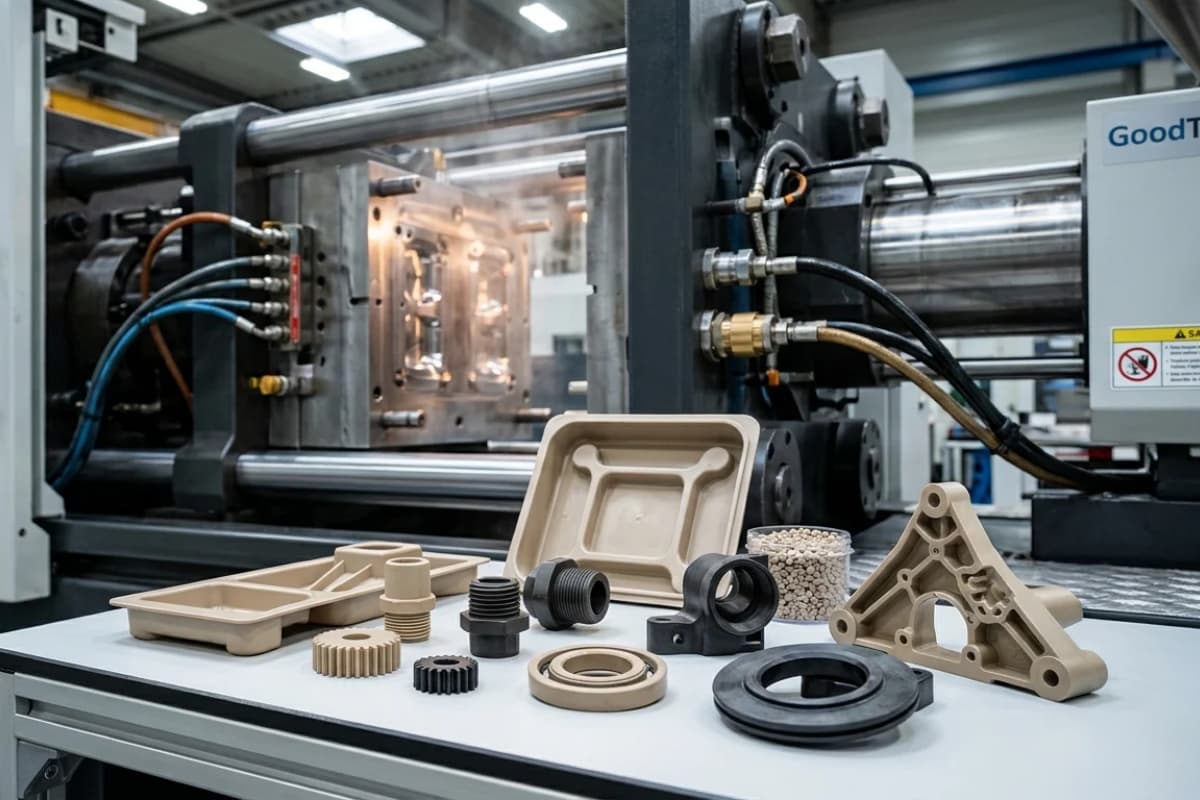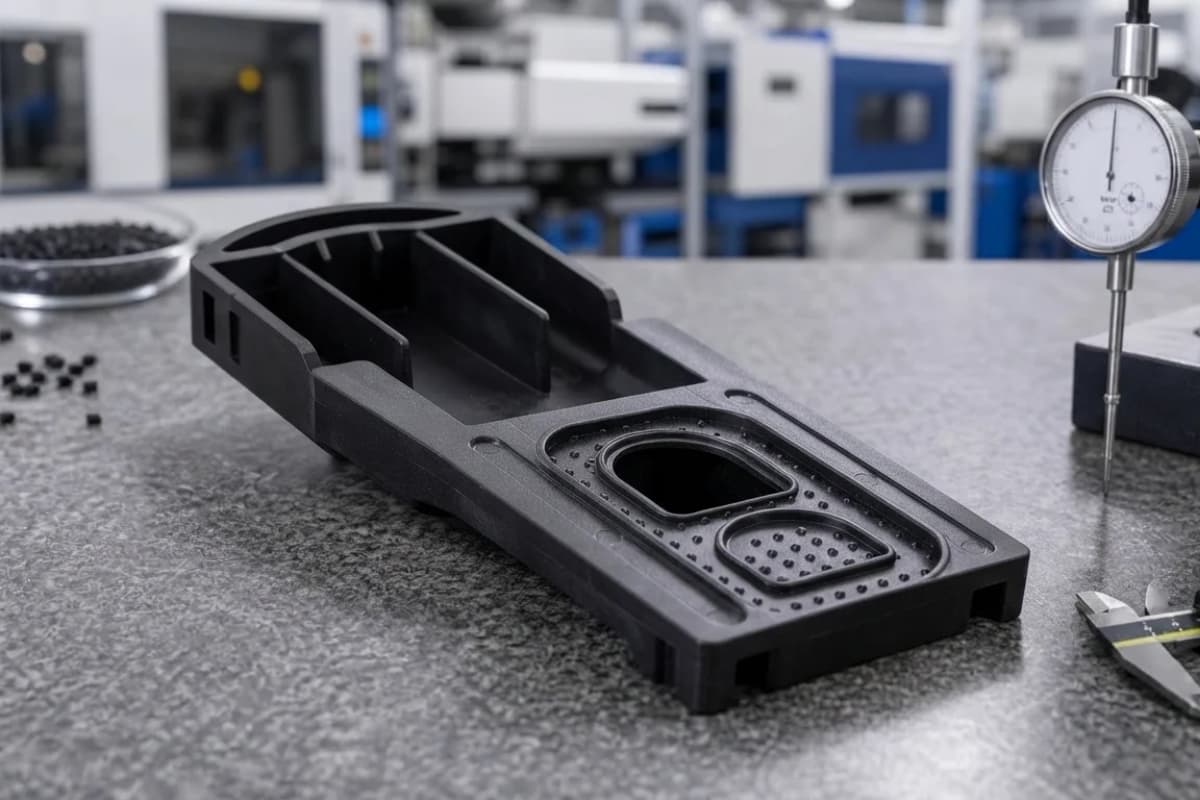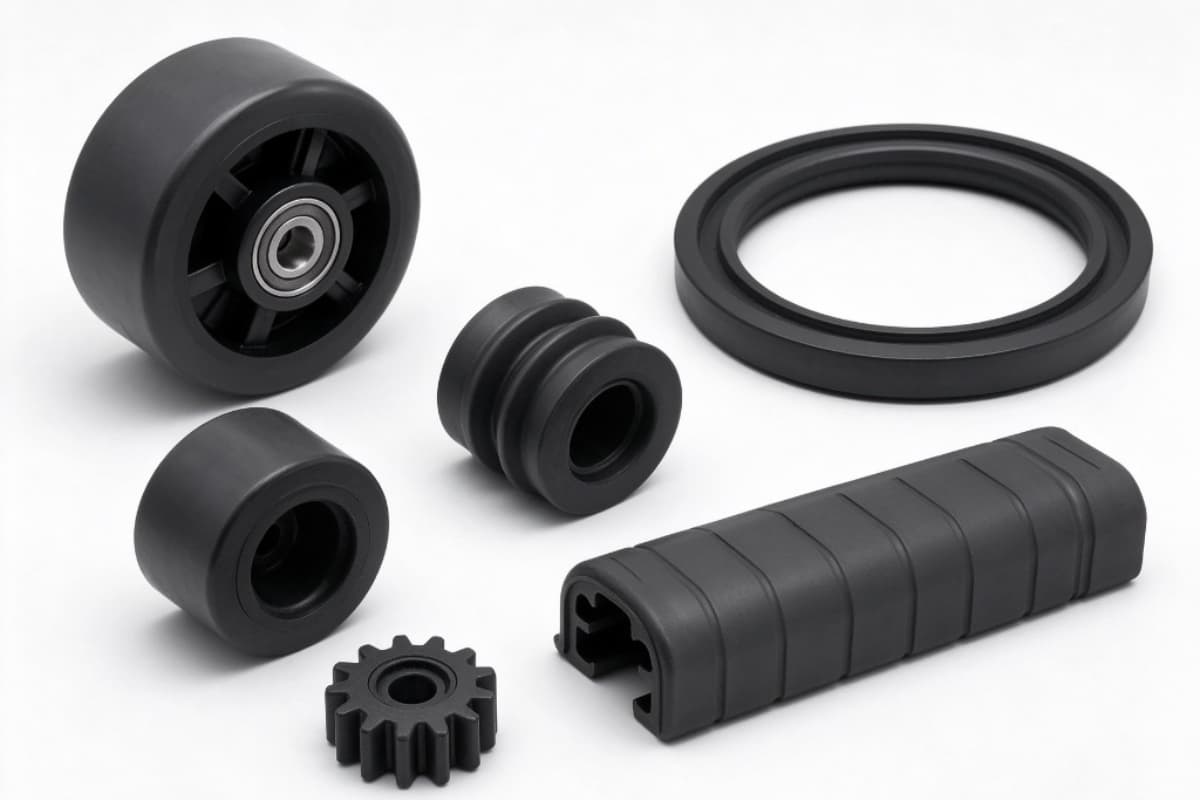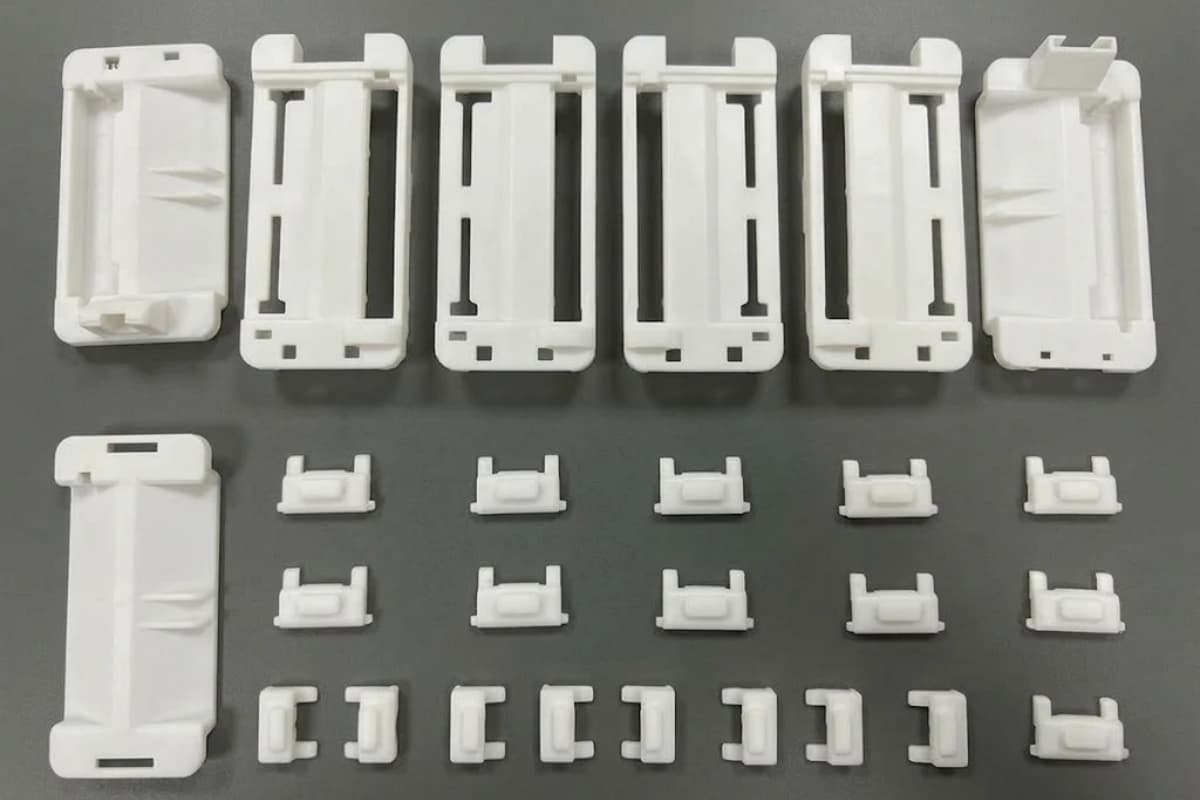

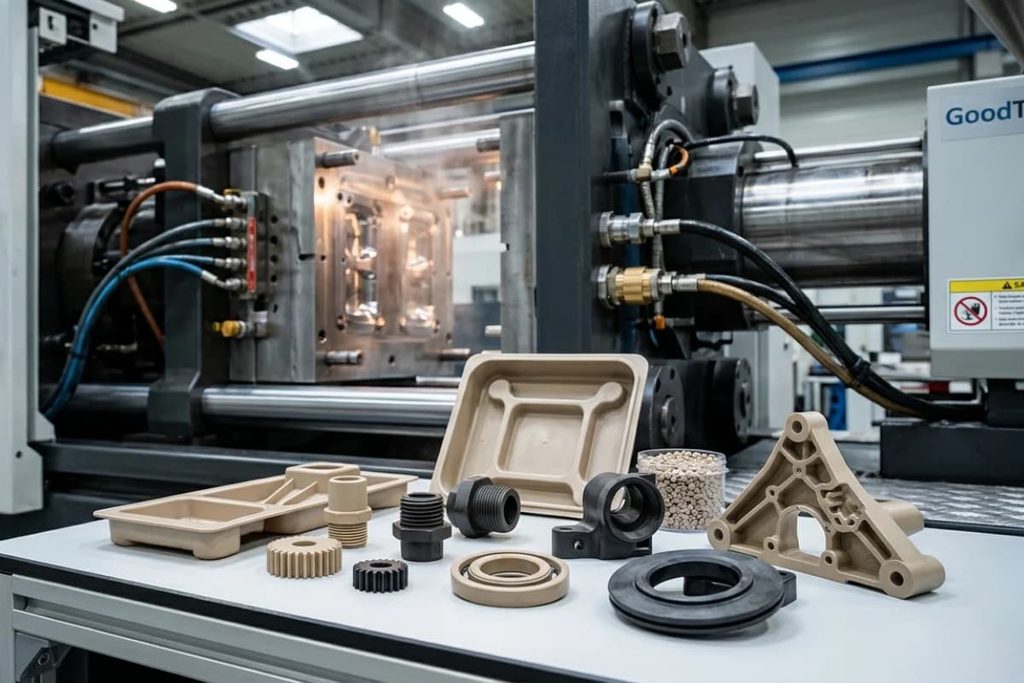
PEEK injection molding produces parts from one of the highest-performing engineering plastics available — continuous service temperature of 260 °C, melting point of 343 °C, and outstanding chemical and sterilization resistance — but it demands process discipline most resins never need: resin dried at 150 °C for 3–6 hours to below 0.02% moisture, a melt temperature of 360–400 °C, a mold held at 170–200 °C to develop full crystallinity, and annealing at ~200 °C for stress-critical parts. This guide covers PEEK properties, filled-grade selection, process parameters, equipment and tooling requirements, and how PEEK compares with PTFE, Delrin, and machined aluminum, so you can decide whether molding PEEK is right for your part.
What Is PEEK? Properties at a Glance
PEEK (polyetheretherketone) is a semi-crystalline high-temperature thermoplastic from the polyaryletherketone (PAEK) family. It combines the processability of a thermoplastic with performance that approaches thermosets and, in filled grades, die-cast metals. Typical property ranges for unfilled grades:
| Property | Typical Value (Unfilled PEEK) | Why It Matters |
|---|---|---|
| Melting point | 343 °C | Sets the equipment ceiling — barrel must reach 400 °C+ |
| Continuous service temperature | ~260 °C (short peaks to 300 °C) | Under-hood, sterilization, and aerospace thermal loads |
| Chemical resistance | Excellent — withstands most solvents, acids, and hydrocarbons | Harsh process fluids and medical reprocessing |
| Hydrolysis / steam resistance | Excellent — survives repeated autoclave cycles | Medical instruments and sterilization trays |
| Wear and friction | Low friction, high wear resistance (grade-dependent) | Bearings, seals, sliding components |
| Flame rating | Naturally flame-retardant (V-0 class behavior) | Aerospace and electrical housings |
| Density | ~1.3 g/cm³ (vs ~2.7 for aluminum) | ~50% lighter than aluminum in metal-replacement parts |
| Typical molding shrinkage | 1.2–1.5% linear (unfilled) | Cavity compensation baseline |
Values are typical ranges for unfilled grades at 23 °C — always confirm against the supplier datasheet for the specified grade, since unfilled, glass-filled, and carbon-filled grades differ substantially.
Where PEEK Injection Molding Is Used
| Industry | Typical Parts | Why PEEK Wins |
|---|---|---|
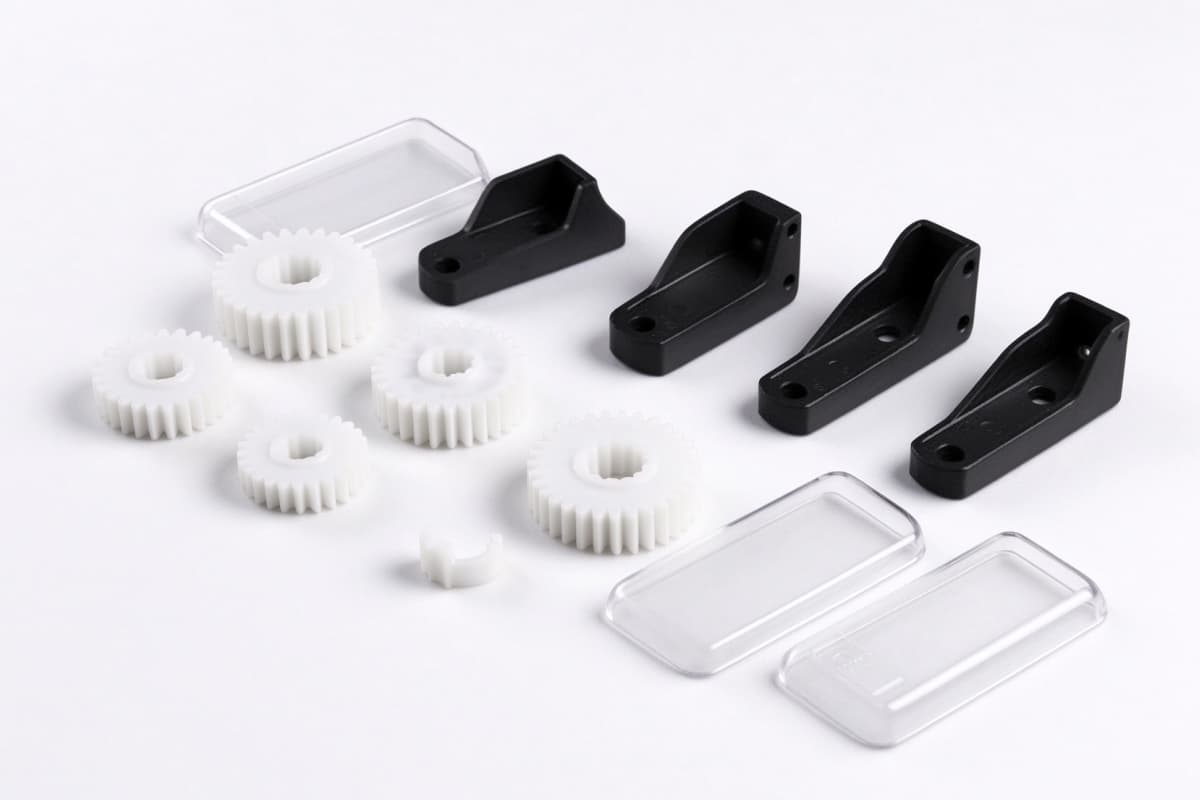
| Medical | Sterilization trays, instrument components, dental and implant-grade parts (ISO 10993 grades) | Repeated autoclave survival, biocompatible grades, radiolucency |
| Semiconductor and electronics | Wafer carriers, sockets, CMP retainers, insulators | Purity, chemical resistance, static dissipation (carbon grades) |
| Aerospace | Brackets, ducting, fasteners, interior components | Weight vs metal, FST (flame/smoke/toxicity) performance |
| Automotive and energy | Seals, bearings, transmission and e-drive components | 260 °C continuous service, oil and coolant resistance |
| Industrial | Pump impellers, valve seats, bushings, rollers | Wear life in aggressive fluids without lubrication |
One rule of thumb before falling in love with PEEK: it is expensive resin (tens of dollars per kilogram), so it is justified by a specific failure mode — temperature, chemical attack, sterilization, or weight against metal. If the part lives at room temperature in benign media, cheaper engineering plastics usually win. Our material selection guide covers that ladder from commodity to high-performance resins.
Filled Grades: Glass-Filled and Carbon-Filled PEEK
Most molded PEEK parts run on filled grades. Fill changes stiffness, wear behavior, and — critically for tooling — shrinkage and abrasion:
| Grade | Key Properties | Shrinkage (flow direction) | Typical Use |
|---|---|---|---|
| Unfilled PEEK | Toughest, best ductility and impact | ~1.2–1.5% | Medical, sealing parts, impact-loaded components |
| Glass-filled (30% GF) | Higher stiffness, lower thermal expansion | ~0.3% | Structural brackets, dimensional stability at temperature |
| Carbon-filled (30% CF) | Highest modulus, best wear and static dissipation | ~0.1% | Bearings, semiconductor components, ESD parts |
Two processing consequences of fill: filled grades are abrasive and demand hardened, polished tool steels, and their anisotropic shrinkage means cavity layout must respect fiber orientation — flow-direction shrinkage is far lower than cross-flow, which drives warpage on flat parts. Grade selection follows the failure mode: unfilled for toughness, glass for stiffness, carbon for wear and conductivity.
PEEK Injection Molding Process Parameters
Consolidated working windows for unfilled PEEK (filled grades run at the upper end and need hardened tooling). Validate against the grade datasheet before cutting steel:
| Parameter | Typical Window | Note |
|---|---|---|
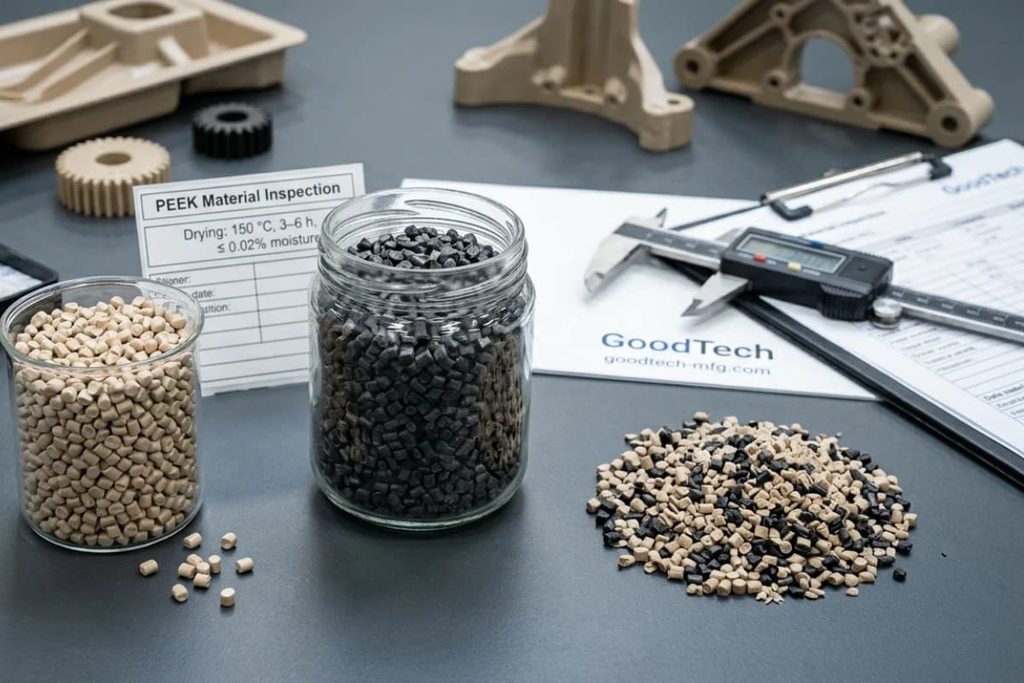
| Drying | 150 °C, 3–6 h, desiccant dryer (dew point ≤ −40 °C) | Target < 0.02% moisture before molding |
| Melt (barrel) temperature | 360–400 °C | Below ~350 °C the melt is too viscous to fill thin walls |
| Mold temperature | 170–200 °C | Controls crystallinity — the single biggest quality lever |
| Injection pressure | 100–160 MPa | High viscosity needs pressure headroom |
| Holding pressure | 60–100 MPa, grade- and wall-dependent | Compensates shrinkage without locking in stress |
| Back pressure | 5–15 bar | Keeps shear heat in the screw under control |
| Screw speed | Low, ~50–80 rpm | High shear degrades the melt (black specks) |
| Injection speed | Medium to high, multi-stage | Slow fill risks short shots; uncontrolled fill causes jetting |
| Shrinkage (unfilled) | 1.2–1.5% linear | ~0.3% GF, ~0.1% CF, anisotropic when filled |
Equipment and Tooling: What PEEK Demands
PEEK fails projects at the equipment-selection stage more often than at the process-tuning stage. The requirements to confirm before committing:
- Barrel capability to 400 °C+ with accurate thermocouples — a controller reading 10 °C low silently degrades the resin at real temperatures above 300 °C overhang.
- Low-compression screw (2:1 to 3:1 compression ratio); general-purpose screws over-shear the melt and cause yellowing and black specks.
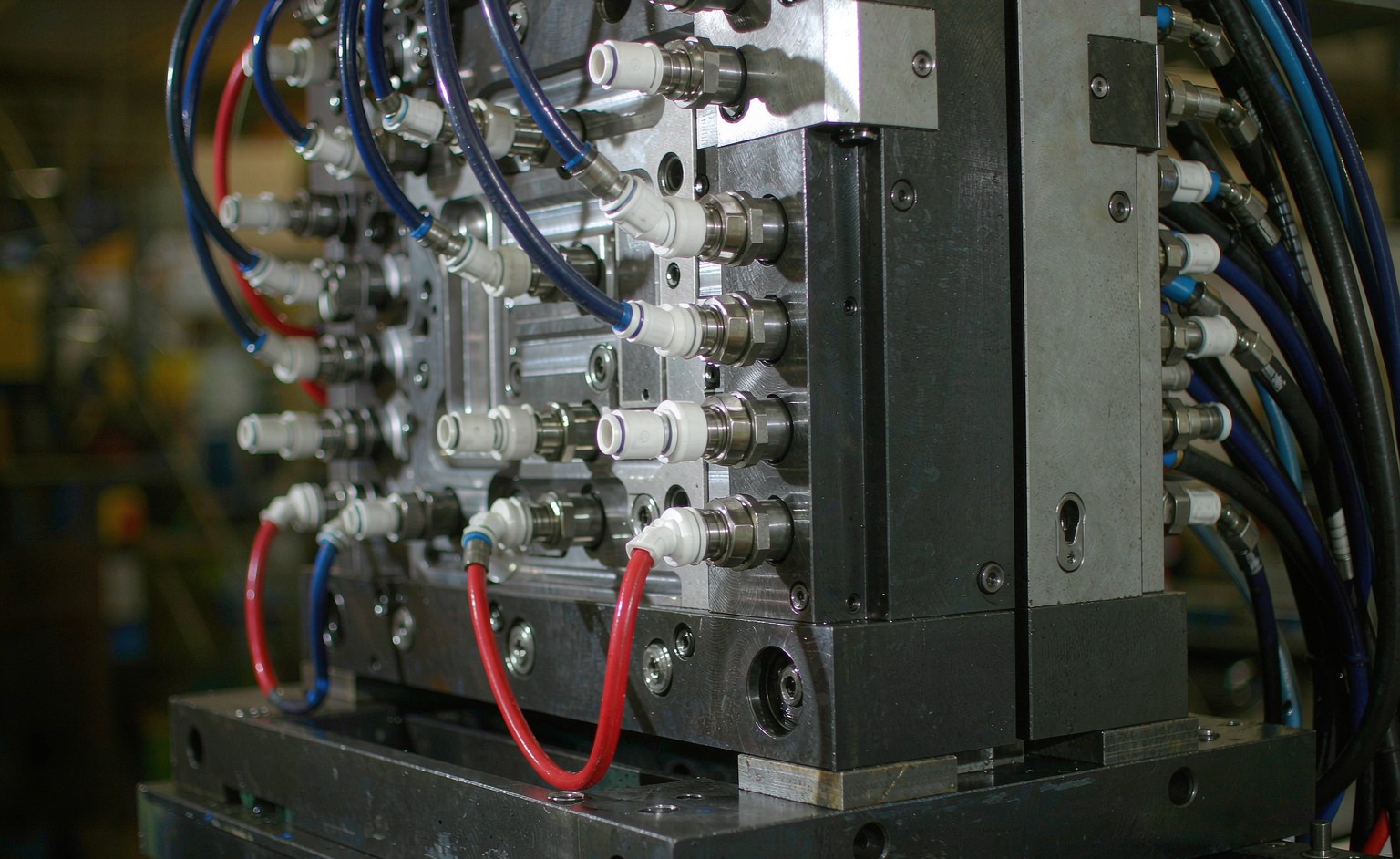
- Heated mold — cartridge or oil temperature control with insulation plates; a mold that cannot hold 170–200 °C cannot make crystalline PEEK.
- Generous flow paths: gates of at least 1 mm on small precision parts (pin gates below that shear the melt and leave weak weld lines), full-round runners, and hot tips or heated nozzles to keep sprues from freezing between shots.
- Hardened, polished steel (H13 / S136 class) for filled grades — glass and carbon fiber abrade soft steel fast, and polished flow channels reduce wear and black specks.
- Venting at 0.02–0.025 mm — deep enough to exhaust, tight enough to avoid flash on a melt this fluid at temperature.
For precision medical and semiconductor components, these requirements overlap with small-part tooling — our micro injection molding guide covers the small-gate, tight-tolerance side of that tooling.
Crystallinity and Annealing: The Two Levers Buyers Miss
Mold temperature is not a cycle-time knob for PEEK — it defines the part you ship. A tool at 170–200 °C lets polymer chains crystallize as the part cools, delivering the stiffness, wear resistance, and chemical resistance PEEK is bought for. A cold tool quenches the surface amorphous: edges look dark or translucent, strength and chemical resistance drop, and dimensional stability drifts in service.
Annealing completes the job on stress-critical parts: staged heating to roughly 200 °C, hold 2–4 hours, slow cool. It relieves residual stress before sterilization, assembly, or precision machining. Specify it for seals, bearings, and parts that will see thermal cycling — and skip it on unfilled cosmetic parts where surface priority dominates, as annealing can mark the surface.
PEEK vs PTFE, Delrin, and Machined Aluminum
PEEK is usually shortlisted against three alternatives, each failing on a different axis:
| Compare | PEEK Wins When | Alternative Wins When |
|---|---|---|
| PEEK vs PTFE | Load-bearing wear, stiffness, creep resistance at temperature — PTFE creeps under load | Pure low-friction sliding, chemical inertness at any temperature, lowest cost |
| PEEK vs Delrin (POM) | Service temperature above ~100 °C, sterilization, chemical attack | Precision motion parts at room temperature at a fraction of the resin cost — see our Nylon vs POM comparison |
| PEEK vs machined aluminum | Complex net-shape geometry, ~50% weight saving, corrosion and chemical immunity, volume amortizes tooling | Low volumes, extreme flatness/tolerance, metallic EMI shielding |
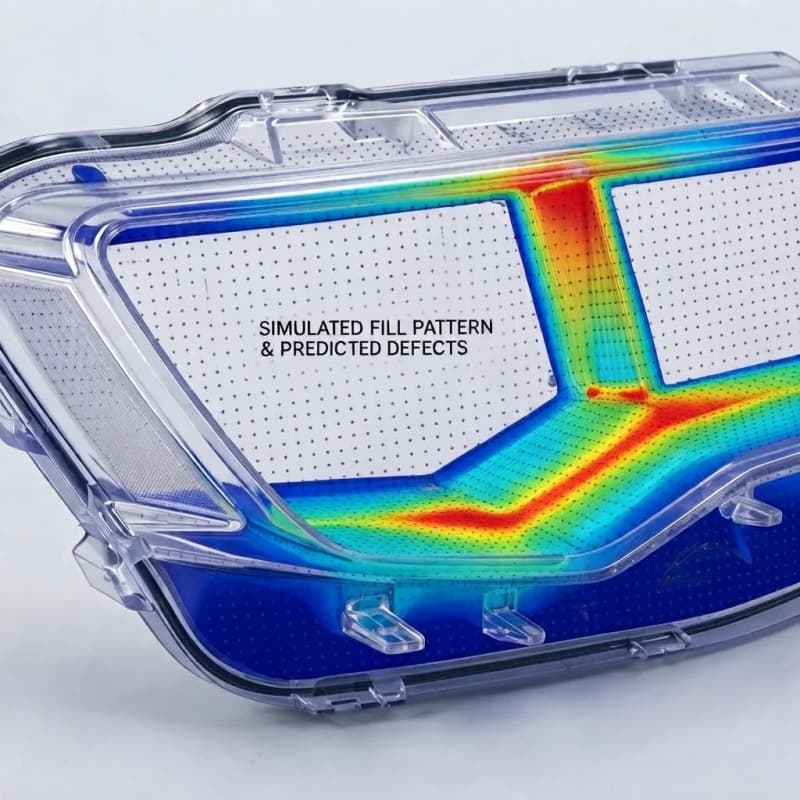
The honest comparison for metal replacement is a molding quote (tooling separated from part cost) against a machining quote at the same annual volume — total-cost crossover typically lands well before 1,000 parts for small components. Our low volume injection molding guide covers the tooling math, and mold flow analysis is worth budgeting for PEEK specifically, since filled-grade fiber orientation and weld lines decide real-world strength.
Frequently Asked Questions: PEEK Injection Molding
Why must PEEK be dried if it is not hygroscopic?
“Not hygroscopic” means PEEK does not swell or dissolve in water — not that it stays dry. Pellets typically absorb around 0.5% atmospheric moisture, and at 380 °C barrel temperatures that moisture causes surface splay, voids, and a real loss of molecular weight. Dry at 120–150 °C for 3–6 hours in a desiccant dryer (dew point ≤ −40 °C) to below 0.02% moisture before every run.
What temperature do you mold PEEK at?
Melt temperature runs 360–400 °C (PEEK’s melting point is 343 °C, and below ~350 °C the melt is too viscous to fill thin sections). Mold temperature runs 170–200 °C — deliberately hotter than most resins because it controls crystallinity. Confirm the exact window against the grade datasheet; filled grades run at the upper end.
Why is the mold temperature so high compared with other plastics?
Because mold temperature controls PEEK’s crystallinity — the property you are paying for. Parts molded into a hot tool (~175–205 °C surface) develop a crystalline structure with full stiffness, wear, and chemical resistance; a cold tool quenches the surface into a weak amorphous state with dark or translucent edges. Under recommended conditions, molded PEEK should reach roughly 30% crystallinity.
Can PEEK be regrind-reused?
Yes, with strict limits: standard guidance allows a maximum of about 30% regrind by weight for unfilled PEEK and about 10% for filled compounds. Even small amounts of foreign or degraded material seriously affect quality at PEEK processing temperatures, so regrind must be clean, dried identically, and verified — many medical and semiconductor programs exclude regrind entirely.
How does PEEK molding compare with machining?
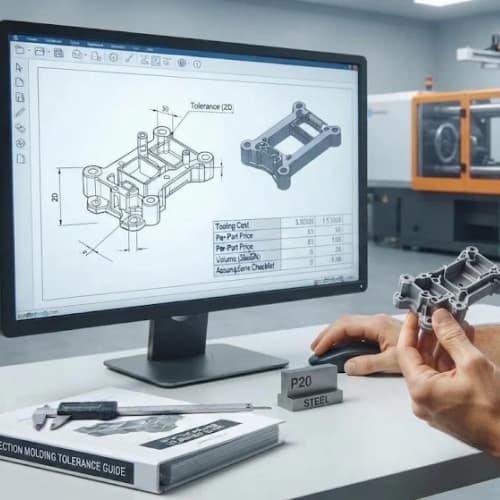
Molding wins on cost once tooling amortizes — each shot uses grams of resin instead of a machined billet, and it delivers complex net-shape geometry machining cannot. Machining wins at low volumes and on the tightest tolerances: typical molding tolerances run about ±0.1 mm with cavity precision around ±0.05 mm, and tighter features get secondary machining. Compare a molding quote (tooling separated from part cost) against a machining quote at your actual annual volume.
What is medical-grade PEEK?
Medical-grade PEEK carries biocompatibility documentation (typically USP Class VI and ISO 10993 data) and lot traceability from resin COA to finished part, and it is processed without regrind under validated drying and cleaning procedures. It is specified for patient-contact instruments, implant-adjacent components, and reusable devices that must survive repeated autoclave cycles. Confirm grade documentation and process validation requirements at DFM review, not after tooling.
Get a PEEK Injection Molding Quote
Send us your 3D file or 2D drawing with the service environment (temperature, chemicals, sterilization cycles), annual volume, and tolerance callouts — or just describe the failure mode the part must survive, and we will recommend unfilled, glass-filled, or carbon-filled PEEK accordingly. Our engineers review DFM before pricing, including gate and weld-line placement for filled grades, crystallinity and annealing requirements, and whether PEEK is even the right resin for your volumes. Contact GoodTech to start your PEEK project, or see our quote guide for the full RFQ package. For the tolerance framework PEEK parts are usually judged against, read our tolerance design guide.