
Choosing the right material and process for medical device injection molding decides whether a part survives sterilization, meets biocompatibility rules, and holds tight tolerances at volume. This guide compares the three families engineers meet most often — thermoplastic, thermoset, and liquid silicone rubber (LSR) — and gives a practical selection path plus supplier-qualification checkpoints.
Quick Answer — Which Process Should a Medical Part Use?
Most medical components are made with thermoplastic injection molding because the material can be melted and recycled, tuned for clarity or chemical resistance, and molded at high volume. Choose liquid silicone rubber (LSR), a type of thermoset, when the part needs flexibility, a permanent seal, repeated sterilization, or implant-grade biocompatibility. Choose other thermosets (such as epoxy) when the application needs high strength with electrical insulation and heat resistance that a thermoplastic cannot reach. Confirm the exact grade and its regulatory status with your molder before finalizing the design.
What Is Medical Device Injection Molding?
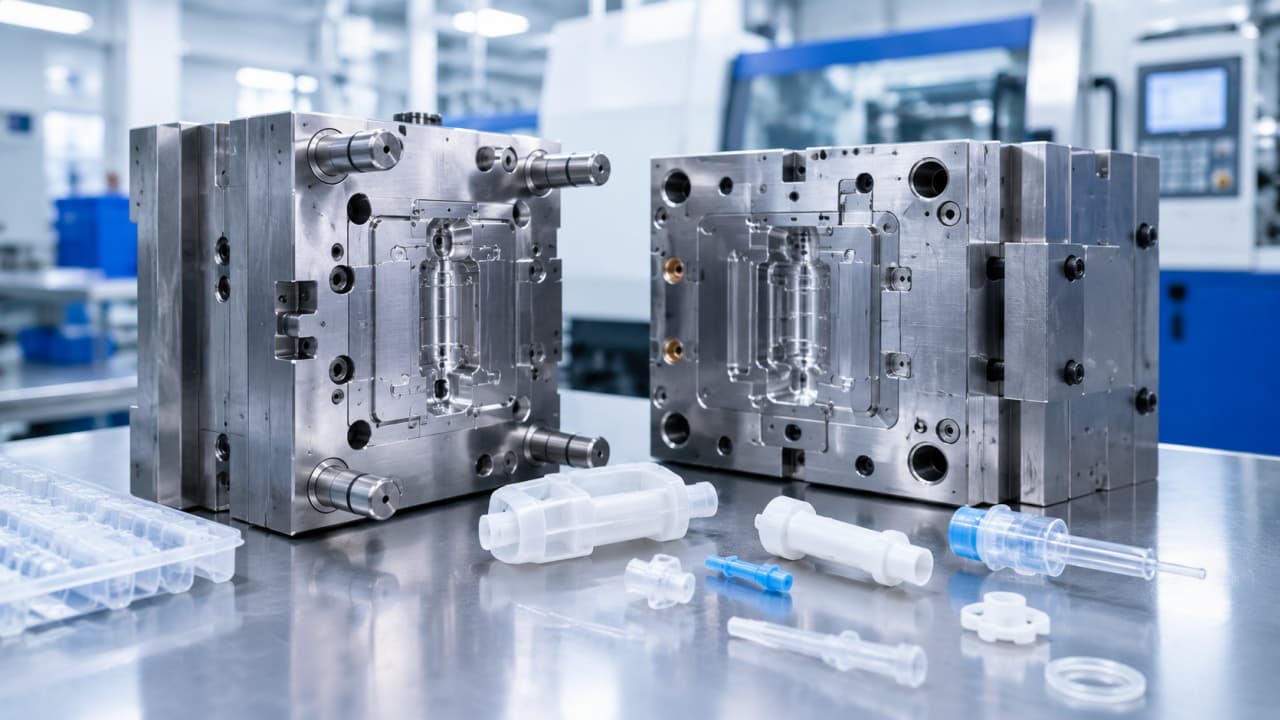
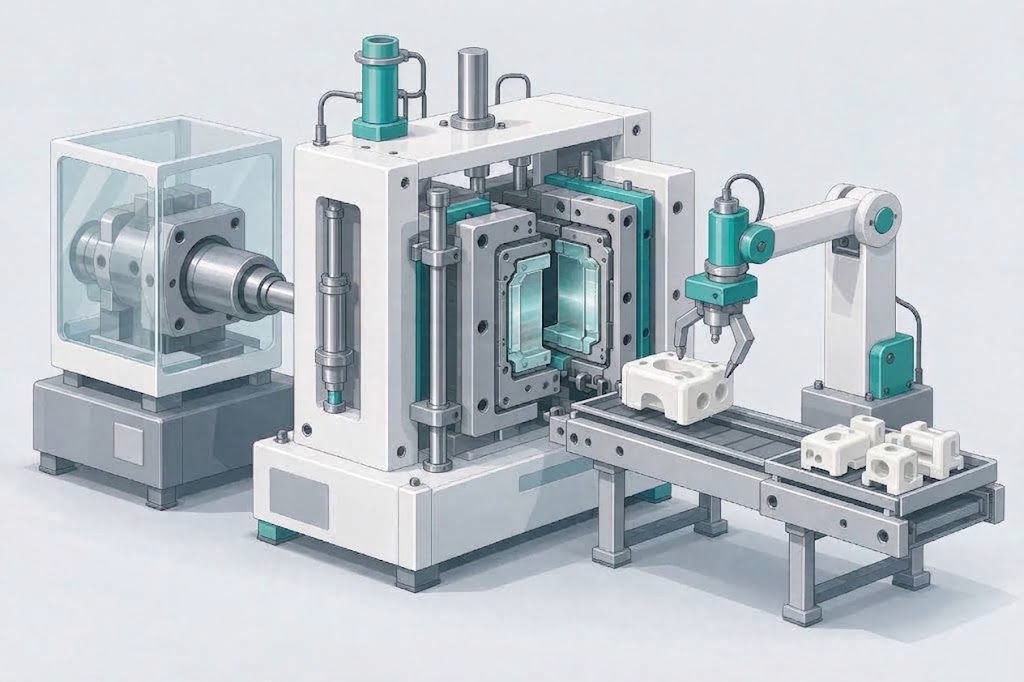
Medical device injection molding is the process of injecting a molten or liquid polymer into a precision mold to form components such as housings, connectors, fluid paths, seals, and surgical accessories. What separates medical molding from general-purpose molding is the surrounding system: documented quality controls, material traceability, and often certification to ISO 13485 for medical device manufacturing. Part compliance depends as much on the process discipline as on the resin.
Thermoplastic vs Thermoset vs Liquid Silicone Rubber
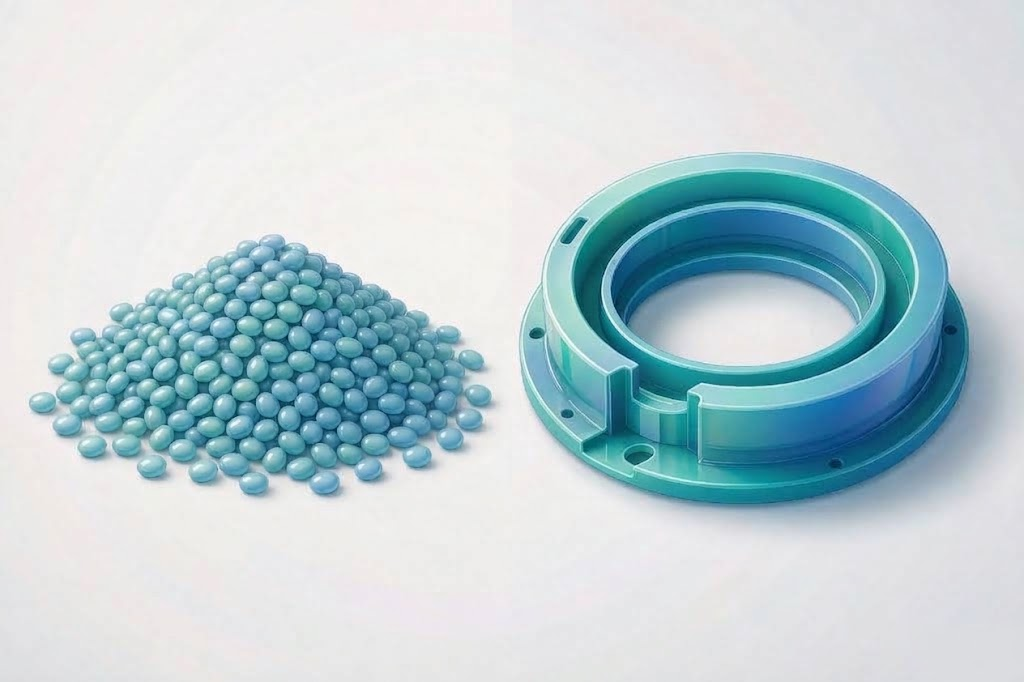
These three material families behave differently at the molecular level, which drives their medical uses.
| Property | Thermoplastic | Thermoset (e.g. epoxy, phenolic) | Liquid Silicone Rubber (LSR) |
|---|---|---|---|
| State at room temperature | Solid pellet | Gel or paste | Two-part liquid |
| After molding | Remelts if reheated | Permanently cross-linked (irreversible) | Permanently cross-linked elastomer |
| Recyclability | Can be reground and reused | Not remeltable; only grindable as filler | Not remeltable |
| Heat resistance | Good, material-dependent | High | Very high (LSR resists continuous high heat) |
| Typical medical use | Housings, connectors, fluid parts | High-strength insulating parts | Seals, gaskets, tubing, soft-touch, implantable |
Thermoplastics are the default for rigid medical parts. Thermosets and LSR win where the part must keep its shape under heat or sterilization and where flexibility or biocompatibility is required.
Material Selection by Medical Requirement
Use this table as a first-pass filter, then validate the specific grade with your molder.
| If your device needs… | Start with… | Why |
|---|---|---|
| Rigid housing, clarity, chemical resistance | Engineering thermoplastic (e.g. PC, ABS, medical-grade copolymers) | Moldable at volume, tunable properties, recyclable |
| Soft seal, gasket, or cushion | LSR | Flexible, elastic recovery, seals tightly |
| Repeated sterilization (steam, EtO, gamma) | LSR or heat-stable thermoplastic | LSR tolerates high heat and aggressive sterilization |
| Implantable or skin-contact biocompatibility | LSR (low extractables, low toxicity) | Established biocompatibility profile |
| High strength with electrical insulation | Thermoset epoxy | Cross-linked network gives strength and insulation |
| Water-immersed, flexible, wear-resistant | Polyurethane (thermoset) | Resists swelling; keeps flexibility when wet |
Why Liquid Silicone Rubber (LSR) Is Common in Medical Devices
LSR earns its place in medical designs for a combination of properties that are hard to get from rigid plastics:
- Sterilization resistance: LSR maintains properties through steam, ethylene oxide, and gamma sterilization cycles.
- Biocompatibility: Medical-grade LSR is formulated for low toxicity and low extractables, supporting skin-contact and implantable applications.
- Flexibility at temperature extremes: It stays flexible from very low to high temperatures.
- Elastic seal performance: It returns to shape after compression, which is why it is used for gaskets and septa.
Suitable for: seals, valves, respiratory parts, dosing components, wearable cushions, and implantable elements. Less suitable for: rigid structural shells or parts needing the recyclability of a thermoplastic. Note that LSR requires dedicated, meticulously cleaned equipment and a two-component dosing system — confirm process availability with your supplier.
Thermoset Options Beyond LSR (Epoxy, Polyurethane, Phenolic)
When the design calls for a cross-linked material other than silicone, three thermosets appear in medical and industrial contexts:
| Material | Strength | Watch-outs |
|---|---|---|
| Epoxy | High strength, low shrinkage, good electrical insulation, glossy finish | Can be brittle; sensitive to moisture uptake |
| Polyurethane | Flexible to hard, abrasion resistant, water resistant | Continuous-use temperature is lower than LSR |
| Phenolic | High tensile and impact strength, good for laminates | Older chemistry; not a food- or implant-grade choice |
Design and Quality Considerations for Medical Molding
Material choice is only half the story. The following points protect function and compliance:
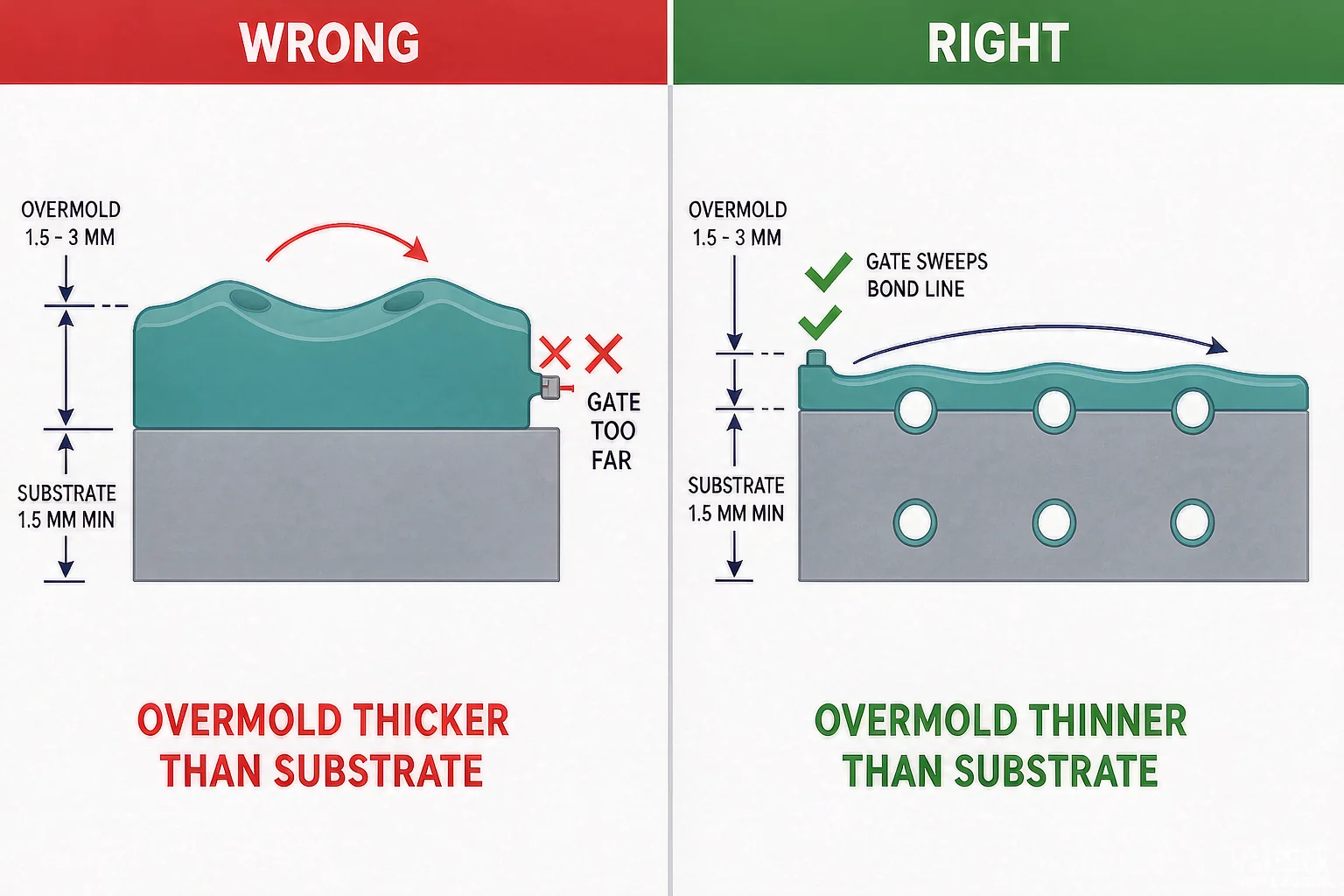
- Wall thickness: Keep sections uniform to avoid sink, warpage, and internal stress.
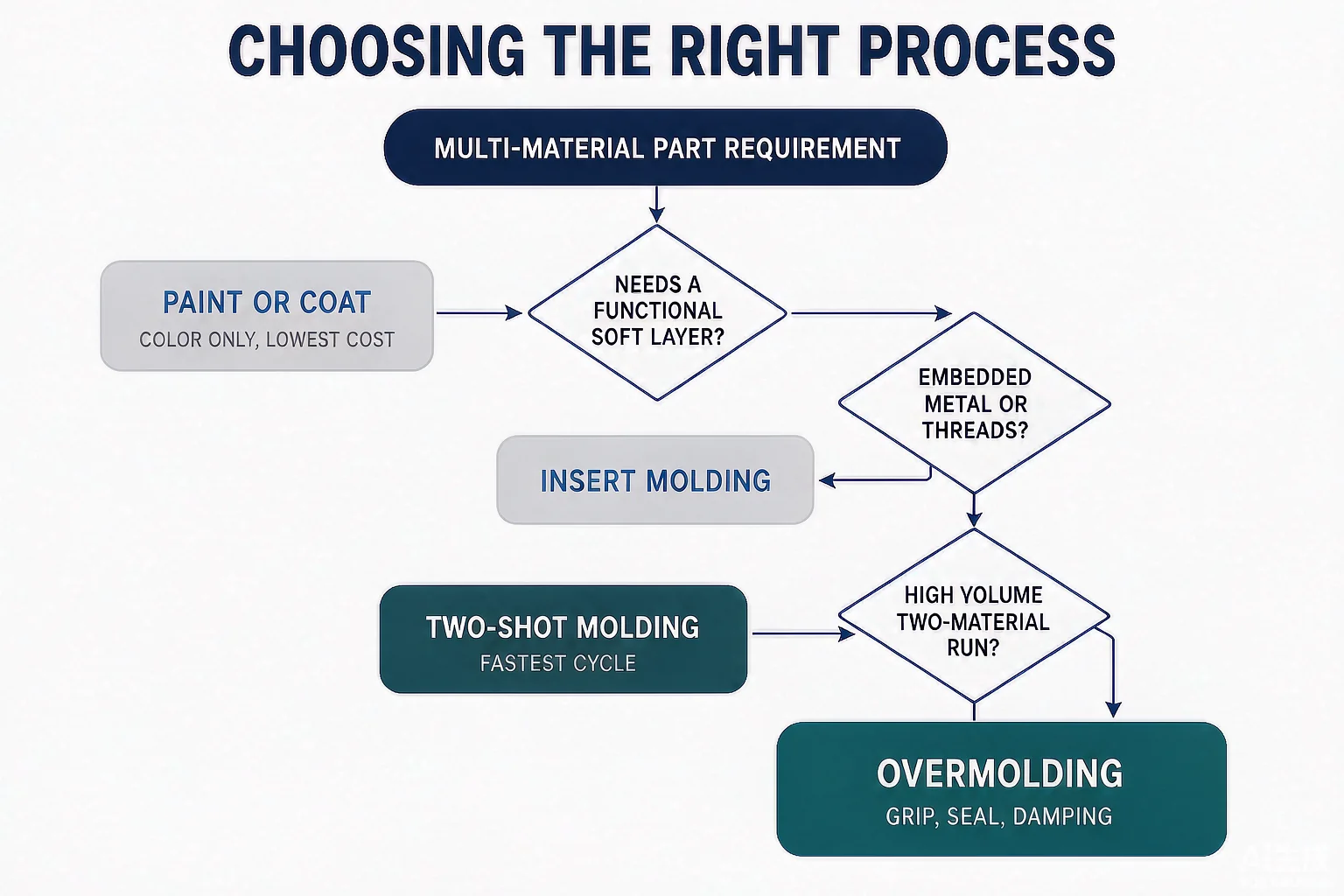
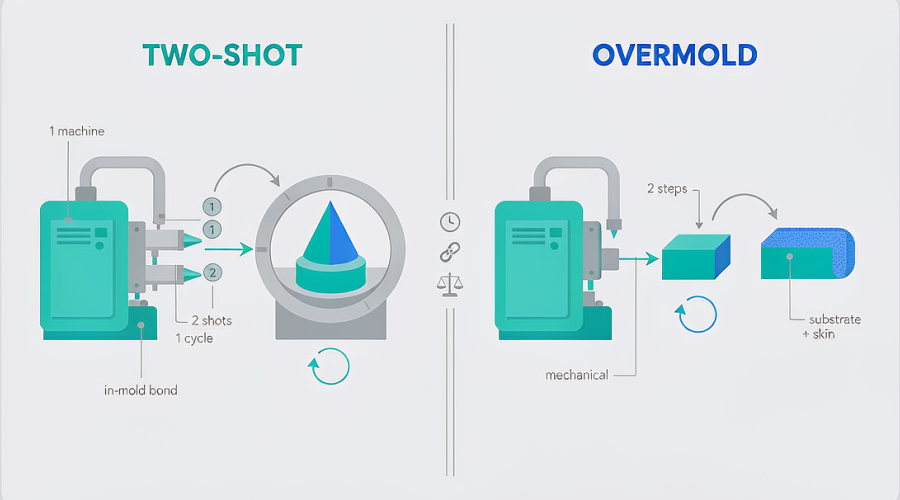
- Insert and multi-material design: Overmolding and insert molding combine rigid and soft materials in one part.
- Surface requirements: Decide polish, texture, and printing early — see surface finishing options for medical parts.
- Quality system: Expect documented controls, batch traceability, and validation under ISO 13485.
- Cleanliness: Define handling, packaging, and cleanroom needs up front.
From Prototype to Production
A disciplined path reduces late-stage risk:
- Define requirements: function, sterilization, regulatory class, volume, and budget.
- Prototype: Use rapid prototyping (CNC, cast, or short-run molding) to prove form and fit.
- Tooling: Move to production mold fabrication with the right runner and cooling strategy.
- Validation: Run first-article inspection and process capability studies.
- Production: Lock the process and controls for repeatable output.
Common Mistakes in Medical Material Selection
- Assuming “heat resistant” always means thermoset. Many engineering thermoplastics already cover elevated-temperature duties and remain recyclable.
- Ignoring sterilization compatibility. A resin that works at room temperature may degrade under steam or gamma.
- Trusting an unverified temperature table. Always confirm processing and service temperatures from the resin datasheet, not a generic chart.
- Over-promising tolerances. Achievable tolerance depends on mold, machine, and process — not on the material family alone.
How to Qualify a Medical Injection Molding Supplier
Process and material matter, but so does the partner. A qualified supplier should pass documentation, capability, quality-system, IP-control, process-capability, and commercial-fit gates. Use our supplier qualification checklist — a 22-point audit with a scoring model — to structure the decision.
Key Takeaways
- Thermoplastic is the workhorse for rigid medical parts; LSR handles seals, flexibility, and sterilization; other thermosets cover high-strength insulating needs.
- Match material to the device requirement first, then validate the specific grade and its regulatory status.
- Quality system, traceability, and supplier qualification are as decisive as the resin choice.
- Bring sterilization method and volume into the material decision early.
FAQ
Can LSR be sterilized?
Yes. Medical-grade LSR is widely used precisely because it withstands steam, EtO, and gamma sterilization without losing properties.
Is thermoset recyclable?
No. Thermosets cross-link permanently and cannot be remelted. They can only be ground for use as filler, which matters for sustainability and regulatory reviews.
Does a medical part require an ISO 13485-certified molder?
For regulated devices, working with an ISO 13485-certified manufacturer is strongly recommended because it confirms a documented quality management system for medical products.
What temperature can medical plastics withstand?
It depends on the grade. Standard thermoplastics cover moderate ranges; LSR and some engineering thermoplastics reach much higher service temperatures. Confirm the exact figure from the material datasheet for your application.
Work with GoodTech on Your Medical Device Program
GoodTech is a medical-device-capable injection molding manufacturer operating from dual headquarters in Chicago and Shenzhen, with additional production in Vietnam. Our program runs on ISO 13485 medical quality controls, supported by 45 molding machines (60–1000 tons) and in-house mold fabrication and rapid prototyping.
Whether your program uses engineering thermoplastics or specialized materials such as LSR, our engineering team can review your part requirements, advise on material and process selection, and carry the project from prototype to validated production. Share your drawings, expected volume, sterilization method, and regulatory class, and we will return a feasibility assessment and quote.