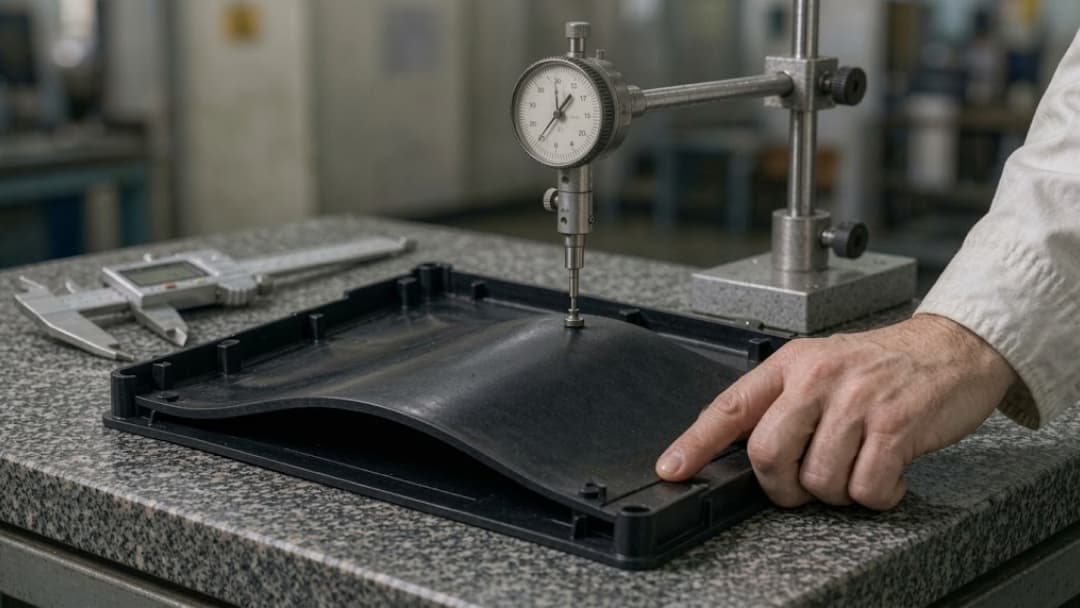

Quick answer: pay for mold flow analysis when a wrong gate, uneven cooling, or surprise warpage would cost more to fix than the study itself — typically on tools over $25,000, tight tolerances, glass-filled resin, or visible cosmetic surfaces. Skip it on simple, uniform-wall parts in commodity plastic, where a normal DFM check already covers the risk.
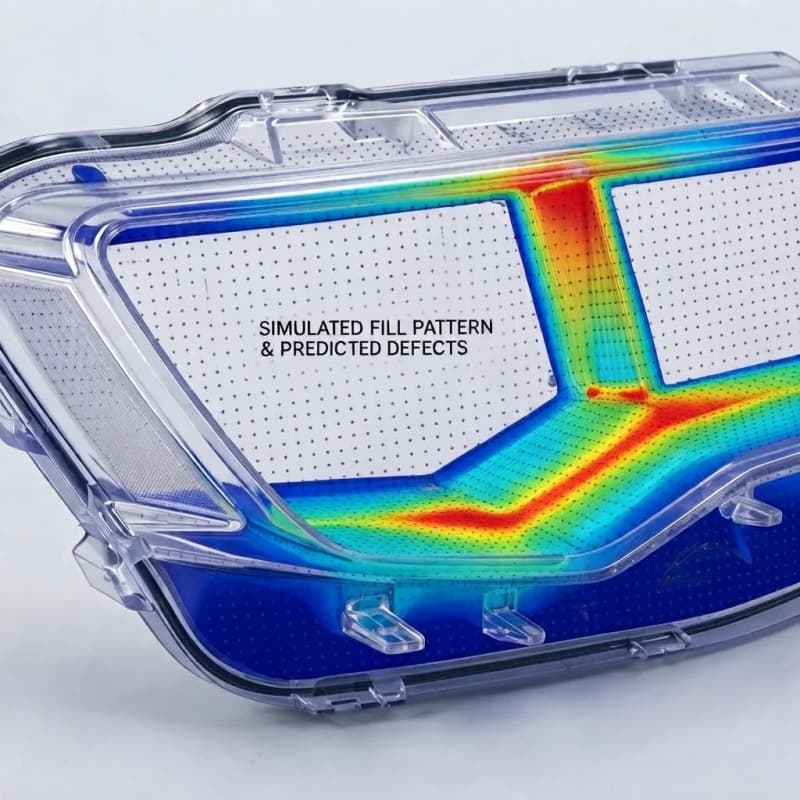
Mold flow analysis (also called Moldflow analysis or injection molding simulation) is software that fills a digital copy of your mold with plastic before anyone cuts steel. It shows where the plastic flows, where it stalls, where two flow fronts meet, where air gets trapped, and where the part will end up warped. That much is not in dispute. The real question is whether the answer is worth $1,000 to $8,500 and 3 to 14 days of your project schedule — and that depends on what the part, the tool, and the volume look like.
1. What Does Mold Flow Analysis Actually Predict?
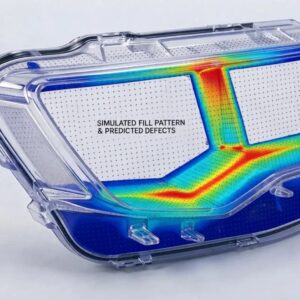
Simulation is not one product. It is a stack of analyses, and each one answers a different question. Here is what each result actually changes on the shop floor:
| Simulation result | Decision it changes | Defect it prevents |
|---|---|---|
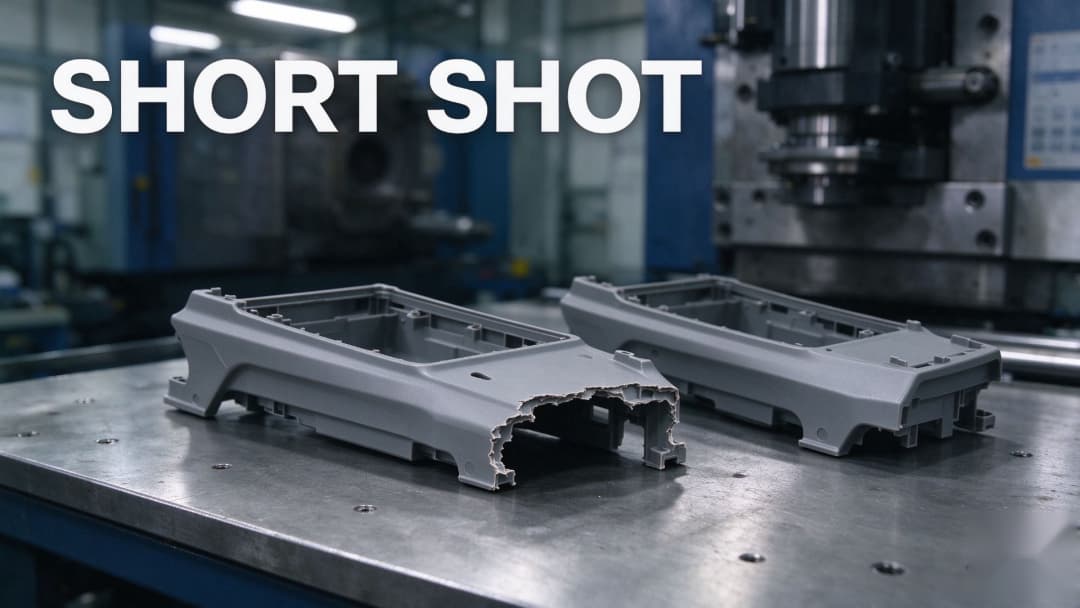
| Fill pattern and last point to fill | Gate location, wall thickness | Short shots, hesitation marks |
| Pressure at the gate, clamp force | Machine tonnage, tool strength | Flash, overpacking, blown cores |
| Weld line location | Gate position, vent layout | Weak or visible weld lines |
| Air trap locations | Vent placement and depth | Burn marks, dieseling |
| Shear rate and melt temperature | Injection speed profile | Material degradation, splay |
| Cooling hot spots | Baffles, bubblers, conformal inserts | Sink marks, long cycle time |
| Warpage and shrinkage | Cavity pre-compensation, ejection | Dimensions out of tolerance |
Notice that every row is a design decision, not a report section. A study that does not change a single dimension in the tool drawing has no value, no matter how pretty the color plots are.
2. How Much Does Mold Flow Analysis Cost?
Pricing is quoted per part, not published on a rate card, so ranges vary by provider. These are typical 2026 market ranges for independent analysts and small engineering firms — large consultancies run 1.5 to 2 times higher:
| Scope | Typical price (per part) | Turnaround | What you get |
|---|---|---|---|
| Fill only | $1,000 – $2,500 | 3 – 5 days | Gate options, fill time, weld lines, air traps, pressure |
| Fill + pack | $2,500 – $4,500 | 5 – 7 days | Adds shrinkage, packing pressure, sink prediction |
| Fill + pack + cool | $3,500 – $6,000 | 7 – 10 days | Adds cooling layout, hot spots, cycle time estimate |
| Full (adds warp) | $4,500 – $8,500 | 10 – 14 days | Adds warpage prediction and pre-compensation amounts |
| Conformal cooling design + sim | $6,500 – $12,000 | 2 – 3 weeks | Channel routing plus thermal comparison to the baseline |
Two practical notes. First, most reputable mold makers include a basic fill check in their DFM review at no extra charge — ask before you buy anything. Second, you can stage it: run fill plus pack first, fix the design, then commission warpage only if dimensional risk is still there. That halves the upfront spend on parts that turn out to be easy.
3. The Three Numbers That Decide It
You do not need to judge the simulation. You need to judge the risk. Three numbers do most of the work:
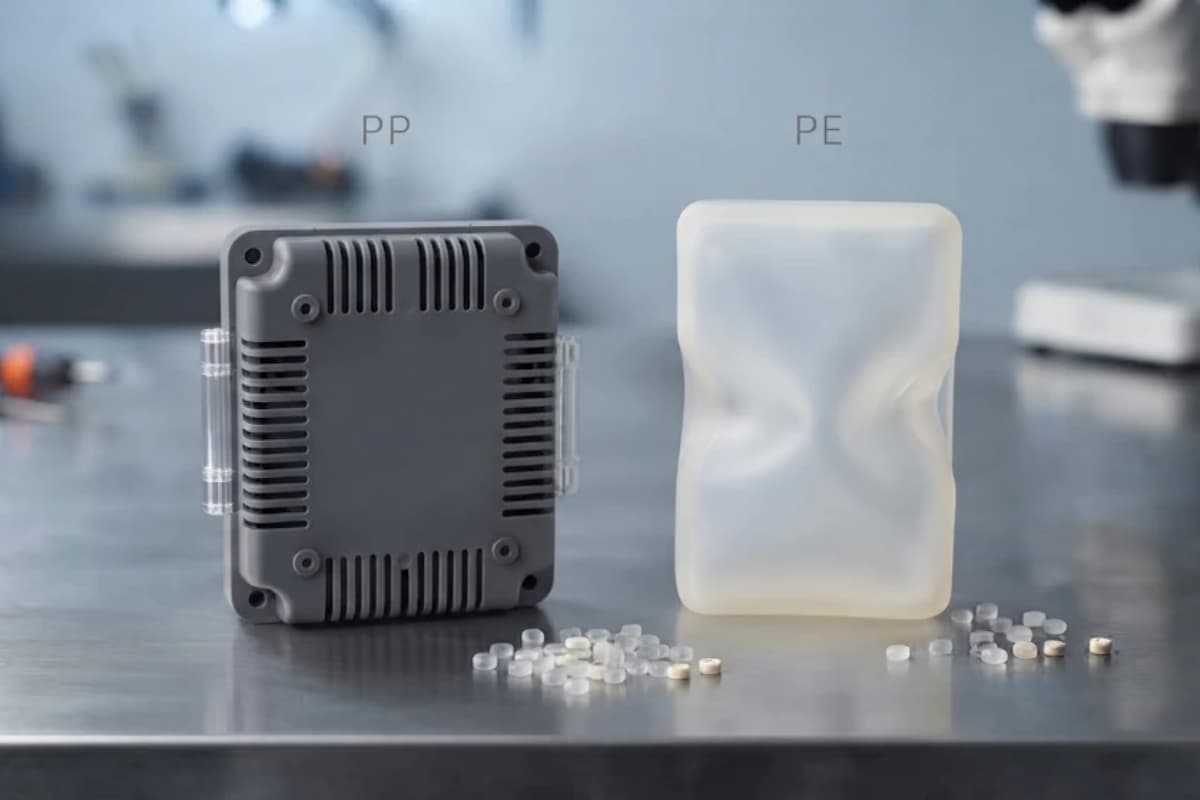
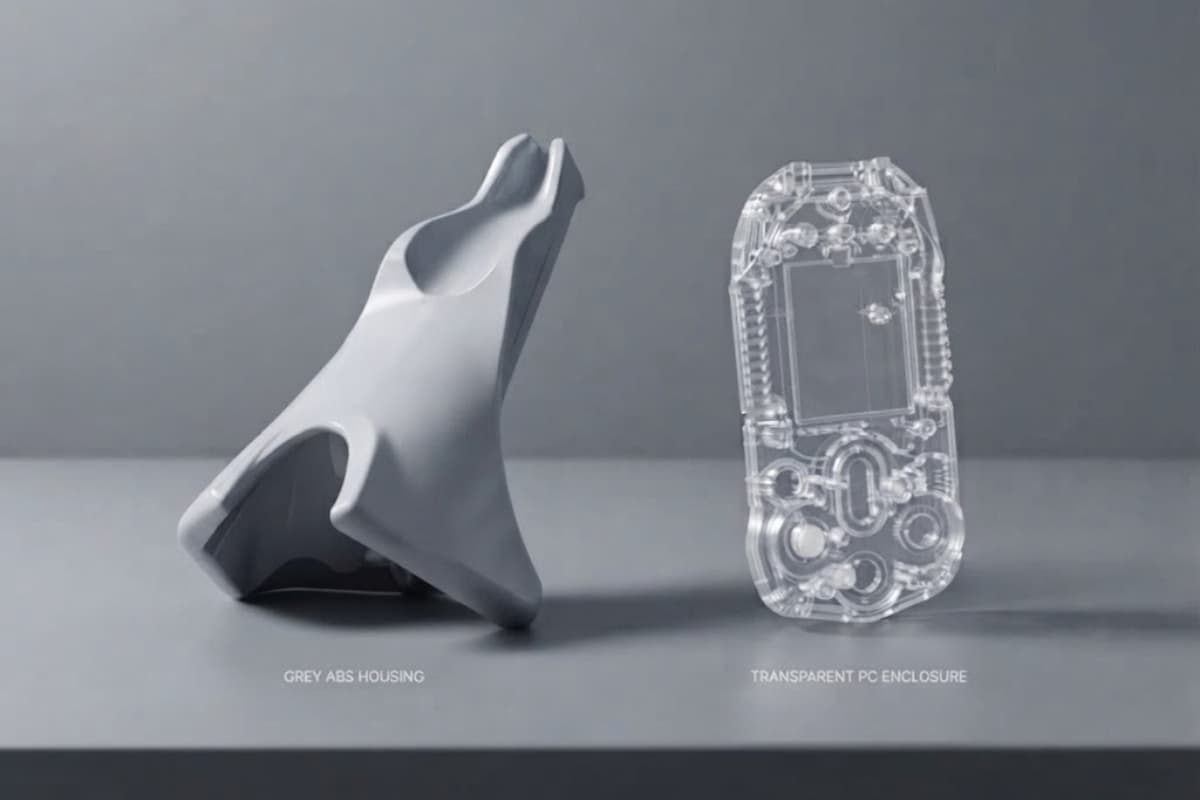
- Tool cost. The break-even point shifts with material. As a rule of thumb: roughly $25,000+ for commodity resin like PP or PE, $18,000–$22,000 for engineering resin like PC or PA, and $12,000–$15,000 for glass-filled or high-temperature resin. Below those numbers, the fix is usually cheaper than the study. Above them, one prevented steel change pays for the analysis several times over. More on that math in our guide to reducing tooling cost.
- Tolerance and geometry. Tighter than commercial tolerance, walls under 1.0 mm, a flow-length-to-thickness ratio over 200:1, or big thick-to-thin transitions all push you toward simulation. These are exactly the parts where warpage shows up late and expensively.
- Annual volume. At a million shots a year, shaving two seconds off the cycle is worth real money — cooling simulation usually finds those two seconds. At 5,000 shots, it rarely does.
4. When Can You Skip It?
Skipping is a legitimate engineering decision, not corner-cutting. Skip the simulation when:
- The part has uniform walls, a short flow path, and no cosmetic surface — a plain PP lid, a simple bracket.
- You have molded the same part family before with known shrinkage and no history of defects.
- Volumes are low and a small tool change would cost less than the study.
- The schedule is a sample order where speed matters more than long-term stability.
- The design is still moving. This one matters most: simulating a part that is about to change is money burned. Every geometry change invalidates the model. Lock the walls, draft, ribs, and gate target first.
5. How a Report Goes Wrong
This is the part of the market nobody advertises. A simulation is only as good as its inputs, and most bad reports fail in one of four places:
- Material data. The software library entry is a generic grade. Your actual resin may be a different supplier, a different melt flow, and 20% regrind. Ask which grade and whose data.
- Cooling model. Channels modeled as straight holes, with baffles, bubblers, or inserts left out. The thermal result then looks tidy and means nothing.
- Gate and runner modeled as ideal. A real hot runner has pressure loss and heat soak that an ideal boundary condition hides.
- Mesh too coarse. Thin walls get three elements through thickness instead of eight, and the predicted pressure drop is off by 30%.
Then there is the accuracy question. Warpage predictions are directional, not absolute: trust the trend — this corner lifts, that edge pulls in — and do not design to the last decimal of a predicted 0.32 mm. A single run with no sensitivity check is a guess with colors. Ask for melt temperature varied by plus or minus 10 °C, and you will see whether the conclusion holds.
6. What Should You Ask Before You Pay?
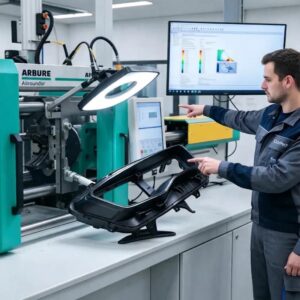
- Which exact material grade, and is the data from the supplier or a generic library?
- Is the cooling circuit modeled with baffles, bubblers, and inserts — or as straight holes?
- What is the mesh element count through the thinnest wall?
- Did you run a sensitivity check, or is this one pass?
- Does the report end with a recommendation — move the gate here, pre-compensate by this much — or just a picture of the problem?
A supplier who can answer all five without hesitating is worth the fee. One who cannot is selling plots. For the design rules that make most of these questions moot, start with our DFM design guide and the gate types comparison.
Frequently Asked Questions: Mold Flow Analysis
How much does mold flow analysis cost?
Around $1,000 to $2,500 for a fill-only study, $2,500 to $4,500 with packing, and $4,500 to $8,500 for the full fill, pack, cool, and warp package. Conformal cooling design with simulation runs $6,500 to $12,000. Many mold makers include a basic fill check free with their DFM review.
How long does mold flow analysis take?
Three to five days for fill only, and ten to fourteen days for the full package. Cooling and warpage runs need iteration, so they take the longest. Meshing is often 30–40% of the effort — a clean CAD file with simplified internal geometry cuts days off the schedule.
Can mold flow analysis replace trial runs?
No. It narrows the process window and catches design-level mistakes, but the first trial shot is still how you confirm against real resin, real machine, and real drying. Treat the report as a way to make T1 shorter, not as a substitute for T1.
Is mold flow analysis worth it?
Worth it when the cost of being wrong beats the cost of the study: tools over roughly $25,000 in commodity resin (less for engineering or glass-filled resin), tight tolerances, cosmetic surfaces, or high annual volumes. Not worth it for simple, uniform-wall parts with mature molding history — a free DFM review covers those.
Is mold flow analysis worth it for glass-filled materials?
This is where it pays back fastest. Glass fibers orient during flow, and that orientation drives uneven shrinkage that experience alone cannot predict. For glass-filled PA, PPS, or PEEK, a warpage run usually costs less than one steel correction.
Related Reading
- Injection Moulding Design Guide: DFM Best Practices
- Injection Molding Gate Types: 8 Designs Compared
- Hot Runner vs Cold Runner: Which Is Right for Your Project?
- Conformal Cooling vs Standard Cooling: Is It Worth It?
- Common Injection Molding Defects: Causes and Prevention
- 20 Types of Plastic Materials: Properties and Uses
Not sure whether your part needs a simulation, or just a better DFM review? Send the STEP file, the material you plan to run, and your tolerance callouts. Our engineers will tell you honestly which one you need — and quote your custom injection molding project with the tooling and analysis scope spelled out from the start.